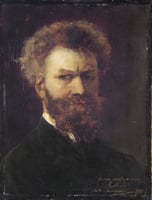
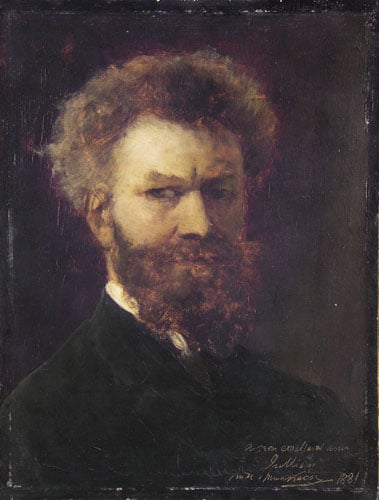
Expertenanalyse zu Mihaly Munkacsys Self-Portrait II
Stil: Realism · Genre: self-portrait
This analysis draws exclusively on the provided facts—artwork, artist, style, and genre—to highlight the significance of Mihály Munkácsy’s Self-Portrait II within the Realist movement.
Artwork: Self-Portrait II
Artist: Mihály Munkácsy
Style: Realism
Genre: Self-portrait
Expert Analysis
Mihály Munkácsy’s Self-Portrait II is a powerful testament to the Realist commitment to unvarnished truth, even—perhaps especially—when the subject is the artist himself. As a self-portrait, the work moves beyond mere likeness to become a psychological document, capturing the artist not as an idealized bohemian but as a working figure marked by the demands of his craft.
Within the Realist tradition—which rejected the theatricality of Romanticism and the artificiality of Academicism—Munkácsy embraces a direct, unapologetic gaze. The painting’s significance lies in its refusal to flatter: there is no heroic posture or poetic lighting. Instead, the artist presents himself with the same sober, observational rigor he would apply to a peasant or a condemned man, subjects for which he was renowned. This democratic treatment of selfhood aligns with Realism’s core tenet: that all subjects, including the artist’s own face, deserve honest representation.
Munkácsy’s handling of paint—presumably vigorous and textured, typical of his mature Realist style—further emphasizes materiality over idealization. The face is likely rendered with careful attention to the play of light across tired eyes or a furrowed brow, suggesting the introspection of an artist who had seen both acclaim and tragedy. His place in 19th-century Hungarian Realism, where he fused the influence of Courbet with a distinctly Central European gravitas, gives this self-portrait added weight: it is not only a personal statement but a declaration of artistic allegiance to truth-telling.
In summary, Self-Portrait II is significant because it exemplifies how Realist self-portraiture can function as both a mirror and a manifesto—challenging the viewer to see the artist not as a romantic genius, but as a flesh-and-blood observer of the real world.
Visuell ähnlich
20 Werke mit ähnlicher Komposition und Farbpalette
Male portrait
Noè Bordignon
The Internist Professor Samuel Stern
Anton Romako
Self-Portrait Presented To M. Sage
William-Adolphe Bouguereau
Portrait of the A.V. Vysheslavtsev
Alexei Korzukhin
Self-Portrait
Paul Cezanne
Head of a Man
Ilya Repin
John MacWhirter, Landscape Painter
James Archer
Thomas Alexander Graham, Artist
James Archer
Autoretrato
Jose Maria Velasco
James Archer, Artist, Self Portrait
James Archer
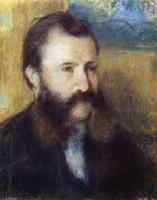
Portrait of Monsieur Louis Estruc
Camille Pissarro
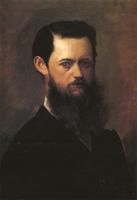
Autoretrato
Jose Maria Velasco
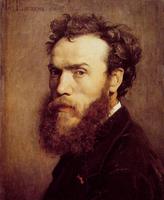
Self-portrait
Jean-Paul Laurens
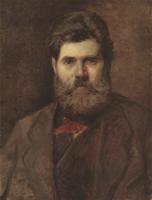
Portrait of the Sculptor Vladimir Brovsky
Vasily Perov
Portrait of Pavel Tretyakov
Ivan Kramskoy
Self-Portrait
Paul Cezanne
Автопортрет
Микола Пимоненко
Portrait of Monsieur Nicolle
Gustave Courbet
Self-portrait
Eugene de Blaas
Antoine Paul Nicolaas Franchimont
Thérèse Schwartze