Analisi esperta di Vanitas di Cornelis Norbertus Gysbrechts
Stile: Baroque · Genere: vanitas
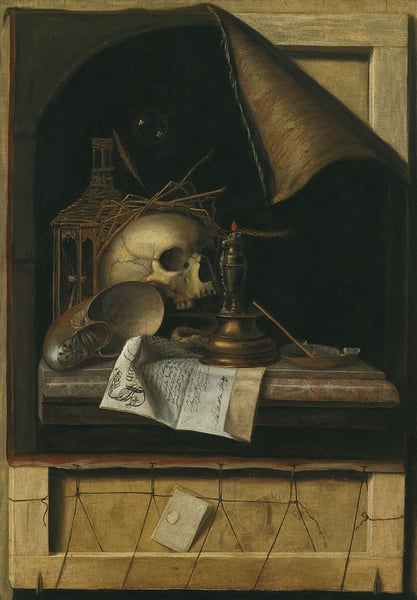
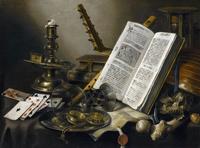
As an expert art historian, I will analyze "Vanitas" by Cornelis Norbertus Gysbrechts based solely on the provided structured facts: it belongs to the Baroque style and the vanitas genre. The significance of this work lies in its exemplary embodiment of the vanitas tradition within the broader context of Baroque art.
The term vanitas refers to a specific type of still-life painting that flourished in the 17th-century Netherlands and Flanders, during the Baroque period. These works are moralizing allegories, reminding viewers of the transience of life, the futility of worldly pleasures, and the certainty of death. In this painting, Gysbrechts would have employed a repertoire of symbolic objects—such as skulls, wilting flowers, extinguished candles, bubbles, or timepieces—each laden with meaning about human mortality and the emptiness of earthly achievements. The Baroque style, with its dramatic use of light and shadow (chiaroscuro), intense realism, and emotional immediacy, heightens the impact of these symbols. Gysbrechts, known for his mastery of trompe-l'œil (illusionistic trickery), likely used meticulous detail to make the objects appear physically present, thereby intensifying the viewer's confrontation with mortality.
This painting is significant because it distills a central Baroque concern: the tension between the material world's splendor and its spiritual emptiness. The genre of vanitas allowed Baroque artists to explore profound philosophical questions about existence, fame, and legacy, while simultaneously showcasing technical virtuosity. Gysbrechts's work, as a vanitas, thus functions as both a moral lesson and a stunning demonstration of Baroque illusionism. It invites the viewer to reflect on the fleeting nature of all things—a theme that resonated deeply with the religious and philosophical currents of the Baroque era, which often emphasized the insignificance of human life in the face of divine eternity. In this way, the painting stands as a powerful and characteristic expression of its time, using the tools of Baroque art to deliver a timeless warning.
Visivamente simili
20 opere con composizione e palette affini
VANITAS STILL LIFE
Edward Collier
Trompe l'oeil with Studio Wall and Vanitas Still Life
Cornelis Norbertus Gysbrechts
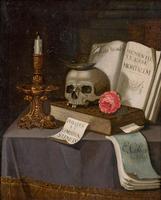
Vanitasstillleben mit Totenschädel, Seifenblasen und verlöschender Kerze
Edward Collier
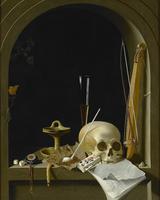
Vanitas Still Life in a Niche
Adriaen Coorte
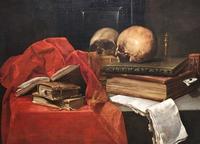
[Unkown]
Madeleine Boullogne
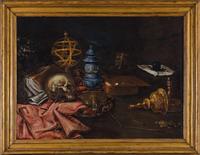
Vanitas
Edward Collier
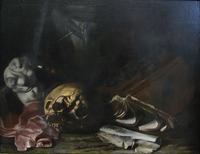
Still Life
Salvator Rosa
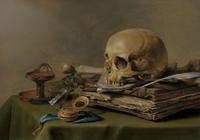
Vanitas. Still Life
Pieter Claesz
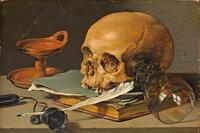
Still Life. Skull and Writing Quill
Pieter Claesz
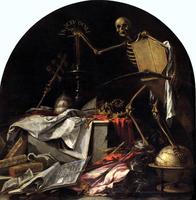
Allegory of Death: In Ictu Oculi
Juan de Valdes Leal
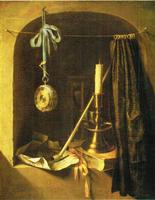
Still life with candle
Gerrit Dou
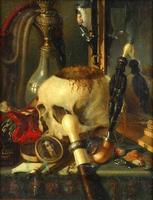
Vanitas
Constantin Daniel Rosenthal
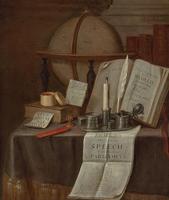
Omnia Vanitas: a book with a paper marker inscribed VITA BREVIS ARS LONGA, a glove, an open copy of 'Description of the World', a pewter standish with a candle, and a pamphlet from 1698, on a table
Edward Collier
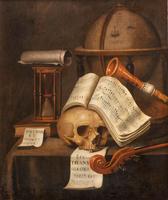
Vanité avec partition en Menuet
Edward Collier
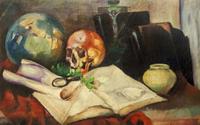
Still life with a skull
Nikola Martinoski
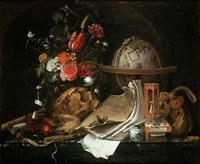
Vanitas Still Life
Maria van Oosterwijck
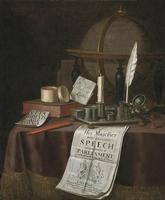
A globe, an inkwell with a candle, books and other objects on a draped table
Edward Collier
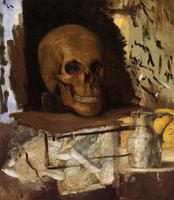
Still Life Skull and Waterjug
Paul Cezanne
Vanitas. Still Life
Pieter Claesz
Untitled
Henri Matisse