Analisi esperta di Snow di Toko Shinoda
Stile: Abstract Expressionism · Genere: abstract
Expert Analysis of "Snow" by Toko Shinoda
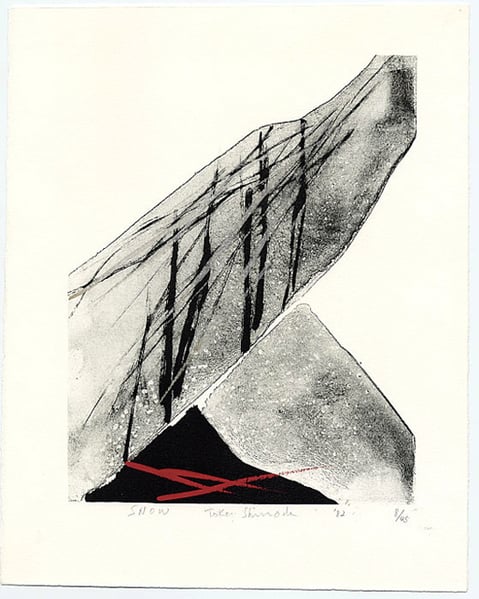
Toko Shinoda’s Snow is a masterful synthesis of Eastern calligraphic tradition and Western Abstract Expressionism, a duality that defines her singular place in post-war art. Created during the height of her international recognition in the 1950s–60s, this work exemplifies her signature use of black sumi ink on a stark white ground, a palette that evokes both the austerity of Zen ink painting and the spontaneous gesture of American abstraction.
Visual and Formal Elements:
The composition appears deceptively simple: sweeping, fluid black strokes that suggest falling snow or drifting wind, contrasted with areas of untouched white. Shinoda’s brushwork is both controlled and lyrical—each mark carries the weight of calligraphic tradition, yet breaks free from literal representation. The negative space is not empty but charged, acting as the canvas’s “breath,” a concept rooted in East Asian aesthetics. The erratic, almost musical rhythm of the strokes mirrors the unpredictable, silent descent of snow, capturing its transient nature.
Significance Within Abstract Expressionism:
Shinoda’s work challenges the movement’s often masculine, New York-centric narrative. While Abstract Expressionists like Jackson Pollock and Franz Kline sought raw, dramatic energy, Shinoda introduced a meditative restraint. Snow embodies what critic Harold Rosenberg called “action painting,” but the action is refined, deliberate—a dance between ink and void. Her art bridges two worlds: the gestural freedom championed by the New York School and the disciplined spontaneity of Japanese shodō (calligraphy). This fusion prefigures later Minimalist and Post-Painterly abstraction, emphasizing the elemental dialogue between material and space.
Cultural and Historical Context:
Created in a period when Western artists were appropriating Eastern philosophy (e.g., Cage’s Zen influences, Reinhardt’s black paintings), Shinoda offered an authentic counterpoint—a Japanese woman who not only absorbed Expressionism but transformed it through her heritage. Her gender and cross-cultural perspective are crucial: in a male-dominated field, she demonstrated that abstraction could be both powerful and delicate, universal yet rooted in personal lineage. Snow is thus a quiet revolution: it proves that abstraction need not be bombastic to be profound, and that the ephemeral—like snow—can embody timeless artistic truth.
Visivamente simili
20 opere con composizione e palette affini
Fête
Toko Shinoda
Rippling
Toko Shinoda
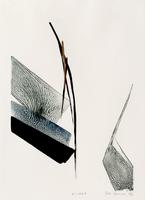
Rivage
Toko Shinoda
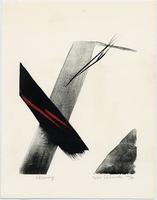
Blessing
Toko Shinoda
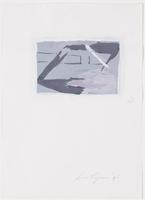
The Heritage
Luc Tuymans
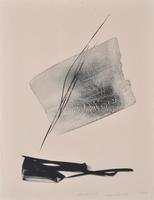
Arrived Wind
Toko Shinoda
L'amant cachalot
Huguette Arthur Bertrand
Untitled
Ellsworth Kelly
0422 Edited
ambrosio paolo
Maiden
Toko Shinoda
La que observa
eDgar gRau
0575
ambrosio paolo
Angle et taches
Antoni Tapies
El reverso de mi ventana.
Aldo Menéndez

Horizontal Rust
Franz Kline
Transparent Shadow
Toko Shinoda
Landscape (late autumn)
Alfred Freddy Krupa
Abstract Composition
Paul Jenkins
Beyond
Toko Shinoda

Phenomena Franklin's Kite
Paul Jenkins