Analisi esperta di Intimate Scenery of River and Mountains (detail) di Li Tang
Stile: Ink and wash painting · Genere: shan shui
Expert Analysis of "Intimate Scenery of River and Mountains (detail)" by Li Tang
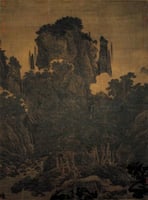
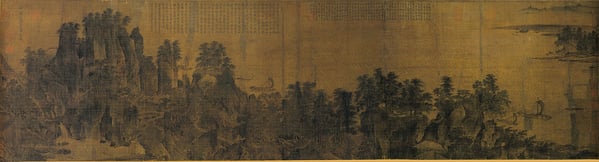
Li Tang’s Intimate Scenery of River and Mountains (detail) is a defining example of the Southern Song transformation of shan shui (mountain-water) painting. Executed in ink and wash on silk, this work marks a pivotal shift from the towering, monumental landscapes of the Northern Song dynasty toward a more personal, lyrical vision of nature—a hallmark of Li Tang’s late career and a direct precursor to the work of Ma Yuan and Xia Gui.
Significance within Ink Wash and Shan Shui Tradition
Li Tang was a court painter who bridged the Northern and Southern Song periods. In this detail, he demonstrates his revolutionary approach: instead of depicting vast, panoramic vistas with multiple peaks as seen in Fan Kuan or Guo Xi, he focuses on a cropped, intimate vignette—a close-up of a riverbank, rocks, and a partial mountain slope. This "corner composition" technique, later perfected by the Ma-Xia school, invites the viewer into a quiet, personal contemplation of nature rather than an overwhelming spectacle.
Brushwork and Ink Mastery
The detail showcases Li Tang’s hallmark "axe-cut" texture strokes (fupi cun), visible in the angular, faceted rock formations. These sharp, slashing brushstrokes, combined with diluted wash for atmospheric mist, create a sense of volume and tactile immediacy. The river is suggested through elegantly left-blank silk, while the distant mountains recede into pale, translucent ink—a sophisticated use of negative space that evokes both depth and quietude. This technique would profoundly influence the lyrical, suggestive landscapes of the Southern Song.
Genre and Period Context
As shan shui, the painting does not merely record a location but expresses a philosophical ideal: the harmony between humanity and the natural world. Yet Li Tang’s innovation lies in making that harmony feel accessible—almost as if the viewer is standing on the riverbank, peering into a secluded grove. This intimacy anticipates the shift from courtly grandeur to the scholar-amateur aesthetic of later dynasties.
Legacy
Intimate Scenery of River and Mountains (detail) is significant because it captures the exact moment when Chinese landscape painting turned inward, emphasizing mood, atmosphere, and personal experience over epic scale. Li Tang’s synthesis of precise drawing, wet ink washes, and compressed space laid the groundwork for the entire Southern Song landscape tradition—and ultimately, for the literati ideal that nature should be felt, not merely seen.
Genere
Visivamente simili
20 opere con composizione e palette affini
Clearing Autumn Skies over Mountains and Valleys (detail)
Guo Xi
Luxuriant Forest among Distant Peaks
Li Cheng

Intimate Scenery of River and Mountains
Li Tang
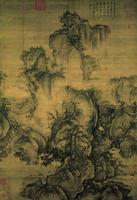
Early Spring
Guo Xi
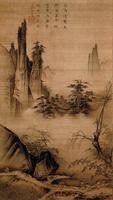
Dancing and Singing (Peasants Returning from Work)
Ma Yuan
Pines and the Waterfall
Lan Ying
Snowscape
Tang Yin
Wind in the Pines Among a Myriad Valleys
Li Tang
Landscape
Lan Ying

Parting at the Jing River
Shen Zhou
Untitled
Qiu Ying
Four Accomplishments
Kanō Motonobu
The Nature Better than the Official Ranks
Kim Hong-do
Dwelling in the Floating Jade Mountains
Qian Xuan
Clearing Autumn Skies over Mountains and Valleys (detail)
Guo Xi
Landscape in night of autumn
Kim Hong-do
Old Trees, Level Distance
Guo Xi
Dancing and Singing (Peasants Returning from Work) (detail 1)
Ma Yuan
Sound of Pines on a Mountain Path
Tang Yin
Landscape of Four Seasons: Winter
Sesshu Toyo