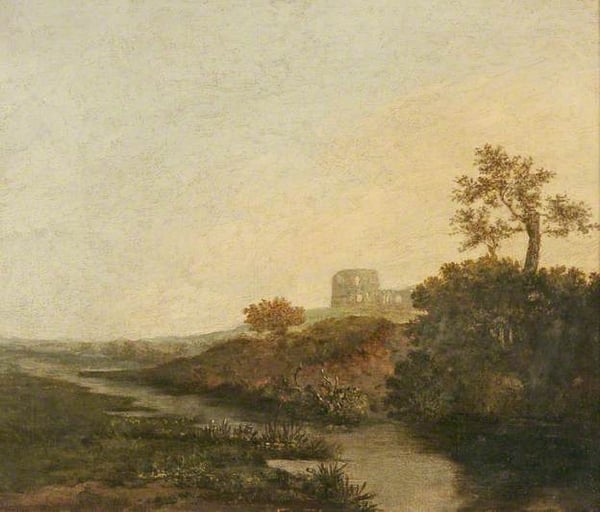
A Castle in Ruins, Morning
Экспертный разбор работы «A Castle in Ruins, Morning» художника John Crome
Стиль: Romanticism · Жанр: landscape
John Crome’s A Castle in Ruins, Morning is a quintessential example of the Romantic landscape, embodying the movement’s deep fascination with nature, emotion, and the passage of time. As a leading figure of the Norwich School, Crome elevates a simple rural scene into a meditative reflection on decay and renewal.
Significance within Romanticism:
The painting captures two key Romantic preoccupations: the sublime and the picturesque. The ruined castle—a man-made structure succumbing to nature—symbolizes the transience of human ambition against the eternal forces of the natural world. Romantic artists often used ruins to evoke melancholic beauty and historical nostalgia, inviting viewers to contemplate mortality and the cycles of history. The specific use of morning light is crucial: soft, golden illumination bathes the ruins, suggesting not just decay but also rebirth and hope. This contrast between ruin and dawn aligns with Romanticism’s interest in emotional extremes—melancholy intertwined with serenity.
Significance within Landscape Genre:
Crome’s landscape is not a mere topographical record but a mood-driven composition. Unlike earlier, more formalized landscapes, this work prioritizes atmosphere and emotional resonance over precise detail. The loose brushwork and subtle gradations of light demonstrate Crome’s skill in capturing transient weather effects, a hallmark of the Norwich School and a precursor to later plein-air painting. The inclusion of a ruined castle anchors the scene in British history, appealing to a Romantic-era audience’s growing national sentiment and love for local antiquities.
Key Insight:
What makes A Castle in Ruins, Morning significant is its synthesis of the temporal and the eternal—the ruined stonework speaks of human history, while the morning sunlight whispers of nature’s indifference and perpetual renewal. It stands as a masterful example of Romantic landscape art’s power to evoke profound philosophical emotion through a simple, evocative scene.
Визуально похожие
20 работ с близкой композицией и палитрой
At Honingham, Norfolk
John Crome
Old Corn Mill, Stockbridge
John Bradley
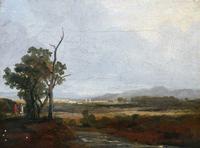
View near Duddingston Loch
David Allan
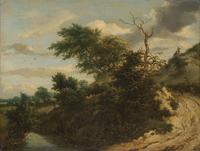
Sandy Track in the Dunes
Jacob van Ruisdael
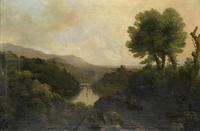
An extensive river landscape with travellers on horseback
Thomas Barker of Bath
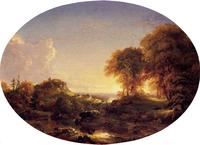
Catskill Landscape
Thomas Cole
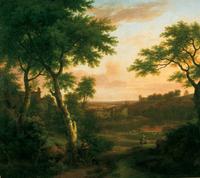
The Ruins of Rievaulx Abbey, Yorkshire
George Lambert
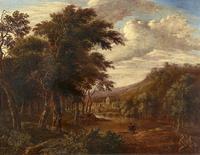
Bewaldete Uferlandschaft mit Stadt
Gerrit Battem
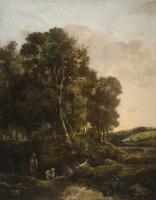
The Way through the Wood
John Crome
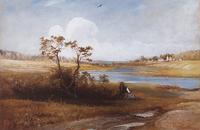
Near the village of St Michael Pskov province
Aleksey Savrasov
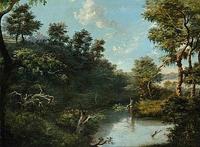
Upper Yarra
Isaac Whitehead
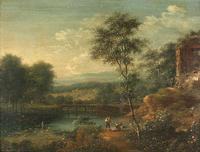
Rhenish landscape
Johann Christian Vollerdt
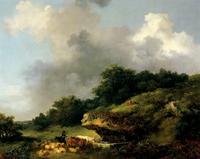
The Watering Place
Jean-Honore Fragonard
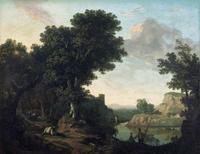
A Classical Landscape
Thomas Jones
Italianate riverscape with figures in a boat and cows in the foreground
Thomas Barker of Bath
The Vale of Dedham
John Constable
Landscape with House
David Johnson
A River Landscape Flanked by Trees
George Lambert
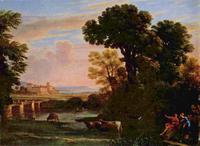
Pastoral Landscape
Claude Lorrain
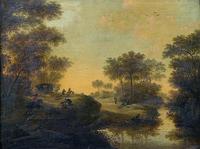
Cavaliers et carrosse le long d’une rivière Panneau de chêne, deux planches, non parqueté
Jan Hackaert