Analisi esperta di À l’Aube di Charles Hermans
Stile: Realism · Genere: genre painting
Expert Analysis of "À l’Aube" by Charles Hermans
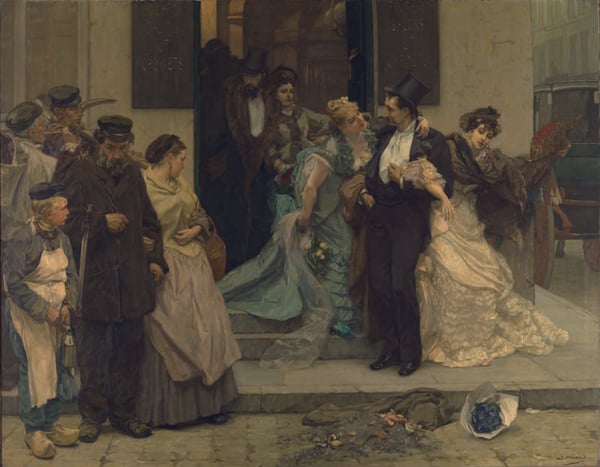
In Charles Hermans’ “À l’Aube” (At Dawn), the artist delivers a powerful example of 19th-century Realism through the lens of genre painting. The work is significant for its unflinching observation of everyday life, a core tenet of the Realist movement. The title suggests a specific, transitional moment—the break of day—which Hermans uses not for romantic effect, but to ground the scene in the tangible, often harsh realities of ordinary existence.
As a genre painting, the work eschews historical or mythological grandeur, focusing instead on a common, perhaps overlooked subject. Hermans’ Realist approach likely employs meticulous detail and a subdued, naturalistic palette to capture the textures of light and atmosphere at dawn, while also inviting social commentary. The significance of “À l’Aube” lies in its quiet insistence that the dignity of daily life—especially among the working or lower classes—merits the seriousness of fine art. By framing this moment with the precision and empathy of Realism, Hermans elevates a simple, temporal occurrence into a timeless statement about human experience within its social and physical environment.
Genere
Stile
Visivamente simili
20 opere con composizione e palette affini
À l’Aube (detail)
Charles Hermans
Ribbons and Laces for Very Pretty Faces
Edmund Blair Leighton
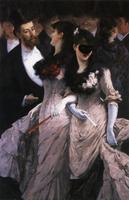
At the Masquerade (detail)
Charles Hermans
My Next Door Neighbour
Edmund Blair Leighton
The 70th birthday of Kommerzienrat Valentin Manheimer (1815-1889)
Anton von Werner
Dividend day at the bank of england
George Elgar Hicks
Vendor of Song Books
Vasily Perov
Before the race
Arthur David McCormick
An Afternoon Tea
Federico Andreotti
The Choice of Wedding Presents
Vladimir Makovsky
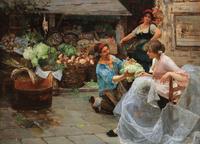
Courtship to the market
Alessandro Milesi
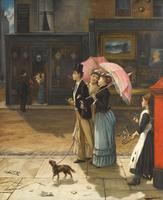
Our Good Natured Cousin
Augustus Edwin Mulready
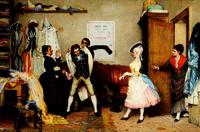
Dressing for the Masquerade
Eugene de Blaas
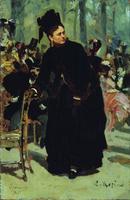
Woman (study)
Ilya Repin
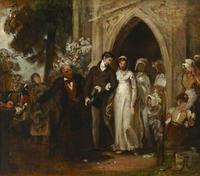
The Village Wedding, Watley Abbey
George Hemming Mason
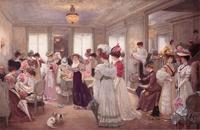
Five Hours at Paquin
Henri Gervex
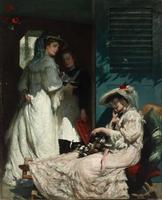
A summer morning
Rupert Bunny
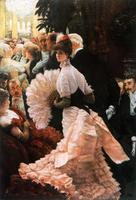
The Political Lady
James Tissot
Couple of ladies out for a walk
Umberto Veruda
Leaving the Conservatoire
Pierre-Auguste Renoir