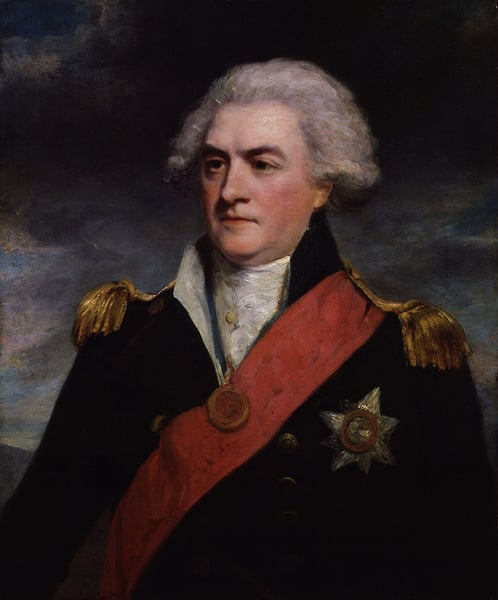
Expert analysis of John Hoppner’s Portrait of Adam Duncan, 1st Viscount Duncan
Style: Romanticism · Genre: portrait
This portrait of Admiral Adam Duncan by John Hoppner is a striking example of Romantic-era portraiture, where the sitter’s individual heroism and emotional gravitas take precedence over mere likeness. Painted shortly after Duncan’s decisive victory at the Battle of Camperdown (1797), the work transforms a military record into a study of determined, solitary leadership.
Hoppner, a leading British portraitist of the late 18th and early 19th centuries, here infuses his typically polished, flattering style with the Romantic emphasis on dramatic contrast and psychological depth. The admiral is depicted not in the heat of battle, but in a moment of intense, quiet resolution. His direct gaze and firm posture convey moral fortitude, while the stormy sky and churning sea in the background—hallmarks of Romantic landscape—serve as a symbolic extension of his character: turbulent, powerful, and containing nature’s elemental force.
The significance of this work lies in its seamless blend of official portraiture and Romantic sensibility. Rather than presenting Duncan as a detached aristocrat, Hoppner makes him a vessel for national pride and personal courage, reflecting the era’s fascination with the sublime and the heroic individual. The painting thus stands as both a historical record of a naval hero and a vivid embodiment of Romanticism’s core belief: that human will can conquer overwhelming odds.
Visually similar
20 works with related composition and palette
Portrait of General adjutant Count Pyotr Tolstoy
Vladimir Borovikovsky
Portrait of George John Spencer, 2nd Earl Spencer
John Singleton Copley
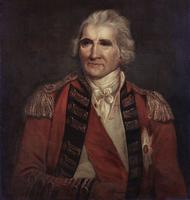
Sir Ralph Abercromby
John Hoppner
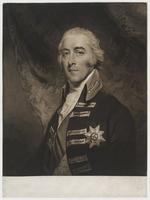
John Pitt, 2nd Earl of Chatham
Charles Turner
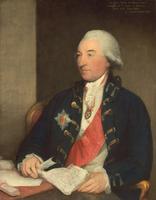
Sir John Dick
Gilbert Stuart
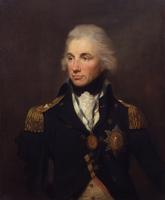
Horatio Nelson
Lemuel Francis Abbott
An Unknown British Officer
John Hoppner
Captain Arthur Forbes of Culloden (1760–1803)
George Romney
Paul I
Vladimir Borovikovsky
Vice-Admiral Sir Richard Goodwin Keats (1757–1834)
John Jackson
Portrait of Grand Duke Konstantin Pavlovich
Vladimir Borovikovsky
Sir Edward Pellew, Lord Exmouth
Thomas Lawrence
Melgunov, Alexei Petrovich, Governor-General Yaroslavl and Vologda
Dmitry Levitzky
Portrait of Don Luis De Borbon Infante of Spain
Anton Raphael Mengs
Portrait of Filip Nereusz Raczyński
Pompeo Batoni
Captain William Bentinck (1764–1813)
George Romney
Horatio Gates
Gilbert Stuart
Emperor Joseph II of Austria
Joseph Kreutzinger
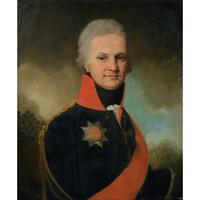
Portrait of Khristofor von Benckendorff
Vladimir Borovikovsky
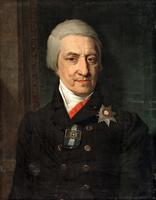
Portrait of Koshelev
Vladimir Borovikovsky