Analisi esperta di Désert di Charles Lapicque
Stile: Tachisme · Genere: abstract
Expert Analysis of "Désert" by Charles Lapicque
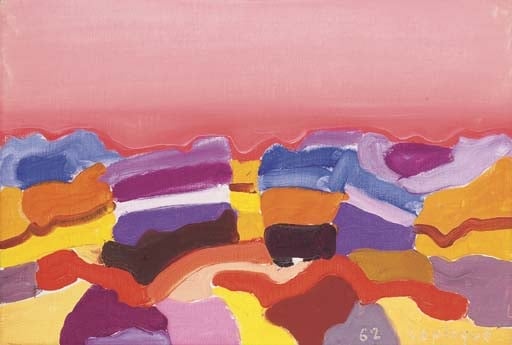
As a work within the Tachisme movement, Charles Lapicque’s "Désert" exemplifies the core values of this post-war French abstract style: spontaneity, gestural freedom, and the primacy of color. The painting’s abstract genre means it deliberately avoids recognizable forms, instead using patches, blots, and irregular strokes of pigment to evoke an emotional or atmospheric response—much like the shifting, unbounded character of a desert landscape.
Significantly, Lapicque’s approach in "Désert" stands apart from the geometric abstraction or pure formalism of other mid-century movements. Here, the Tachiste technique emphasizes the physical act of painting itself: the artist’s hand, the flow of paint, and the interplay of unblended hues create a sense of rhythmic energy and organic emergence. The title suggests an open, arid expanse, yet the abstraction pushes beyond literal representation, inviting the viewer to experience space and light through color alone. Lapicque’s work is notable for its lyrical, almost musical quality, and "Désert" captures that fusion of emotional intensity and material immediacy—a hallmark of Tachisme’s contribution to European abstraction.
Visivamente simili
20 opere con composizione e palette affini
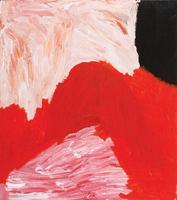
Dibirdibi Country
Sally Gabori
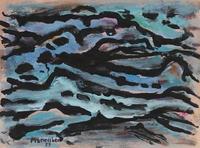
Composition
Alfred Manessier
Dibirdibi Country
Sally Gabori
Figure sleeping
Harriet Korman
Untitled #17
Etel Adnan
Dibirdibi Country
Sally Gabori
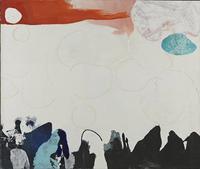
Brandon
James Brooks
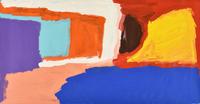
My Father's Country (Thundi / Big River)
Sally Gabori
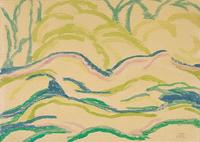
Landscape
Janos Mattis-Teutsch
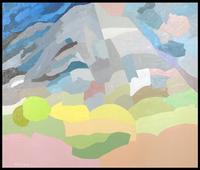
Mount Tamalpais
Etel Adnan
Leveling
Helen Frankenthaler
Dibirdibi Country
Sally Gabori
Current
Friedel Dzubas
Skywriting
Helen Frankenthaler
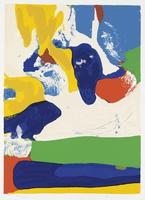
Concord
James Brooks
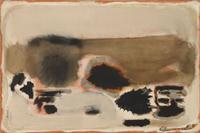
No.5/No.24
Mark Rothko
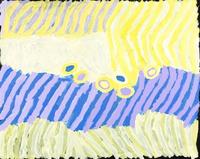
Women's Cermony
Makinti Napanangka
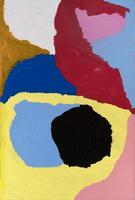
Hunting Ground – My Father's Country
Sally Gabori
Catalan Via Paris
Ronnie Landfield
Untitled
Guido Molinari