
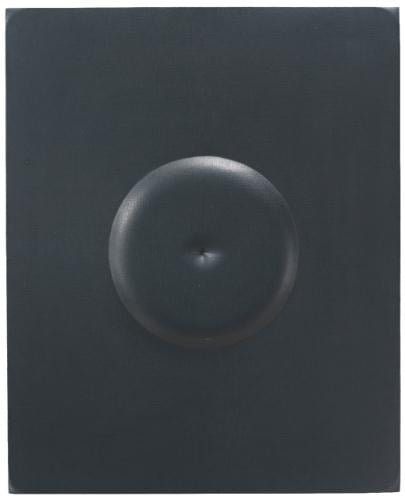
Expert analysis of Agostino Bonalumi’s Grigio
Style: Spatialism · Genre: abstract
Analysis of "Grigio" by Agostino Bonalumi
Within the framework of Spatialism—an Italian avant-garde movement that sought to integrate space, light, and movement into art—Agostino Bonalumi’s "Grigio" (Gray) stands as a seminal example of his revolutionary "extroflexion" technique. Unlike traditional abstract painting that relies on color and composition on a flat surface, Bonalumi physically manipulated the canvas from behind, creating protruding volumes and deep recessions. The monochromatic gray surface is not a mere color choice but a deliberate strategy: by eliminating chromatic distraction, the work forces the viewer to focus purely on the interplay of light, shadow, and three-dimensional relief. This spatial tension—where the canvas seems to breathe and push outward—challenges the boundary between painting and sculpture, making "Grigio" a defining piece within Spatialism. Its significance lies in how it transforms the picture plane into an active, physical event, embodying the movement’s core ambition to transcend the limits of traditional easel painting and engage directly with real space.
Visually similar
20 works with related composition and palette

Work No. 264 (Two protrusions from a wall)
Martin Creed
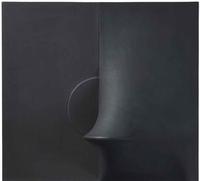
Nero
Agostino Bonalumi
Object - D N° 15
Matsutani
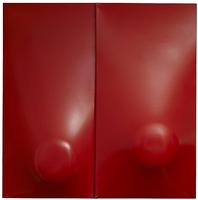
Rosso
Agostino Bonalumi
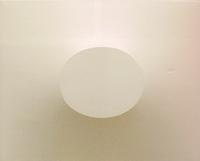
Superficie bianca con ovale in positivo
Turi Simeti
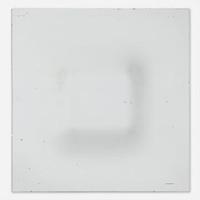
Untitled
Victor Bonato
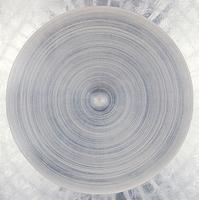
B 106
Tadasky
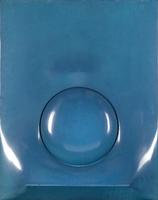
Untitled
Agostino Bonalumi
The Negative Way #4
Paul Brach
Geteilte Konvexstörung
Victor Bonato
The Negative Way #3
Paul Brach
Un ovale nero
Turi Simeti
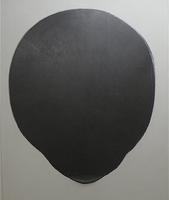
Cercle 99-7-18
Matsutani
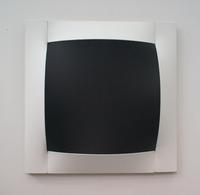
Closing the Gap IV (black)
Jan Maarten Voskuil
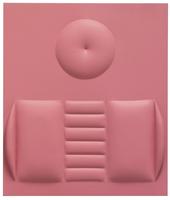
Rosa
Agostino Bonalumi
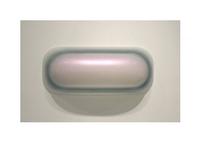
Untitled (Pink Bubble)
Craig Kauffman
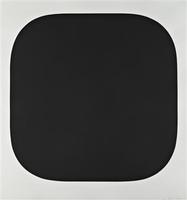
Black Variation IV, from Second Curve series
Ellsworth Kelly
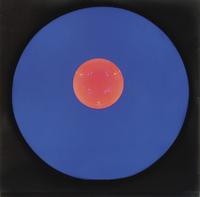
Espaces chromatiques complémentaires
Gregorio Vardanega
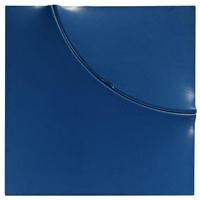
Blu
Agostino Bonalumi
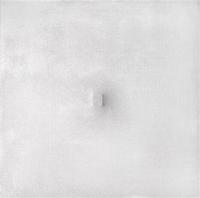
Un quadrato bianco
Turi Simeti