Seraphine Louis sanatçısının Feuilles eseri hakkında uzman analizi
Tarz: Naïve Art (Primitivism) · Tür: flower painting
Expert Analysis of Feuilles by Séraphine Louis
Séraphine Louis (1864–1942), a self-taught French painter and domestic worker, is one of the most compelling figures in Naïve Art (often categorized under Primitivism). Her work, including Feuilles (French for “Leaves”), exemplifies the raw, untutored vision that defines the movement—art made outside academic conventions, driven by inner necessity rather than formal technique.
Significance within Naïve Art
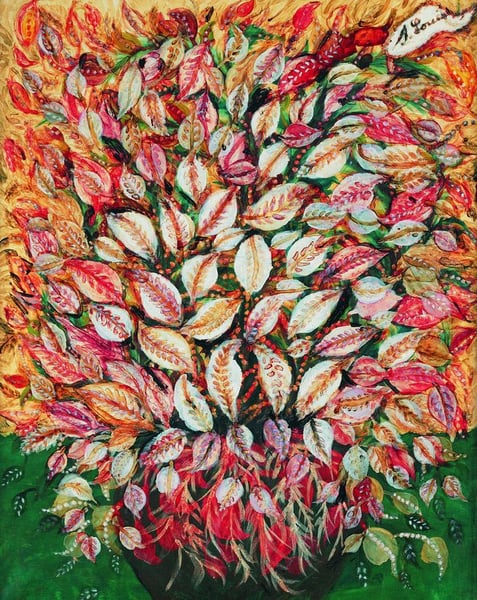
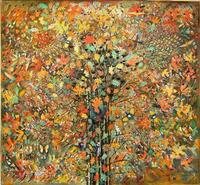
Feuilles captures Séraphine’s hallmark approach: an obsessive, rhythmic layering of paint that transforms simple botanical motifs into hallucinatory, almost supernatural forms. Unlike the polite flower studies of trained still-life painters, Séraphine’s flowers and leaves pulsate with an ecstatic, visionary energy. She claimed she painted under divine guidance, and her compositions often feel like sacred, trembling altarpieces to nature. In Feuilles, the leaves are not rendered with botanical accuracy but become swirling, jewel-like patterns—each vein and edge built up with impasto to create a tactile, glowing surface.
Technical and Stylistic Innovation
Working in obscurity and poverty, Séraphine developed her own materials: she mixed house paint with oils, used her fingers and palette knives, and devised colors from local pigments. Feuilles likely exhibits her signature use of vivid, clashing hues—cobalt blues, vermilions, emerald greens, and golden yellows—applied with a fervent, repetitive motion. This technique gives the painting a dense, almost encrusted texture, reminiscent of stained glass or mosaic. The lack of perspective or shading is not a flaw but a deliberate flattening that forces the eye to dwell on the intricate surface patterns, evoking a state of mystical absorption.
Symbolic and Emotional Resonance
For Séraphine, leaves were not mere foliage but living emblems of creation and fecundity. In Feuilles, the leaves seem to writhe, unfurl, and multiply, filling the canvas edge to edge—a microcosm of her obsessive worldview. This abundance reflects her deep connection to the natural world, which she saw as a direct revelation of the divine. The painting’s significance also lies in its defiance of biography: created by a woman with no formal artistic education, working by candlelight after long days of domestic labor, Feuilles stands as a testament to the power of untaught genius and the sublimity of the ordinary.
Legacy
Séraphine Louis was “discovered” by the German collector and critic Wilhelm Uhde in 1912, who recognized her as a major Naïve artist alongside Henri Rousseau. Feuilles belongs to the period of her most intense productivity (1910s–1920s), before her later mental decline. Today, her work is celebrated for its unique fusion of folk art, visionary mysticism, and proto-Expressionist intensity. Feuilles remains a key example of how Naïve Art can achieve profound emotional depth through what appears, at first glance, to be childlike simplicity.
Görsel olarak benzer
İlişkili kompozisyon ve renk paletine sahip 20 eser
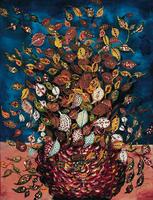
Le Bouquet de Feuilles
Seraphine Louis
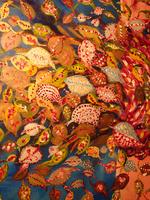
Untitled
Seraphine Louis
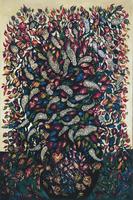
Fleurs et fruits
Seraphine Louis
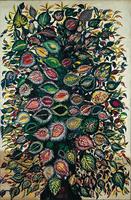
Feuilles
Seraphine Louis
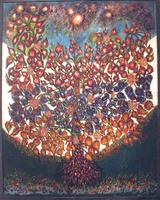
Untitled
Seraphine Louis
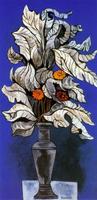
Flores secas
Oswaldo Guayasamin
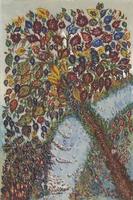
Tree or Paradise
Seraphine Louis
Ivy and Roses
Mihnea Cernat
Flower Vase
Rene Portocarrero
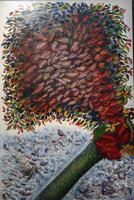
Untitled
Seraphine Louis
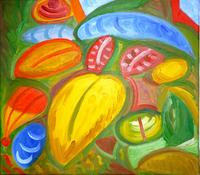
The Jungle
Mihnea Cernat
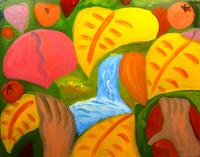
Sanctuary
Mihnea Cernat
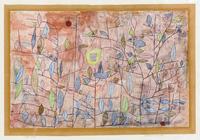
Sparse foliage
Paul Klee
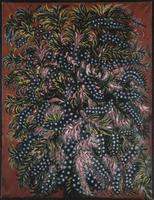
Untitled
Seraphine Louis
Rose Bush
Mihnea Cernat
Bouquet of flowers
Oleksandr Bogomazov
The Tree of Paradise
Seraphine Louis
Flowers
Maria Pia Solito Valerio (PiVal)
Untitled
Viorel Marginean
Green jug and bouquet
Martiros Sarian