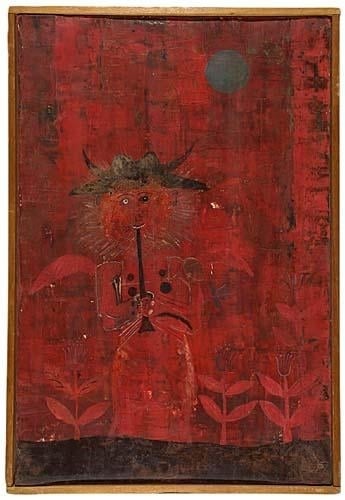
Analisi esperta di Angelo Cattivo Chesuona di Gustavo Foppiani
Stile: Surrealism · Genere: religious painting
Expert Art Historical Analysis: "Angelo Cattivo Chesuona" by Gustavo Foppiani
Gustavo Foppiani’s Angelo Cattivo Chesuona stands as a compelling, if lesser-known, example of Surrealist engagement with religious iconography. The work achieves significance by marrying two seemingly antithetical realms: the sacred tradition of religious painting and the subconscious, often irreverent language of Surrealism. The title itself—Italian for "Bad Angel Chesuona" (with "Chesuona" likely a invented or archaic term)—immediately signals a subversion of the classic angelic figure, a cornerstone of Christian art.
Within the Surrealist tradition, Foppiani employs the technique of dépaysement—the dislocation of familiar objects into strange contexts. By taking the genre of religious painting, which is typically bound by doctrinal symbolism and formal reverence, and reimagining it through a Surrealist lens, Foppiani creates a tension between the sacred and the profane, the divine and the irrational. The “bad angel” motif suggests a fall from grace, a demonic inversion, or a psychological archetype drawn from the artist’s own unconscious. This aligns with André Breton’s call for art that accesses the deeper workings of the mind, free from rational control.
The work’s significance lies in its quiet defiance: it does not merely illustrate a biblical story, but transforms the holy into a dream-like, possibly ominous encounter. In doing so, Angelo Cattivo Chesuona contributes to Surrealism’s broader project of questioning established moral and aesthetic hierarchies. It reminds us that even the most sacred imagery can be reclaimed by the subconscious, becoming a vehicle for anxiety, mystery, and transformation—hallmarks of the Surrealist vision.
Genere
Stile
Visivamente simili
20 opere con composizione e palette affini
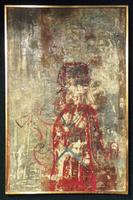
L'Angelo Cattivo Suona alla tua Sinistra
Gustavo Foppiani
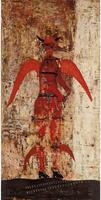
Angelo Catino in Divisa D'Uffiziale
Gustavo Foppiani
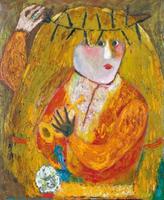
Anna Margit, Tövises Múzsa 1968
Anna Margit
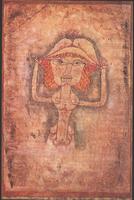
The singer L as Fioridigli
Paul Klee
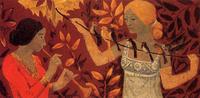
Scene
Paul Serusier
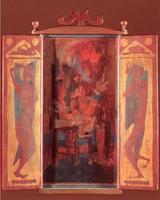
Kondor Béla, Szárnyas Oltár
Kondor Béla
Benefico influsso, degli astri sulla citta
Gustavo Foppiani
Kondor Béla, Itélkező
Kondor Béla
Untitled Man with Hat and Horn
Gustavo Foppiani
Astrolabe
Oleh Denysenko
O Ye, All Ye That Walk in Willowood
Margaret Macdonald
Anna Margit, Önarckép Angyallal 1970
Anna Margit
Kondor Béla, Várvédők
Kondor Béla
Anna Margit, Hölgy Virág Koszoruval
Anna Margit
56 At Jennie Richee. Vivian Girls caught in insane fury of crazy...
Henry Darger
Antigrazioso
Carlo Carra
Graphic with Cocoa
Dieter Roth
Consciousness of Shock
Victor Brauner
Study for a wall-hanging with a theme from Elytis’s poem Axion Esti
Yiannis Tsaroychis
Heaven Choir, or A Word Dropped from a Song Makes It All Wrong
Valeria Trubina