Analisi esperta di Toilette du matin (Mary Warner) di Heinrich Kuhn
Stile: Pictorialism · Genere: photo
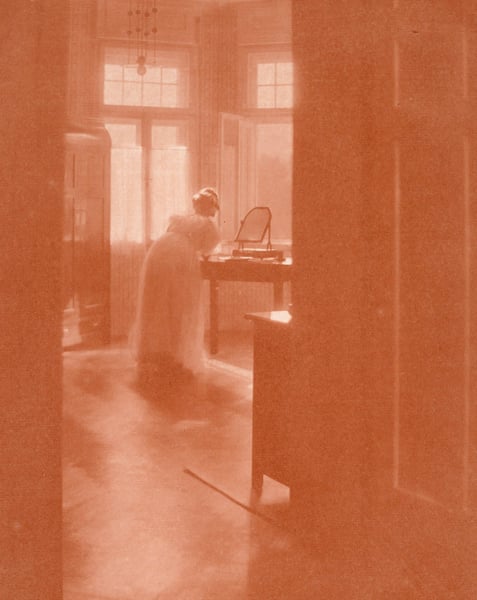
Expert Analysis: "Toilette du matin (Mary Warner)" by Heinrich Kuhn
- Artwork: Toilette du matin (Mary Warner)
- Style: Pictorialism
- Genre: Photograph
Significance within Pictorialism and Art History
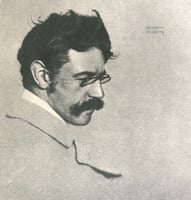
Heinrich Kuhn’s Toilette du matin (Mary Warner) stands as a quintessential example of Pictorialism, the international movement that sought to elevate photography to the status of fine art through deliberate, painterly manipulation. Kuhn, a leading figure of the Vienna Camera Club and a close associate of Alfred Stieglitz and the Photo-Secession, was renowned for his technical mastery of gum-bichromate and other alternative processes. In this work, he transforms a private, domestic moment—a woman at her morning toilette—into a luminous, atmospheric tableau.
Key aspects that define its significance:
-
Painterly Aesthetics: The image’s soft focus, subtle tonal gradations, and muted palette mimic the effects of Impressionist or Symbolist painting. Kuhn deliberately suppresses photographic clarity to emphasize mood and lyricism over documentary precision. The composition, with its diagonal mirror and figure in profile, recalls Degas’ intimate bathing scenes, bridging photography and painting.
-
Process as Artistic Statement: Kuhn’s use of gum-bichromate allowed him to layer pigments and control texture, literally brushing light and color onto the print. This handcrafted approach challenged the notion of photography as mere mechanical reproduction. Each print became a unique art object, reinforcing the Pictorialist belief that the artist’s hand and vision are paramount.
-
Intimate Subject, Universal Theme: The title Toilette du matin (Morning Toilet) situates the work within a long tradition of private, feminine rituals. Yet Kuhn never descends into voyeurism; instead, the soft, ambient light and reflective surfaces (mirror, basin, window) create a meditative, almost sacred atmosphere. Mary Warner, Kuhn’s frequent model (and his sister-in-law), appears both present and ethereal—a muse suspended in quiet contemplation.
-
Context of Pictorialist Innovation: In the early 1900s, Kuhn’s work was exhibited internationally, including at the influential 1902 “New School of American Photography” in London and the 1904 Photo-Secession shows. Toilette du matin exemplifies the movement’s pinnacle: a fusion of technical experimentation, emotional resonance, and a deliberate rupture from commercial or snapshot photography.
Conclusion: This photograph is significant not only for its exquisite execution but for how it encapsulates Pictorialism’s core ambition—to prove photography could be as expressive and transcendent as painting. Kuhn’s mastery of light, texture, and atmosphere in Toilette du matin elevates a simple morning routine into a timeless meditation on beauty and transience.
Genere
Stile
Visivamente simili
20 opere con composizione e palette affini
Mary Warner à contre-jour
Heinrich Kuhn
Untitled
Lewis Carroll
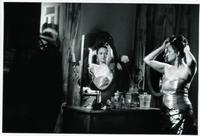
Phantom Lady Or Kismet
Pushpamala N
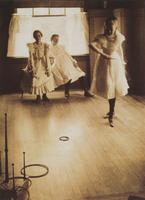
The Ring Toss
Clarence White
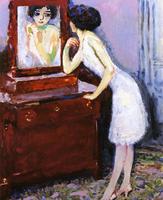
Woman before a mirror
Kees van Dongen
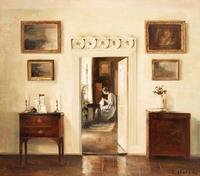
Woman Sewing
Carl Holsøe
Jane and Mary Elizabeth Wilson
Clarence White
Interior with a Lady and a Cat
Carl Holsøe
The Kiss
Clarence White
Preparing for sunday
William Henry Hunt
Blessed Art Thou among Women
Gertrude Kasebier
Interior from Strandgade with Sunlight on the Floor
Vilhelm Hammershoi
Peacock Feather
Clarence White
Woman in an Interior with a Mirror
Carl Holsøe
Photograph
Thomas Eakins
Interior, Vestibule by Lamplight
Felix Vallotton
Blindman's Buff
Clarence White
Working Life
Alfredo Andersen
Tata and Katia in the mirror
Zinaida Serebriakova
Lesende
Carl Henrik Nordenberg