Analisi esperta di January di Theodor Severin Kittelsen
Stile: Neo-Romanticism · Genere: illustration
Expert Analysis of "January" by Theodor Severin Kittelsen
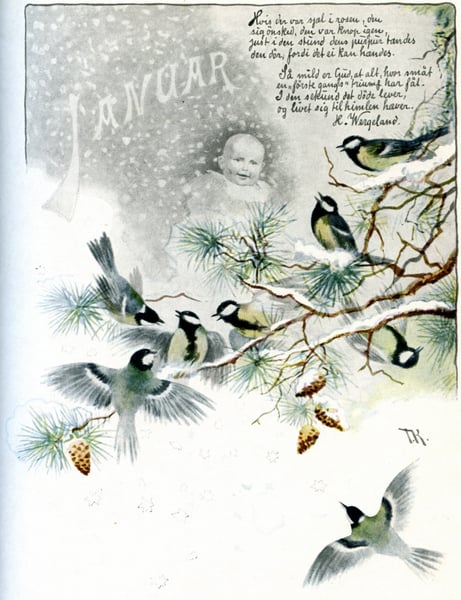
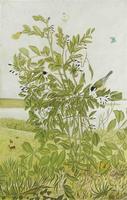
As a Neo-Romantic illustration, Theodor Severin Kittelsen’s “January” exemplifies the movement’s core ambition: to infuse the natural world with emotional and mythic resonance. Created at the height of Scandinavia’s national romantic revival, this work transforms a simple calendar month into a haunting, narrative scene that bridges folklore and landscape.
Significance within Neo-Romanticism
Kittelsen stands apart from mainstream Romanticism by rejecting grand, heroic landscapes in favor of intimate, eerie encounters with nature. “January” likely portrays the month as a brooding, personified force—perhaps a wandering figure or a frost-enshrouded spirit—set against a stark, snow-blanketed wilderness. This aligns with Neo-Romanticism’s retreat from industrialization and its embrace of the supernatural as a way to reclaim ancient, pagan ties to the land. The illustration genre here is not mere decoration; it is a vehicle for storytelling, where every gnarled tree and shadowed path hints at Nordland’s rich oral traditions.
Kittelsen’s Distinctive Voice
Unlike his contemporary, Edvard Munch, whose Neo-Romantic works often scream with psychological angst, Kittelsen’s “January” whispers. His significance lies in how he naturalizes the supernatural: the month is not a monster but a quiet, inevitable presence—like the cold itself. The composition likely uses negative space and muted tonal contrasts (white snow against dark silhouettes) to evoke both the silence of deep winter and the expectancy of folk tales. This balance of the uncanny and the ordinary became a hallmark of Norwegian Neo-Romantic illustration, influencing subsequent artists who sought to depict the country’s natural world as a living, sentient character.
Legacy and Interpretation
In “January,” Kittelsen achieves what Neo-Romanticism demanded: a synthesis of national identity, emotional depth, and accessible imagery. The work invites viewers to see winter not merely as a season but as a narrative threshold—a time when the boundary between the human and the elemental dissolves. Its significance endures because it captures a specifically Nordic melancholy that transforms a simple calendar illustration into a timeless meditation on nature’s enduring, and often unsettling, power.
Visivamente simili
20 opere con composizione e palette affini
Birds of the Seasons - Spring
Toshi Yoshida
Blue tit on a brach of a larch
Adolf Dietrich
Giant Tit on Snowy Branch
Ohara Koson
Tits on Maple
Ohara Koson
Blue Tit
Richard Spare

Tales from the Loop
Simon Stalenhag
Plate 39. Crested Titmouse
John James Audubon
Plate 50. Black & Yellow Warbler
John James Audubon
Bird with Sunflower
Emma Odette
Plate 90 Black & White Creeper
John James Audubon
Boy with the Birdie
Fedir Krychevsky
Songbird on plum blossom
Ohara Koson
Bluetits On A Teasel
Archibald Thorburn
Plate 155 Black-throated Blue Warbler
John James Audubon
Birds on Riser
Adolf Dietrich
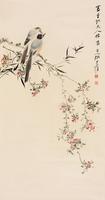
Untitled
Chang Dai-chien
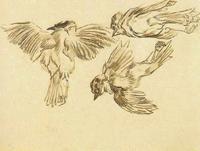
Studies of a Dead Sparrow
Vincent van Gogh
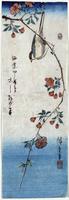
Small Bird on a Branch of Kaidozakura
Hiroshige
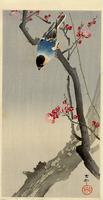
Bullfinch on Flowering Plum
Ohara Koson
Sojabohnen
Adolf Dietrich