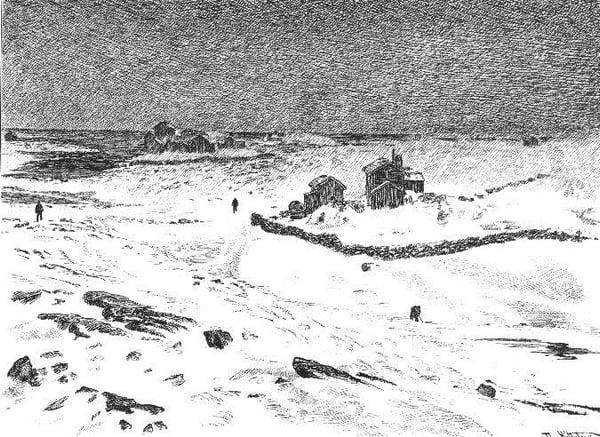
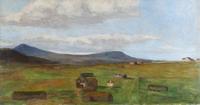
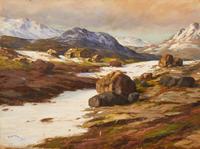
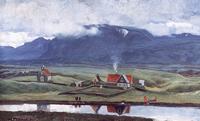
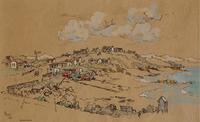
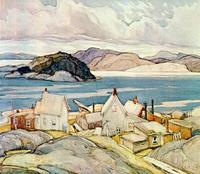
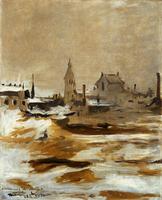
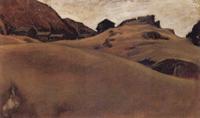
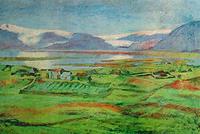
Theodor Severin Kittelsen’s At the island Røst is a quintessential Neo-Romantic landscape that captures the movement’s core emphasis on emotional resonance, sublime nature, and national identity. The painting’s significance lies in how it transforms a remote Norwegian island into a stage for introspection and awe. Kittelsen eschews idealized, pastoral vistas in favor of a stark, untamed coastal scene—jagged rocks, a vast, restless sea, and a brooding sky—that evokes both the grandeur and the solitude of the North. This aligns with Neo-Romanticism’s reaction against industrialization and realism, seeking instead a spiritual connection to the land. The work also subtly incorporates elements of folklore and national romanticism, as Røst itself is steeped in Nordic legend; Kittelsen’s rendering of the island as a mysterious, almost sentient place reinforces the period’s fascination with the wild as a repository of cultural memory and primal emotion. Through its atmospheric tension and raw, elemental beauty, At the island Røst stands as a key example of how Neo-Romantic landscape painters used Norway’s rugged peripheries to explore deeper themes of belonging, myth, and the sublime.