Expertenanalyse zu Theodor Severin Kittelsens Helje
Stil: Neo-Romanticism · Genre: sketch and study
Expert Analysis of "Helje" by Theodor Severin Kittelsen
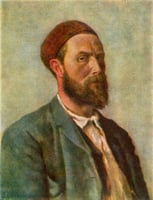
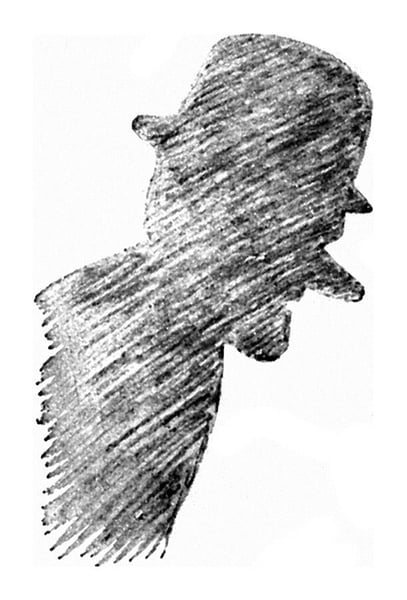
Theodor Severin Kittelsen’s Helje is a compelling example of Neo-Romanticism, a late-19th-century movement that revived Romantic ideals of emotion, nature, and national identity, often filtered through a moody, symbolist lens. As a sketch and study, this work reveals the artist’s raw, intuitive process—a hallmark of the period’s emphasis on personal expression over polished finish.
Significance within Neo-Romanticism and Kittelsen’s Oeuvre
-
Subject and Mythology – Helje (a variant of Hel, the Norse goddess of the underworld) taps directly into Norwegian folklore and ancient Norse mythology. This was a central theme for Kittelsen and other Neo-Romantic artists, who sought to forge a national artistic identity by reviving indigenous myths, legends, and landscapes. Here, the sketchy, almost spectral handling of the figure evokes the ambiguous boundary between life and death, a core Neo-Romantic preoccupation with the sublime and the supernatural.
-
Emotional Intensity and Atmosphere – The sketch format amplifies the moody, dreamlike quality typical of Neo-Romanticism. Loose, expressive lines and minimal shading suggest a fleeting vision or a memory of a ghostly presence. This aligns with the movement’s rejection of academic rigidity, favoring instead the artist’s immediate emotional response to nature and folklore.
-
Genre as Statement – By presenting Helje as a sketch and study, Kittelsen elevates the preparatory drawing to a finished aesthetic statement. In Neo-Romanticism, such works were prized for their authenticity and directness—they captured the artist’s first, most unguarded encounter with the subject. This approach contrasts with the more polished, idealized treatments of mythology in earlier Romanticism.
-
National Romantic Context – Kittelsen is best known for illustrating Norwegian fairy tales and trolls, but Helje shows a darker, more existential side of his oeuvre. The figure’s wraithlike form against a vague, dark background reflects the harsh, misty landscapes of Norway, where nature itself seems haunted. This fusion of place and myth made Kittelsen a key figure in the Neo-Romantic vein of National Romanticism, which aimed to define a unique Nordic cultural psyche.
In sum, Helje is significant as a distilled expression of Neo-Romantic ideals: a mythic subject rendered with evocative, unfinished immediacy, grounding supernatural folklore in a distinctly Norwegian landscape of the mind. It demonstrates how a sketch could carry the full weight of a movement’s spiritual and national aspirations.
Visuell ähnlich
20 Werke mit ähnlicher Komposition und Farbpalette
Head of a Man with Hat
Vincent van Gogh
Portrait of Jean Moréas
Felix Vallotton
Two Gentlemen
Ludwig Bemelmans
Portrait of Charles Baudelaire with tuba
Edouard Manet
Muž v klobouku
Josef Capek
Fausto
Eduardo Arroyo
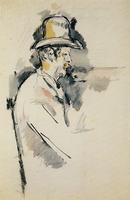
Man with a Pipe
Paul Cezanne
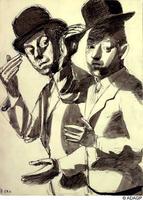
Double self-portrait in a bowler hat
Jean Dubuffet
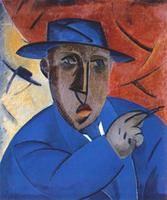
Portrait of the artist
Vladimir Tatlin
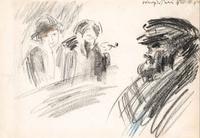
Vaszary János, Bárban 1925
Vaszary János
Antes
Pablo Picasso
Händler
Werner Berg
Old man by the Window
Morteza Katouzian
Orphan Man with Top Hat, Head
Vincent van Gogh
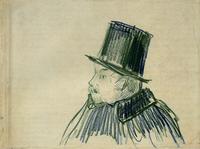
Head of a Man with a Top Hat
Vincent van Gogh
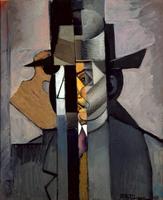
Portrait of Albert Gleizes
Jean Metzinger
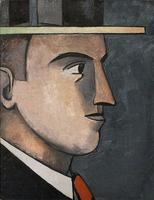
Etude
Jean Helion
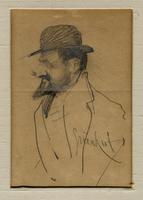
Portrait of a man
Isidoro Grünhut
Man with a Cat and Woman with a Child
Marc Chagall
Spieler
Werner Berg