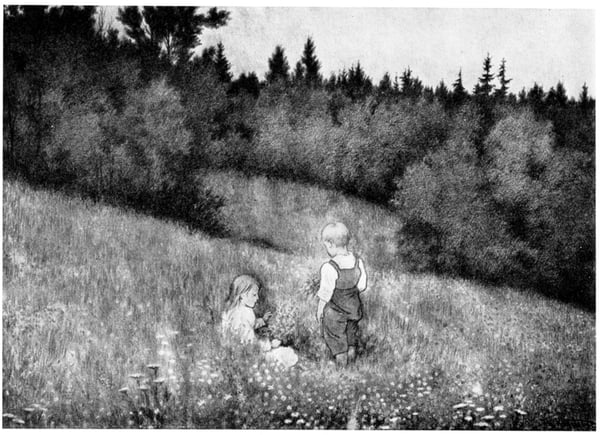
Based solely on the provided structured facts, the significance of Theodor Severin Kittelsen's Roser Og Fioler lies in its embodiment of Neo-Romantic ideals within the framework of genre painting. As a Neo-Romantic work, it likely emphasizes subjective emotion, nostalgia, and a deep connection to nature—qualities that opposed the rationalism of earlier realism. The choice of a genre subject (everyday life or floral motifs) aligns with the movement’s interest in finding profound meaning in the ordinary, elevating simple scenes to vehicles for mood and symbolism. Within Kittelsen’s oeuvre, famous for his fairy-tale and folkloric themes, this painting represents a quieter, more lyrical aspect of Neo-Romanticism, focusing on intimate beauty rather than dramatic narrative. Its importance is thus in demonstrating how a genre painting can distill the emotional and spiritual yearnings of its period through modest, natural subjects.