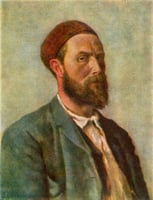
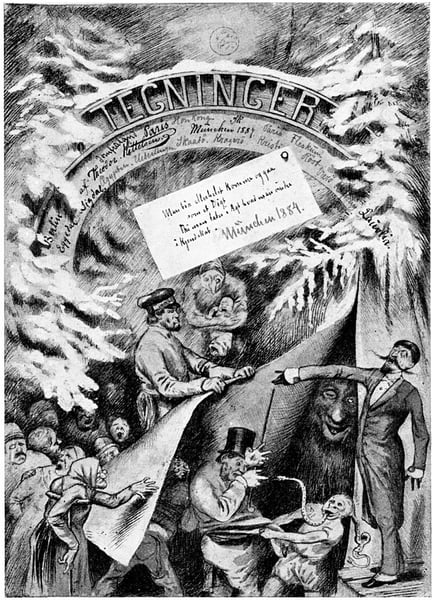
Teppet Gaar Op
Expertenanalyse zu Theodor Severin Kittelsens Teppet Gaar Op
Stil: Neo-Romanticism · Genre: mythological painting
Analysis of "Teppet Gaar Op" (The Curtain Rises) by Theodor Severin Kittelsen
In this mythological painting, Kittelsen harnesses the core tenets of Neo-Romanticism—a fin-de-siècle revival of emotion, mysticism, and national folklore—to conjure a threshold between the mundane and the magical. The title itself, "The Curtain Rises," suggests a theatrical unveiling, a moment when hidden forces of nature or ancient myth step into view.
Kittelsen, best known for illustrating Norwegian fairy tales and the eerie creatures of the Scandinavian wilderness, here transforms the landscape into a living stage. The composition likely frames a dramatic encounter between human figures and supernatural beings—trolls, spirits, or personified elements—rendered with the soft, atmospheric light characteristic of Neo-Romantic painting. This softness blurs the boundary between reality and dream, inviting the viewer into a narrative charged with folkloric weight.
The painting’s significance lies in its embodiment of national romanticism: at a time when Norway was forging its cultural identity apart from Denmark and Sweden, artists like Kittelsen mined local legends to assert a distinct, soulful heritage. "Teppet Gaar Op" does not merely illustrate a story; it enacts the very act of myth-making, suggesting that the wilderness is alive with ancestors, warnings, and wonders. The work stands as a visual manifesto of Neo-Romanticism’s return to awe, reminding us that the most profound truths often hide just behind the curtain of the ordinary.
Stil
Visuell ähnlich
20 Werke mit ähnlicher Komposition und Farbpalette
Comme En Quatre-Vingt Treize
Theophile Steinlen
L'Ennemi du Peuple
Theophile Steinlen
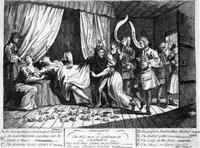
Mary Toft, apparently giving birth to rabbits
William Hogarth
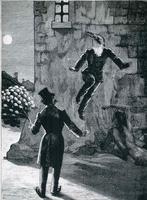
Illustration to "A Week of Kindness"
Max Ernst
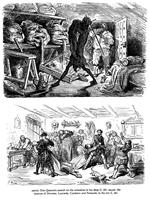
Don Quixote
Gustave Dore
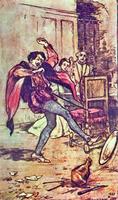
Petruchio, pretending to find Fault with every Dish, threw the Meat about the Floor
Arthur Rackham
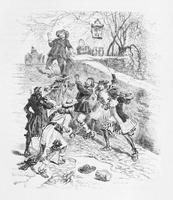
Illustration of Victor Hugo's Novel the Man Who Laughs
Georges Rochegrosse
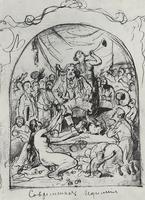
Modern Idyll
Vasily Perov
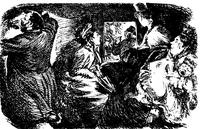
TOUT VIENT À QUI SAIT ATTENDRE
John Leech
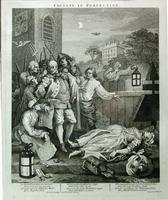
Cruelty in perfection
William Hogarth
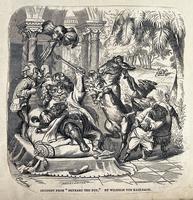
The Lion Dressed as King is Presented with a Bouquet of This
Wilhelm von Kaulbach
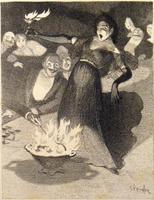
Chanson a Boire
Theophile Steinlen
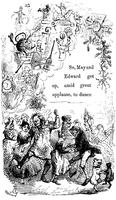
The Dance
John Leech
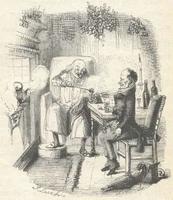
Scrooge and Bob Cratchit
John Leech
A Lesson in Discretion
Cassius Marcellus Coolidge
Art and Artists of Our Time
William Holbrook Beard
Journey to the Center of the Earth
Edouard Riou
A NON-SEQUITUR
John Leech
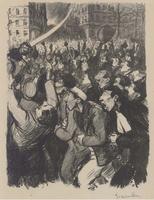
Les Moutons de Boisdeffre
Theophile Steinlen
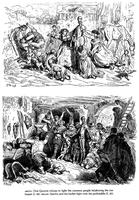
Don Quixote
Gustave Dore