
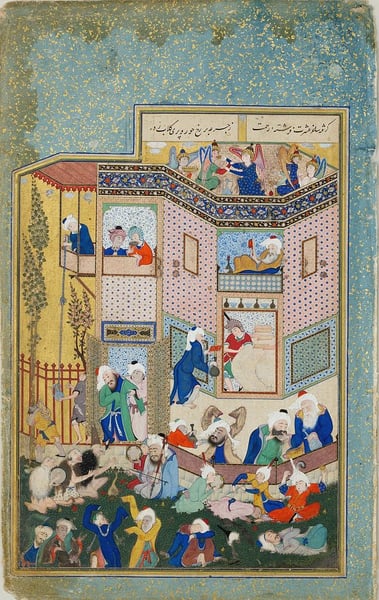
Analisi esperta di Allegory of Drunkenness di Sultan Muhammad
Stile: Safavid Period · Genere: miniature
Expert Analysis: Allegory of Drunkenness by Sultan Muhammad
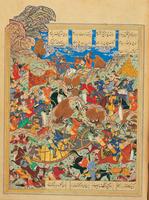
This work stands as a masterful example of Safavid miniature painting, a genre that flourished under the patronage of the Persian court in the 16th century. Sultan Muhammad, a leading figure of the Tabriz school, is renowned for his dynamic compositions and intense expressiveness, both of which are vividly present here.
Significance within Style and Period:
-
Innovation in Composition and Space: Unlike earlier, more static Persian miniatures, Sultan Muhammad employs a crowded, vertically layered scene that pushes figures to the foreground. The tilted perspective and overlapping forms create a sense of chaotic energy, perfectly mirroring the allegorical theme of drunkenness—both literal and spiritual (a common Sufi metaphor for divine ecstasy).
-
Expressive Use of Color: The palette is characteristically rich—deep lapis blues, vibrant vermilions, and gold leaf—but applied with unusual boldness. The figures’ flushed cheeks and bloodshot eyes, along with the swirling patterns of their garments, visually convey intoxication. This expressive colorism was a hallmark of Sultan Muhammad’s style and influenced later Safavid painters.
-
Narrative and Symbolism: The allegory combines earthly revelry with mystical symbolism. The central figure, often identified as a prince or mystic, is supported by attendants as he stumbles—a visual pun on “divine intoxication.” The inclusion of wine cups, musical instruments, and floral motifs (such as poppies) reinforces the theme. This duality—celebrating earthly pleasure while hinting at spiritual transcendence—was a sophisticated feature of Safavid courtly art.
-
Technical Virtuosity: The miniature demonstrates the extraordinary precision of Persian manuscript painting: fine brushwork delineates lace-like patterns on fabrics, intricate tilework, and individual strands of hair. Sultan Muhammad’s figures are known for their elongated proportions and animated postures, here pushed to the point of near-caricature, which adds humor and immediacy to the moral allegory.
-
Historical Context: Created during the reign of Shah Tahmasp I, a great patron of the arts, this work exemplifies the Safavid synthesis of Turkic, Persian, and Chinese artistic traditions. The scene’s energetic, almost restless quality prefigures the later Isfahan style’s more graceful elegance, making Allegory of Drunkenness a pivotal transitional piece.
In sum, this miniature is significant for its daring composition, emotional depth, and the way it uses courtly luxury to explore spiritual ideas—a defining achievement of Safavid miniature painting.
Genere
Stile
Visivamente simili
20 opere con composizione e palette affini
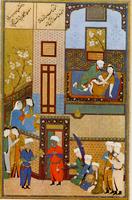
Mihr and Mushtari Marriage
Kamal ud-Din Behzad
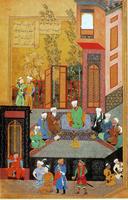
A miniature painting from the Iskandarnama
Kamal ud-Din Behzad
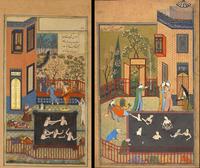
The Eavesdropper
Kamal ud-Din Behzad
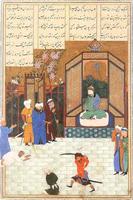
Beheading of a King
Kamal ud-Din Behzad
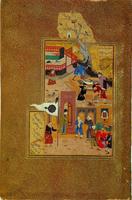
The funeral of the elderly Attar of Nishapur
Kamal ud-Din Behzad
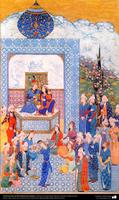
Celebration of Seven Domes
Hossein Behzad
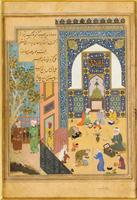
Sad'i and the Youth of Kashgar
Kamal ud-Din Behzad
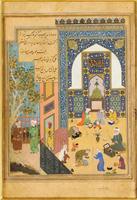
Sad'i and the Youth of Kashgar
Kamal ud-Din Behzad
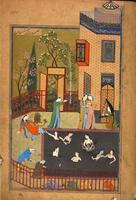
A miniature painting from the Iskandarnama
Kamal ud-Din Behzad
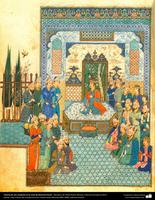
The Reception at the Court of Nasser Khosrow
Hossein Behzad
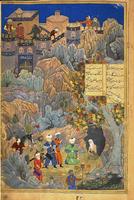
Iskandar, in the Likeness of Husayn Bayqara, Visiting the Wise Man in a Cave.
Kamal ud-Din Behzad
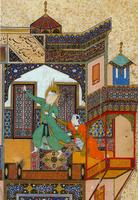
Yusef and Zuleykha (detail)
Kamal ud-Din Behzad
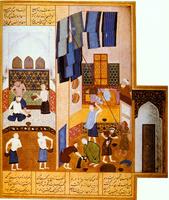
Bath House
Kamal ud-Din Behzad
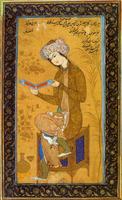
Youth reading
Reza Abbasi
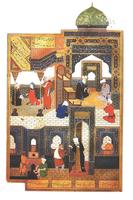
Behzad beggar at a mosque
Kamal ud-Din Behzad
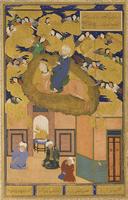
The Mi'raj, or, The Night Flight of Muhammad on his Steed Buraq- Folio from a Bustan of Sa'di
Sultan Muhammad
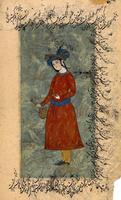
Young man with a bottle and a wine-cup
Reza Abbasi
The Anecdote of the Man Who Fell into the Water
Kamal ud-Din Behzad
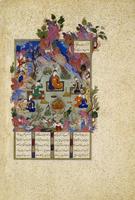
The Feast of Sada
Sultan Muhammad
Battleground of Timur and Egyptian King
Kamal ud-Din Behzad