Expert analysis of Gandy Brodie’s Self-Portrait
Style: Expressionism · Genre: self-portrait
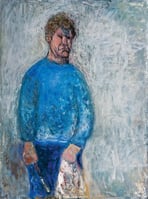
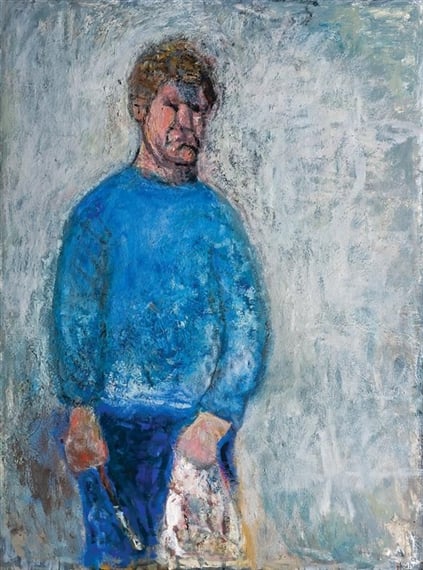
This self-portrait by Gandy Brodie exemplifies the core tenets of Expressionism: the prioritization of emotional and psychological truth over literal representation. As a self-portrait, the work becomes an intimate vehicle for exploring the artist’s inner state—likely conveying a sense of rawness, vulnerability, or existential anxiety characteristic of mid-20th-century American Expressionism. Its significance lies in how Brodie uses the genre to merge personal identity with a broader expressionist impulse, channeling subjective experience through distorted form, heightened color, or gestural brushwork (typical of the style). In the context of Expressionism, this piece stands as a testament to the movement’s belief that art should reveal the artist’s soul, making the self-portrait a particularly potent form of emotional documentation.
Genre
Style
Visually similar
20 works with related composition and palette
Figure in Green Room
Henry Villierme
Meisje
Constant Permeke
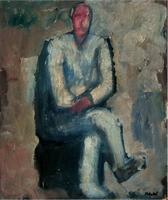
Man Sitting
Mario Sironi
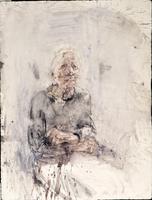
Tribute to France Hals
Chronis Botsoglou
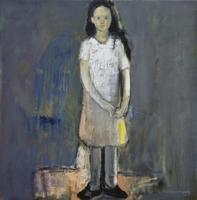
Untitled
Dilek Demirci
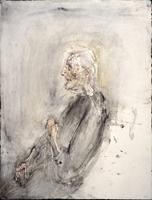
Tribute to Whistler
Chronis Botsoglou
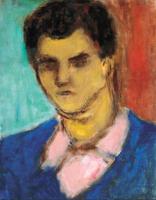
Young Man
Bela Czobel
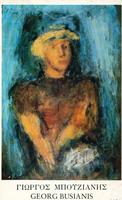
Portrait
George Bouzianis
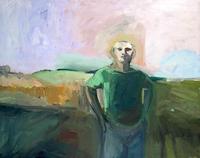
Man and Lavender Sky
Elmer Bischoff
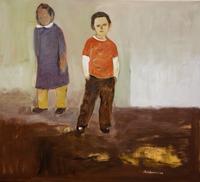
Untitled
Dilek Demirci
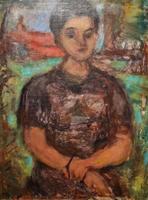
Annus
Bela Czobel
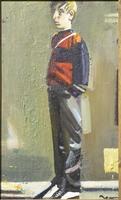
Little Bro
Oleg Holosiy
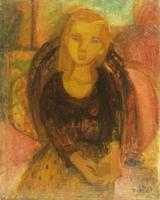
Modok Mária, Fekete Blúzos Nő
Modok Mária
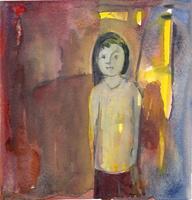
Untitled
Dilek Demirci
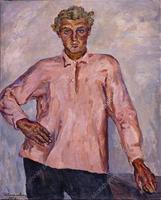
A young poser from the village Samokrazhi
Pyotr Konchalovsky
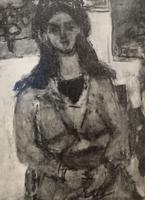
Bela Czobel, Young Girl
Bela Czobel
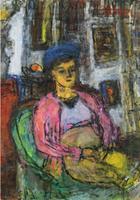
Bela Czobel, Girl in Green Armchair
Bela Czobel
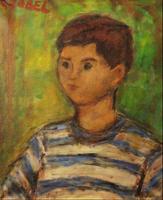
Czobel Béla Gyerek
Bela Czobel
Diego
Alberto Giacometti
Pihenő Akrobata
Bela Czobel