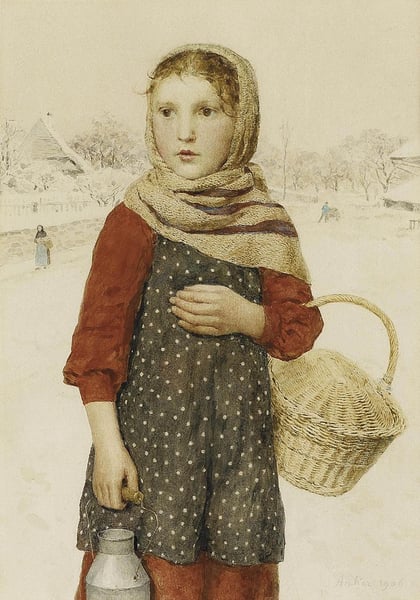
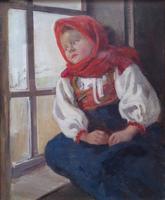
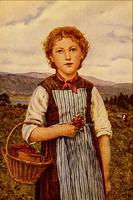
"Girl in winter landscape" by Albrecht Anker stands at a fascinating stylistic crossroads, blending the intimate domesticity of Biedermeier with the decorative elegance of Art Nouveau. This portrait achieves significance by grounding a modern, ornamental sensibility—seen in the rhythmic lines of the winter branches and the subtle stylization of the girl's silhouette—within the Biedermeier tradition of quiet, everyday realism. The winter landscape itself becomes a key element: it is not merely a backdrop but a space that evokes the Biedermeier value of serene, ordered nature while also allowing for Art Nouveau’s fluid, linear motifs in the interplay of snow-covered forms. Anker’s ability to merge these two sensibilities—the personal, unassuming portrayal of a girl (typical of Biedermeier portraiture) and a forward-looking, decorative treatment of the environment (hinting at Art Nouveau’s modernity)—makes this work a distinctive bridge between the 19th-century bourgeois interior and the dawn of a more stylized, organic aesthetic.