Analyse experte de Apfelernte de Cuno Amiet
Style : Expressionism, Fauvism · Genre : portrait
Expert Analysis of "Apfelernte" (Apple Harvest) by Cuno Amiet
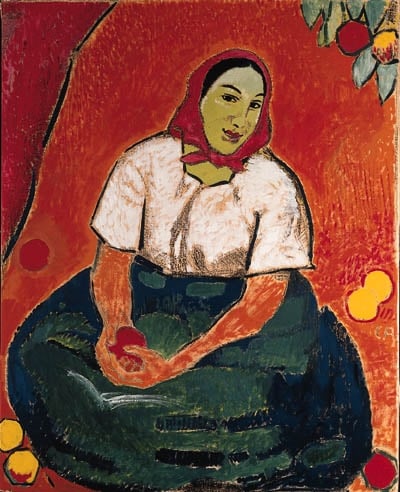
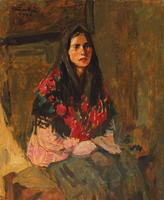
Cuno Amiet’s Apfelernte is a striking example of early 20th-century European modernism, blending the expressive intensity of German Expressionism with the chromatic boldness of French Fauvism. Although the title suggests a pastoral harvest scene, the work is classified as a portrait—a fact that underscores Amiet’s innovative approach to figuration: he treats the sitter not as a detached subject but as a vibrant, emotionally charged presence fused with the surrounding environment.
Significance within Expressionism and Fauvism
- Bold, anti-naturalistic color: Amiet employs the Fauvist palette of pure, unmixed hues—crimson, ochre, emerald, and deep blue—applied with vigorous, visible brushwork. The apple harvest setting becomes a symphony of color that transcends literal description, heightening the emotional resonance of the portrait.
- Simplification and distortion: The figure’s features are reduced to essential planes and expressive contours, typical of Expressionist flattening. This stylization removes anecdotal detail, focusing the viewer on the raw psychological presence of the harvester.
- Integration of figure and landscape: The sitter is not a separate entity set against a backdrop; rather, the apples, foliage, and sky seem to radiate from the figure’s own energy. This fusion reflects Amiet’s interest in the symbiotic relationship between humanity and nature, a theme central to his Swiss rural origins.
Historical and Art-Historical Importance
- Bridge between movements: As a Swiss artist, Amiet was among the first to translate the Fauvist principles he encountered in Paris (via Matisse) into a distinctly Northern Expressionist idiom. Apfelernte exemplifies this synthesis—it retains the decorative vitality of Fauvism while introducing the psychological urgency of early Expressionism.
- Pioneering Swiss modernism: Amiet co-founded the “Brücke” group’s Swiss counterpart and was instrumental in bringing avant-garde color and form to Swiss painting. This work demonstrates how he adapted international styles to local subject matter—here, the timeless labor of the apple harvest in a rural Alpine context.
- Portrait as emblem of modernity: By depicting an anonymous worker with such monumental, color-saturated presence, Amiet elevates everyday rural life to the status of modern art. The portrait genre becomes a vehicle for exploring universal human emotion through radical formal means.
In Apfelernte, Cuno Amiet achieves a remarkable balance: the painting is simultaneously a fervent homage to nature’s bounty and a psychologically charged portrait of the human spirit—anchored in Fauvist color theory and propelled by Expressionist feeling. It stands as a testament to the vitality of Swiss modernism and to Amiet’s singular ability to merge the lyrical with the raw.
Genre
Style
Visuellement similaire
20 œuvres à la composition et à la palette proches
Italian Woman (Agostina Segatori)
Vincent van Gogh
Girl
Nicolae Tonitza
Czóbel Béla Parasztlány
Bela Czobel
Czóbel Béla , Kendős Lány
Bela Czobel
Hélène
Alexej von Jawlensky
Female Portrait
Margit Selska
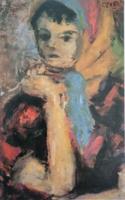
Bela Czobel , Kendős Lány 1972
Bela Czobel
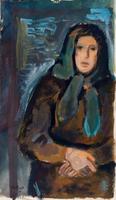
Bortnyik Sándor, Fejkendős Paraszt Asszony
Sandor Bortnyik
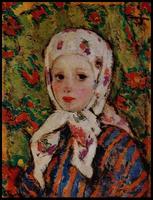
Katyusha the Lipovan Girl
Nicolae Tonitza
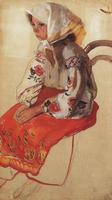
Peasant Girl
Zinaida Serebriakova
Seated Peasant Woman Crunching an Apple
Camille Pissarro

Etude of peasant for unpreserved picture From Church
Boris Kustodiev
Sitzende Frau
Alexej von Jawlensky
The Madras
Henri Matisse
Tyttö Riekkalasta
Sallinen Tyko
Madame Roulin
Paul Gauguin
Spanish woman
Pyotr Konchalovsky
Girl with a pink ribbon
Gustave de Smet
Czobel Bela Lány Fehér Bluzban
Bela Czobel
The Flowery Headscarf
Ipolit Strambu