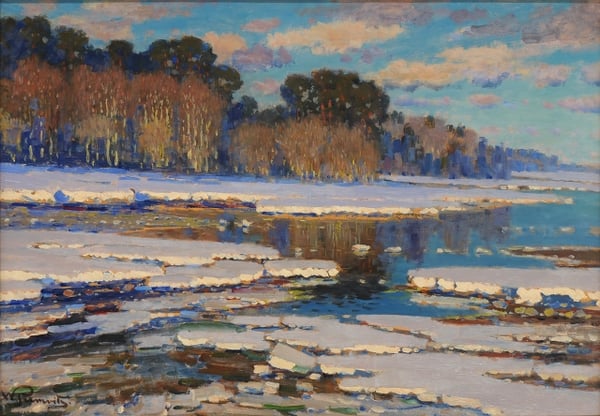
Analyse experte de Melting Snow de Vilhelms Purvitis
Style : Impressionism · Genre : landscape
Expert Analysis of "Melting Snow" by Vilhelms Purvītis
Style: Impressionism | Genre: Landscape
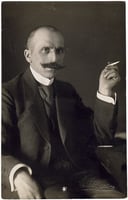
Vilhelms Purvītis (1872–1945) is celebrated as the father of Latvian landscape painting and a pivotal figure who adapted French Impressionism to the distinct light and atmosphere of the Baltic region. Melting Snow exemplifies his mastery in capturing the fleeting, ephemeral moments of nature’s transitions—a core tenet of Impressionism—while grounding them in a distinctly northern, national sensibility.
Significance within Impressionism and Latvian Art
-
Translation of Impressionist Techniques to a Nordic Climate
Unlike the sun-drenched landscapes of Monet or Sisley, Purvītis focuses on the subtle, muted palette of a winter thaw. His use of broken brushwork and layered, semi-opaque whites, grays, and pale blues mirrors the Impressionist fascination with light’s interaction with surfaces—but here the surface is melting snow, not shimmering water or haystacks. The painting captures the very moment when solid snow turns into liquid, reflecting the sky and absorbing shadows. Purvītis’s technique renders the damp, heavy atmosphere and the soft, diffuse light of a cloudy winter day, demonstrating that Impressionism could be adapted to convey the quiet melancholy and transient beauty of northern climates. -
Poetic Realism and National Identity
Purvītis did not merely replicate French Impressionism; he infused it with a lyrical, often melancholic Slavic/ Baltic sensibility. In Melting Snow, the landscape feels intimate and vast simultaneously—a characteristic of his work that links Impressionist spontaneity with a romantic reverence for native land. The composition typically leads the eye across a low horizon, emphasizing the sky’s reflection on wet earth and snow patches, a device he used to evoke the infinite expanse of Latvia’s plains and forests. This fusion made Purvītis a cornerstone of Latvia’s national art movement, as his landscapes became visual metaphors for the fragile, enduring spirit of Latvian identity. -
Mastery of Atmospheric Light and Transience
The significance of Melting Snow lies in its successful capture of a specific weather phenomenon—the thaw—which is inherently unstable. Purvītis uses a cool-gray tonality with unexpected warm ochres or pale violets in the shadows, heightening the sense of humidity and impending change. The snow’s surface is not uniformly white; it is broken by reflections of bare branches, footprints, or rivulets of meltwater, rendered with swift, confident strokes. This attention to the momentary condition of the snow aligns perfectly with Impressionism’s pursuit of l’instant (the instant), while also showcasing Purvītis’s deep observation of Latvian seasonal cycles.
Conclusion
Melting Snow is significant not merely as an Impressionist landscape but as a transformative work that brought the movement to the Baltic region while forging a unique national voice. It demonstrates how Purvītis used the tools of Impressionism—broken color, plein-air immediacy, and focus on light—to elevate the humble, transient beauty of a Latvian thaw into a timeless meditation on nature’s quiet power. The painting stands as a key example of how Impressionism was localized, proving that the movement’s core interests in perception and atmosphere could transcend its French origins to speak to the landscapes of northern Europe.
Visuellement similaire
20 œuvres à la composition et à la palette proches
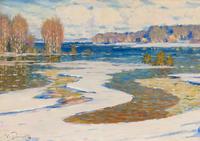
Agrs pavasaris
Vilhelms Purvitis
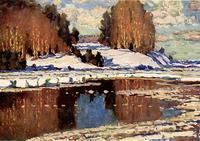
Pavasaris
Vilhelms Purvitis
Pavasaris
Vilhelms Purvitis
Early spring
Isaac Levitan
Springtime. The Last Snow.
Isaac Levitan
Melted Water
Nikolay Bogdanov-Belsky
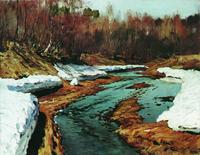
Springtime. The Last Snow.
Isaac Levitan
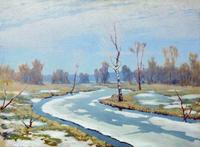
Early spring
Arkhyp Kuindzhi
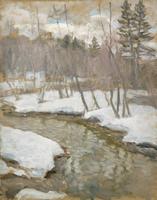
Весна Идет.
Vitold Byalynitsky-Birulya
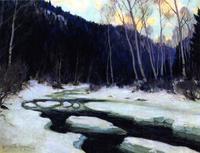
River Thaw
Clarence Gagnon
Scheiber Hugó, Folyóparti Táj
Scheiber Hugó
River Among Snow
Julian Fałat
Windy day
Isaac Levitan
Peisaj de amiază
Samuel Mutzner
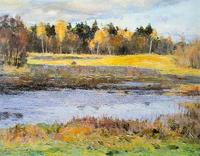
Last Rays
Victor Puzyrkov
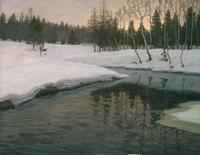
Мартовские Сумерки.
Vitold Byalynitsky-Birulya
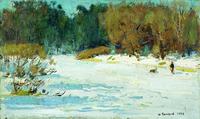
February Sun
Sergiy Grigoriev
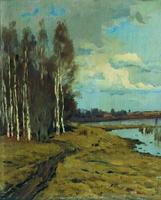
Landscape
Isaac Levitan
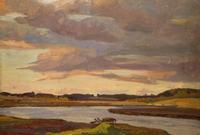
River Avon
Algernon Talmage
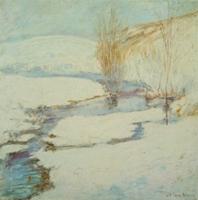
Winter Landscape
John Henry Twachtman