Analisi esperta di The Fairy Circus di Dorothy Lathrop
Stile: Art Nouveau (Modern) · Genere: illustration
Expert Analysis: "The Fairy Circus" by Dorothy Lathrop
Style: Art Nouveau (Modern) | Genre: Illustration
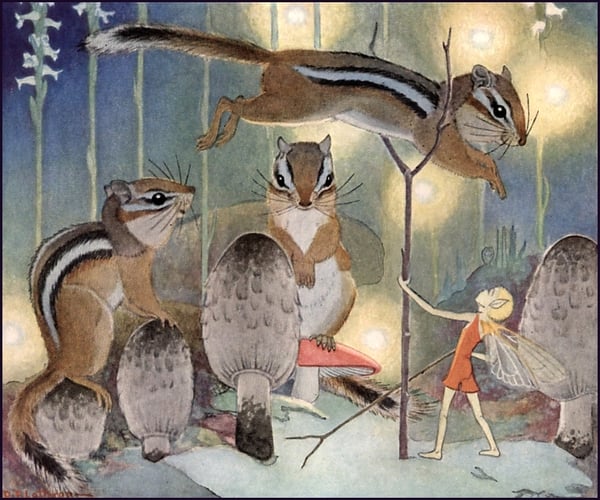
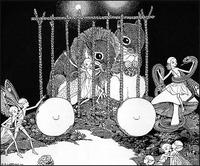
Dorothy Lathrop’s The Fairy Circus (1931) stands as a pivotal work within the intersection of Art Nouveau’s organic aesthetic and the golden age of illustration. The piece exemplifies Lathrop’s mastery of line and her ability to fuse the natural world with fairy-tale whimsy—a hallmark of her contribution to children’s book illustration.
Significance within Art Nouveau:
While Art Nouveau often emphasized decorative, flowing lines drawn from flora and fauna, Lathrop brings a narrative dimension to the style. In The Fairy Circus, sinuous, curving contours define the figures of fairies and animals—trapeze artists, acrobats, and tigers—all rendered with elegant, elongated shapes typical of the movement. The composition uses asymmetrical balance and intricate detailing (e.g., delicate wings, curling leaves) to create a rhythmic, almost musical visual flow. Lathrop’s black-and-white linework (common in her illustrations) echoes the woodcut and printmaking traditions that Art Nouveau revitalized, while her careful handling of negative space adds a modern, graphic clarity.
Genre and Cultural Context:
As an illustration, The Fairy Circus bridges fine art and literature, capturing a moment of fantasy with the precision of a trained observer of nature. Lathrop was the first artist to win the Caldecott Medal (1930, for Animals of the Bible), and this work further demonstrates her rare ability to anthropomorphize animals without losing their anatomical truth. The circus theme—a popular subject in modernist art—allows her to play with motion, balance, and theatricality, transforming a simple story scene into an Art Nouveau tapestry of imagination.
What Makes It Significant:
- Pioneering Fusion: Lathrop merges the decorative elegance of Art Nouveau with the accessibility of illustration, proving that the style could animate children’s literature without losing its sophistication.
- Technical Virtuosity: Her precise, fine lines create texture and depth, from the gossamer wings of fairies to the fur of bears and lions—all while maintaining a cohesive, stylized surface.
- Influence on Visual Storytelling: The Fairy Circus influenced subsequent generations of illustrators (e.g., Maurice Sendak) by proving that genre illustration could achieve the same artistic rigor as paintings or prints.
In summary, The Fairy Circus is a quintessential modern Art Nouveau illustration: it celebrates the ornamental, the natural, and the imaginative, while anchoring those ideals in a narrative context that invites viewers of all ages into a world of delicate wonder. Lathrop’s work remains significant for its quiet revolution—bringing high-style design into the pages of a book, where it could dance, swoop, and enchant.
Visivamente simili
20 opere con composizione e palette affini
Illustration for Fairy Circus
Dorothy Lathrop
Illustration for Hitty
Dorothy Lathrop
Timmy Tiptoes
Beatrix Potter
Goody and Mrs. Hackee
Beatrix Potter
Squirrel Nutkin
Beatrix Potter
Squirrel and cherries
Qi Baishi
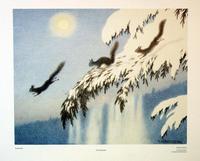
Ekorn i Flukt
Theodor Severin Kittelsen
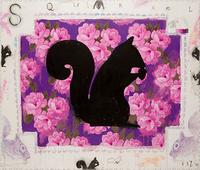
Magenta Squirrel
Robert Zakanitch
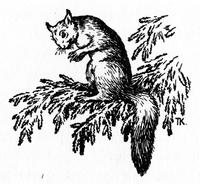
Untitled
Theodor Severin Kittelsen
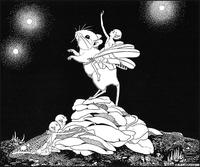
The Fairy Circus
Dorothy Lathrop
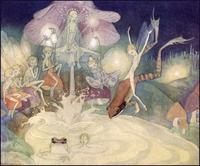
Illustration for Fairy Circus
Dorothy Lathrop
Hans Scarves
Valeria Trubina
Emblemata - Squirrel
M.C. Escher
Illustration to the fairy tale 'The War of mushrooms'
Heorhiy Narbut
The Fairy Circus
Dorothy Lathrop
The Forest
Irfan Ajvazi
The Vision to the Youth Bartholomew
Alexander Roitburd
Untitled
Christian Royal
桃枝松鼠图
Qian Xuan
Katt Og Ekorn
Theodor Severin Kittelsen