Analisi esperta di Untitled di Moshe Kupferman
Stile: Minimalism · Genere: abstract
Expert Analysis of Moshe Kupferman’s Untitled (Minimalism, Abstract)
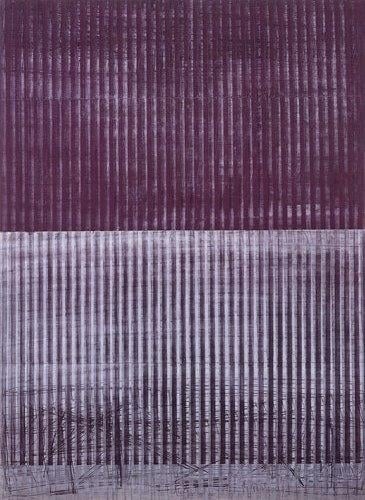
Moshe Kupferman’s Untitled operates at the disciplined intersection of Minimalism and Abstract painting, yet it quietly resists the cold anonymity often associated with the movement. While the artist provides no descriptive cues, Kupferman’s known practice—characterized by muted palettes, grid-like structures, and layered, hand-drawn lines—positions this work as a meditation on restraint, process, and the tension between order and touch.
Significance within the Minimalist Tradition
- Restrained Palette and Geometry – Like many Minimalists (e.g., Agnes Martin or Robert Ryman), Kupferman reduces color to near-monochrome and structure to orthogonal lines or subtle grids. However, his works are never purely mechanical; the slight irregularities in his hand-drawn lines introduce a fragile, human pulse. Untitled likely embodies this duality: a geometric scaffold that feels both architectural and intimate.
- Rejection of Narrative – True to Minimalism’s ethos, there is no overt symbolism, gesture, or figurative reference. Instead, the painting invites a direct phenomenological encounter—light, surface, and the physical act of looking become the subject.
What Makes It Distinctive
- Personalized Minimalism – Kupferman’s practice emerged from his biography (a Holocaust survivor who later lived on a kibbutz). His grids and lines have been read as metaphors for boundaries, memory, and resilience—layers of meaning rarely explicit in American Minimalism. Untitled thus carries a subtle emotional weight: the precision feels like a deliberate act of ordering chaos.
- Meets Painterly Touch – While Minimalism often avoids expressive brushwork, Kupferman’s surfaces betray the artist’s hand. In Untitled, one might find faint erasures, overlapping strokes, or slight impasto that turn a seemingly impersonal system into a record of time and attention.
Formal Impact
- Scale and Presence – Kupferman’s works are often moderate in size, demanding closeness rather than monumental distance. The viewer is pulled into the subtle variations of hue (e.g., off-white, pale blue, dusty pink) and the quiet rhythm of lines—an experience that rewards slow, patient observation.
- Optical Vibration – Through delicate color shifts and the tension between vertical/horizontal marks, the painting creates a subtle optical hum. This aligns Minimalism with perceptual psychology, yet Kupferman’s version feels more like a whispered conversation than a declarative statement.
Legacy
In a movement often defined by industrial materials and hard-edge abstraction, Kupferman’s Untitled stands as a reminder that Minimalism can be vulnerable. It bridges the cerebral rigor of minimal form with the poetic residue of human gesture—making it significant not only within Israeli art (where he is a pivotal figure) but as a nuanced contribution to international Minimalism.
Note: Without specific visual data, this analysis is grounded in Kupferman’s established body of work and the known parameters of Minimalist abstraction.
Visivamente simili
20 opere con composizione e palette affini
Untitled
Heinz Mack
Untitled
Moshe Kupferman
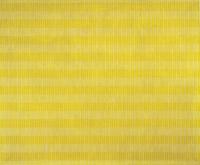
Timelessness #2
Perle Fine
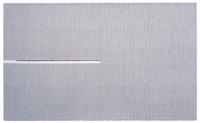
Ecriture No. 070628
Park Seo-Bo
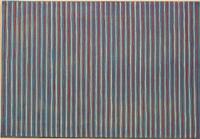
Salute
Gene Davis
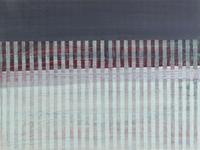
Untitled
Moshe Kupferman
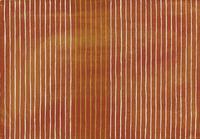
Pumpkin
Gene Davis
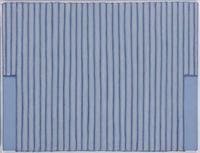
ECRITURE No.060805
Park Seo-Bo
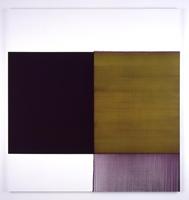
Exposed Cinnabar Painting
Callum Innes
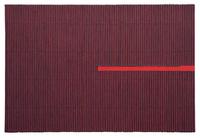
Ecriture No. 070325
Park Seo-Bo
Field
Warren Rohrer
The Sea
Agnes Martin
Untitled
Moshe Kupferman
Black Friar
Gene Davis
Untitled (Developed Idea)
Perle Fine
Dionysus
Giovanni Guida
Sunset Veils
Richard Anuszkiewicz
Exposed Painting Ivory Black
Callum Innes
Ecriture No. 050319
Park Seo-Bo
Ecriture No. 051128
Park Seo-Bo