Expertenanalyse zu Torii Kotondos Fragrance of the Hot Spring
Stil: Shin-hanga · Genre: nude painting (nu)
Expert Analysis: "Fragrance of the Hot Spring" by Torii Kotondo
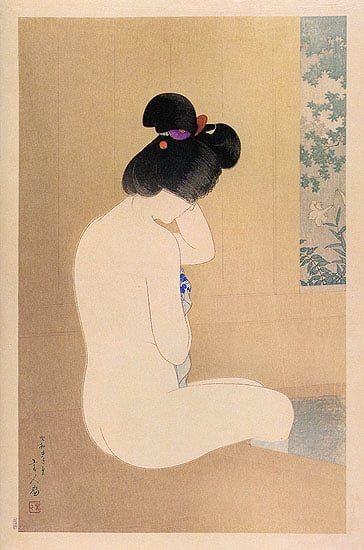
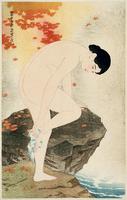
Torii Kotondo's "Fragrance of the Hot Spring" is a masterful and provocative work within the Shin-hanga movement, which flourished in Japan during the early to mid-20th century. The painting is a nude (nu)—a subject that, within the context of traditional Japanese ukiyo-e, was rare and often circumscribed by censorship. Kotondo’s decision to depict a nude woman bathing is a bold departure from convention, signaling the movement’s embrace of Western naturalism and individual expression while retaining the refined craftsmanship of Japanese woodblock printmaking.
Stylistic Significance: The work exemplifies the Shin-hanga ethos: a synthesis of traditional Japanese compositional elegance—evident in the graceful, flowing contour lines and the delicate treatment of the figure—with Western chiaroscuro and anatomical accuracy. Kotondo masterfully renders the soft, warm glow of steam and water, capturing the intimate atmosphere of a hot spring. The title itself, "Fragrance of the Hot Spring," elevates the scene beyond mere depiction; it evokes sensory experience through visual means. The subtle gradations of color and the careful handling of skin tones (a hallmark of Shin-hanga bijin-ga) create a sense of living warmth rather than an idealized, flattened form.
Genre and Context: As a nude, this painting pushes against the moral constraints of its time. Japanese prints of the Edo period typically avoided full nudity, often using the pretense of bathing or partial undress. Kotondo, working in the 1920s–1930s, embraces a more direct, modern sensibility. The work thus marks a significant moment where Shin-hanga artists—often collaborating with publishers like Sakai Kōnosuke—sought to legitimize the nude as a serious artistic subject in Japan, paralleling developments in European modernism. However, Kotondo maintains a distinctively Japanese restraint: the figure is sensuous but not overtly erotic, her modesty partially shielded by the composition’s intimate framing.
What Makes It Significant:
- Bridge between eras and cultures: It represents a confident fusion of Japanese print traditions and Western oil-painting-inspired realism.
- Subject matter as innovation: The nude was still controversial; Kotondo’s elegant treatment helped pave the way for broader acceptance of the genre in Japanese art.
- Technical mastery: The soft bokashi (gradation) technique and subtle line work demonstrate the pinnacle of Shin-hanga craftsmanship, where the artist’s design and the printer’s skill merge in a single, luminous image.
In essence, "Fragrance of the Hot Spring" is not merely a beautiful nude study. It is a quiet declaration of artistic modernity within a traditional framework—a work that captures the fleeting, sensory pleasure of a moment while asserting the beauty and dignity of the human form.
Genre
Stil
Visuell ähnlich
20 Werke mit ähnlicher Komposition und Farbpalette
Woman After Bath
Goyo Hashiguchi
Woman After Bath
Goyo Hashiguchi
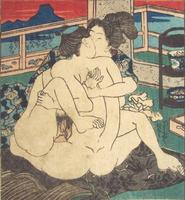
Tokaido 53 Stations, #D
Utagawa Kunisada
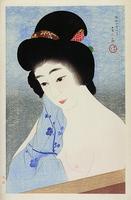
In the Bath
Torii Kotondo
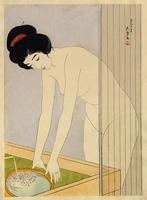
Woman Washing Her Face
Goyo Hashiguchi
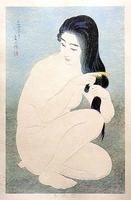
Combing in the Bath
Torii Kotondo
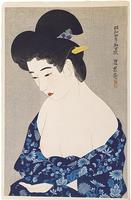
After the Bath
Ito Shinsui
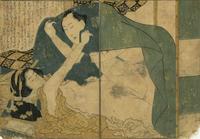
The Adonis plant
Katsushika Hokusai
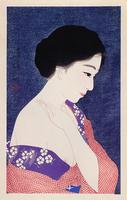
Applying Powder
Torii Kotondo
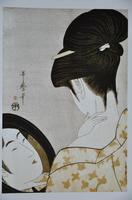
Young woman applying make up
Kitagawa Utamaro
Love on the Kamo River
Keisai Eisen
Lovers in front of a screen
Kitagawa Utamaro
Oiso
Keisai Eisen
Masturbation and voyeurism
Katsushika Hokusai
The Fragrance of a Bath
Ito Shinsui
Models Hugs
Katsushika Hokusai
Woman Applying Powder
Goyo Hashiguchi
The Adonis plant
Katsushika Hokusai
Woman Washing Her Hair
Goyo Hashiguchi
Snow
Torii Kotondo