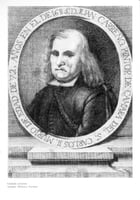
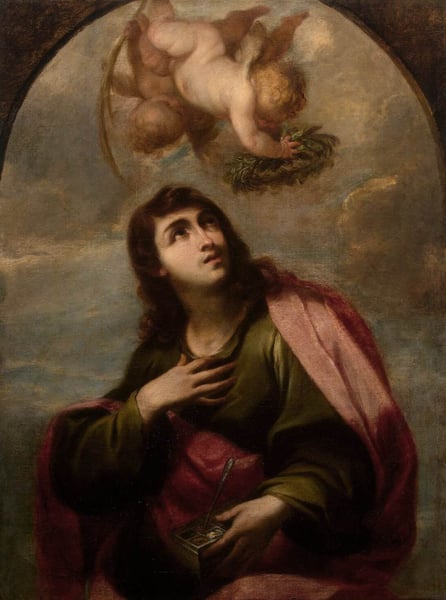
Expert analysis of Juan Carreno de Miranda’s St Damian
Style: Baroque · Genre: religious painting
Expert Analysis of St Damian by Juan Carreño de Miranda
Juan Carreño de Miranda’s St Damian exemplifies the mature Spanish Baroque through its fusion of naturalistic detail, emotional restraint, and devotional clarity. As a religious painting from the 17th century, it holds significance for how it translates Counter-Reformation ideals into an intimate, humanized vision of sainthood.
Key aspects of its significance within the Baroque style:
-
Tenebristic lighting and psychological depth: Carreño employs a controlled, dramatic chiaroscuro that isolates St Damian’s face and hands, focusing the viewer’s attention on the saint’s meditative expression. This use of light, typical of the Spanish Baroque (influenced by Velázquez and Ribera), converts a static portrait into a moment of spiritual interiority.
-
Naturalism with grace: Unlike the heightened ecstasy of Italian Baroque, Carreño’s saint appears calm, almost gentle. The subtle rendering of skin tones, the soft modeling of the face, and the quiet downward gaze convey an accessible, human sanctity. This aligns with the Spanish emphasis on direct, empathetic devotion.
-
Devotional purpose: As a single figure from the pair of twin saints (Cosmas and Damian), the painting likely served as an altarpiece or a private devotional work. Carreño’s ability to combine aristocratic refinement (he was court painter to Charles II) with humble religious sentiment makes this work a bridge between the courtly elegance of Spanish portraiture and the didactic needs of Baroque religious art.
Why it matters in Carreño’s oeuvre:
St Damian showcases Carreño’s mastery in synthesizing the luminous color of Venetian painting with the stark realism of Spanish tradition. Its quiet emotional power—neither theatrical nor cold—distinguishes it as a mature example of Baroque religious painting that prioritizes inner faith over outward spectacle.
Visually similar
20 works with related composition and palette
Penitent Magdalene
Bartolome Esteban Murillo
Saint Rosalie
Anthony van Dyck
St. John the Evangelist at Patmos
Alonzo Cano

St. Mary Magdalene or St. Thais in the Desert
Jusepe de Ribera
The Penitent Magdalene
Guido Reni
Penitent Magdalene
El Greco
The Immaculate Conception
Claudio Coello
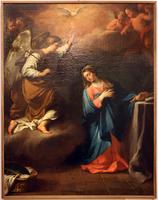
Annunciazione
Pompeo Batoni
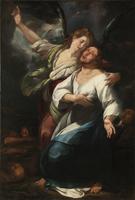
Agony in the Garden
Giulio Cesare Procaccini
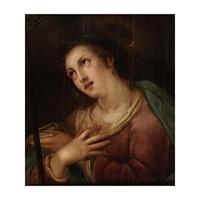
DIE HEILIGE MARIA MAGDALENA ALS BÜSSERIN
Gortzius Geldorp
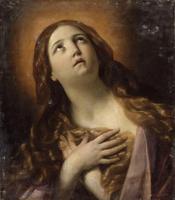
Mary Magdalene in ecstasy at the foot of the cross
Guido Reni
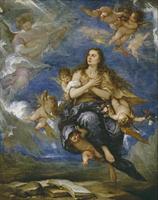
Assumption of Mary Magdalene
José Antolínez
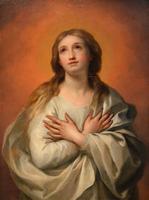
The Immaculate Conception
Anton Raphael Mengs
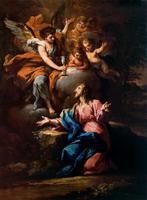
Cristo En El Jardín De Getsemaní
Sebastiano Conca
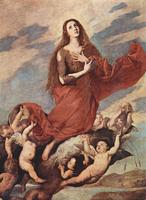
The Assumption of Mary Magdalene
Jusepe de Ribera
Allégorie De La Renommée
Sebastiano Conca
The Annunciation
Luca Giordano
The Annunciation
Giulio Cesare Procaccini
The Annunciation
Bernardo Strozzi
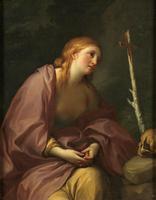
Penitent Magdalen
Anton Raphael Mengs