Analisi esperta di The Day after the Storm di Briton Riviere
Stile: Realism · Genere: landscape
Expert Analysis: "The Day after the Storm" by Briton Riviere
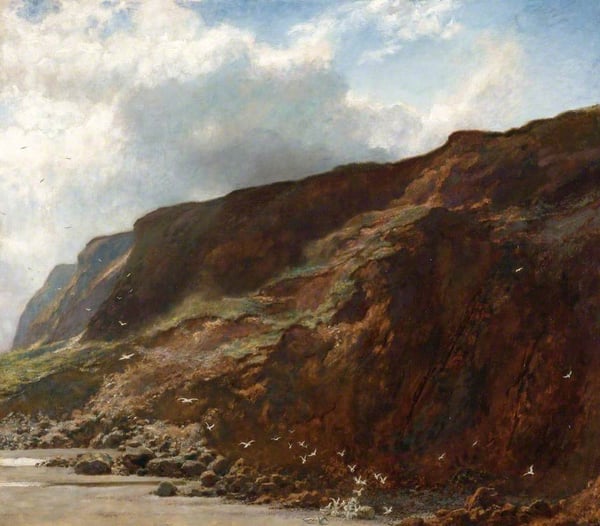
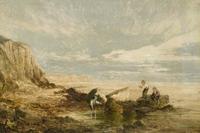
As a work of Realist landscape painting, The Day after the Storm exemplifies Briton Riviere’s mastery of capturing transient natural phenomena with scientific precision and emotional resonance. While the artist is best known for his narrative animal paintings, this piece underscores his broader commitment to the Realist tenet of truthfully depicting the observed world—here, the dramatic aftermath of a storm.
Significance within Realism and the Period
Riviere’s approach aligns with the mid-to-late 19th-century Realist movement’s rejection of idealized or romanticized nature. Unlike the dramatic, sublime storms of Romanticism (e.g., Turner), Riviere focuses on the quiet, restorative moment after violence: the clearing light, sodden earth, and lingering atmosphere of renewal. The painting likely emphasizes:
- Atmospheric effects: The damp, heavy air and diffused post-storm light, rendered through careful modulation of tone and color to evoke humidity and the optical phenomenon of light breaking through retreating clouds.
- Detailed observation: Muddy ground, broken branches, or pooled water would be depicted with meticulous brushwork, reflecting the Realist insistence on empirical fidelity to nature.
- Narrative pause: The absence of human figures or dramatic action centers the landscape itself as the subject—a quiet commentary on nature’s endurance and cyclical power.
Riviere’s Unique Contribution
Though less celebrated today, Riviere was a prominent member of the British Realist circle. In The Day after the Storm, he bridges the scientific precision of the Pre-Raphaelites with the broader atmospheric concerns of the Barbizon School, creating a work that feels both studied and emotionally accessible. The painting’s significance lies in its ability to transform a fleeting meteorological moment into a timeless meditation on calm after turmoil, showcasing Realism’s capacity to find profound beauty in the ordinary and the aftermath.
Visivamente simili
20 opere con composizione e palette affini
Coast of Labrador
William Bradford
Rocky Coast at Sunset
William Hart
Steep coast on Heligoland
Andreas Achenbach
Weymouth Bay (Bowleaze Cove)
John Constable
Rocky shore
Anders Andersen-Lundby
Landscape with shepherd, dog and sheep
Filippo Palizzi
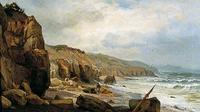
Cornelian Bay, Scarborough
Edward Henry Holder
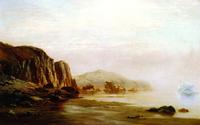
Low Tide, Labrador
William Bradford

Coastal Twilight
William Hart
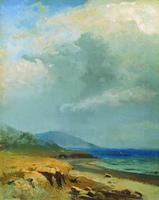
Landscape. Crimea
Fyodor Vasilyev
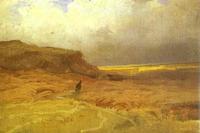
Clouds over Hills. Study
Fyodor Vasilyev
Coast Scene
George Morland
Volga
Aleksey Savrasov
maritime landscape
Thomas Birch
A Lake Scene Effect of a Storm
Edwin Henry Landseer
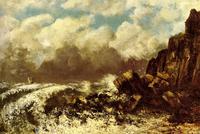
Seascape at Etretat
Gustave Courbet
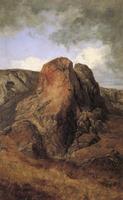
Pórfidos del Tepeyac
Jose Maria Velasco
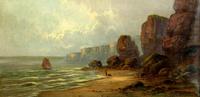
Fish Boat Off Coast
John Brett
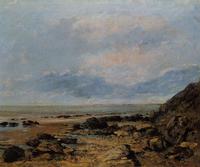
Rocky Seashore
Gustave Courbet
Beach, Boys Sailing a Toy Boat
William Collins