Analisi esperta di Portrait of Bernardino de Campos di Jose Ferraz de Almeida Junior
Stile: Realism · Genere: portrait
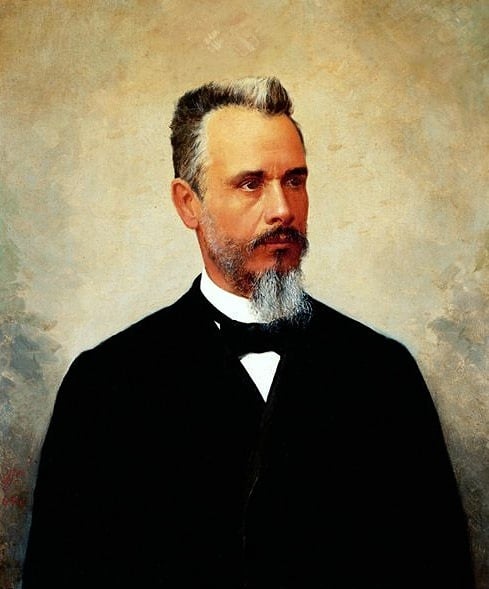
Expert Analysis: "Portrait of Bernardino de Campos" by José Ferraz de Almeida Júnior
José Ferraz de Almeida Júnior (1850–1899) is widely regarded as a pioneer of Realism in Brazilian painting. His Portrait of Bernardino de Campos stands as a quintessential example of the Realist approach to portraiture, distinguished by its unflinching fidelity to visual truth and its subtle psychological depth.
Significance within the Realist Style:
Almeida Júnior’s work embodies the Realist rejection of idealized or romanticized representation. Every detail—from the precise modeling of facial features to the careful rendering of fabric and ambient light—serves to present the sitter not as a symbolic or allegorical figure, but as a concrete individual situated in a specific time and place. The careful attention to the textures of skin, clothing, and background reflects the Realist insistence on direct observation and empirical accuracy. This portrait does not flatter or exaggerate; it documents with the cool objectivity that defines the movement.
Significance as a Portrait:
Bernardino de Campos (1841–1915) was a prominent Brazilian politician, jurist, and statesman—a key figure in the early republic. Almeida Júnior captures not only his physical likeness but also his social stature and personal gravity. The subject’s direct gaze, composed posture, and understated attire convey authority without ostentation. This aligns with the Realist goal of portraying individuals within their authentic social roles. The painting thus serves as both a historical document and an intimate psychological study, reflecting the sitter’s dignity while avoiding the pomp common in earlier aristocratic portraiture.
Broader Artistic Context:
Almeida Júnior studied in Paris under Realist masters and returned to Brazil to apply their methods to national subjects. This portrait is significant as part of his effort to establish a distinctly Brazilian Realist idiom. Rather than mimicking European archetypes, he depicted local figures with the same rigorous honesty. The work elevated the genre of portraiture in Brazil by demonstrating that a national identity could be forged through authentic, unsentimental representation. It also positions Almeida Júnior as a crucial bridge between academic tradition and the modern impulse toward realism, making this painting a cornerstone of 19th-century Brazilian art history.
Museum / Gallery
Visivamente simili
20 opere con composizione e palette affini
João Alves Rubião Junior
Jose Ferraz de Almeida Junior
Francisco de Assis Peixoto Gomide
Jose Ferraz de Almeida Junior
Portrait of a man
Nikolaos Lytras
Portrait of the poet Nikolai Nekrasov
Ivan Kramskoy
Male Portrait
Konstantin Makovsky
José Alves de Cerqueira César
Jose Ferraz de Almeida Junior
Self-portrait
Felix Vallotton
Self Portrait
Mårten Eskil Winge
Portrait of count Aldo Annoni
Cesare Tallone
Samuel P. Avery
Raimundo de Madrazo
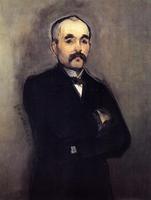
Portrait of Georges Clemenceau
Edouard Manet
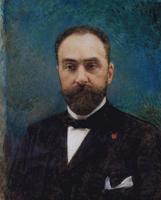
Charles Ephrussi
Leon Bonnat
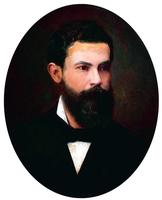
Portrait of Dr. Francisco Eugenio Pacheco e Silva
Jose Ferraz de Almeida Junior
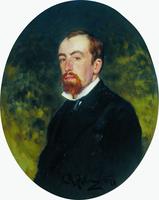
Portrait of the Artist Vasily Polenov
Ilya Repin
Portrait of the composer Pyotr Ilyich Tchaikovsky
Nikolai Kuznetsov
John D. Binns
William Logsdail
Portrait of A.Kuzhetsov
Konstantin Makovsky
Portrait of French Writer and Politician Léon Laurent-Pichat
Ernest Hébert
Portrait of Anthony Valabregue
Paul Cezanne
Portrait of a nobleman
Gerolamo Induno