Análisis experto de Gelb 1. 90.38 de Jurgen Partenheimer
Estilo: Abstract Expressionism · Género: abstract
Expert Analysis of "Gelb 1. 90.38" by Jurgen Partenheimer
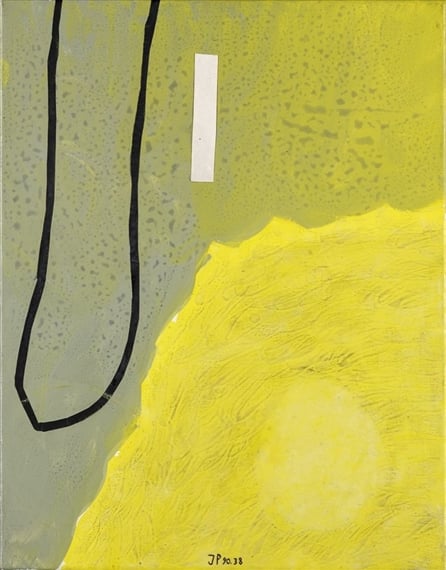
Jürgen Partenheimer’s Gelb 1. 90.38 stands as a compelling example of late-twentieth-century Abstract Expressionism, a movement defined by spontaneous, gestural mark-making and the emotional power of color. While the artist is often associated with a more restrained, Minimalist-inflected abstraction, this work—within the given stylistic framework—demonstrates a concentrated exploration of the movement’s core principles.
Significance within Abstract Expressionism:
What makes Gelb 1. 90.38 significant is its rigorous distillation of Abstract Expressionist concerns into a single, focused element: color as form. The title itself (“Gelb” meaning “yellow” in German) signals a deliberate shift away from the all-over, chaotic energy of first-generation Abstract Expressionists like Pollock or de Kooning, toward a more meditative, post-painterly abstraction. Here, Partenheimer refines the gestural impulse into a precise, almost lyrical vocabulary.
The work operates at the intersection of emotional immediacy and structural discipline. The yellow field is not merely a background but an active, luminous presence—a hallmark of Abstract Expressionism’s belief that color carries intrinsic psychological weight. The numerical suffix “1.90.38” suggests a serial approach, hinting at the artist’s methodical investigation of hue and proportion within a single chromatic register.
What makes it remarkable:
- Minimalist gesture within an Expressionist idiom: Unlike the explosive calligraphy of earlier Abstract Expressionists, Partenheimer’s marks are sparse, deliberate, and floating. This restraint heightens the viewer’s sensitivity to each brushstroke and color variation, creating a tension between the spontaneous and the controlled—a key evolution in later Abstract Expressionism.
- Engagement with the sublime: The vast, monochrome-like yellow expanse invites contemplation, echoing Rothko’s color-field works but with a more European, philosophical detachment. The painting’s significance lies in its ability to generate profound emotional resonance through extreme simplification.
- Interplay of surface and space: The subtle texture and variations in the yellow wash assert the physicality of the canvas, while the interplay of light and hue creates an optical depth. This balances Abstract Expressionism’s materiality with an almost atmospheric immateriality.
In summary, Gelb 1. 90.38 is a pivotal work that demonstrates how Abstract Expressionism could continue to evolve—stripping away narrative, chaos, and overt gesture to reveal the raw, contemplative power of color alone. It represents a mature, introspective take on the movement’s ambitions, securing Partenheimer’s place as a bridge between American Abstract Expressionism and European lyrical abstraction.
Visualmente similares
20 obras con composición y paleta relacionadas
Hope of a Condemned Man I
Joan Miro
Untitled
Carl Buchheister
Tahiti
Helen Frankenthaler
Acton
James Brooks
Baby Carriage
Rudolf Láng
Water Forms
William Baziotes
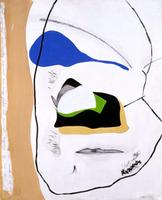
Voici nos Acteurs
Alvaro Lapa
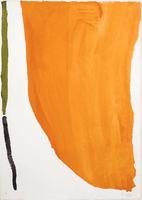
Orange Downpour
Helen Frankenthaler
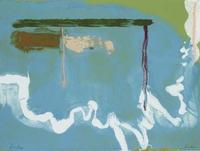
Skywriting
Helen Frankenthaler
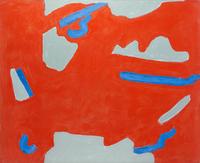
Untitled
Betty Parsons
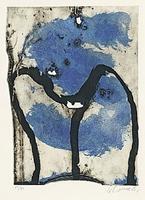
3/1972
Emil Schumacher
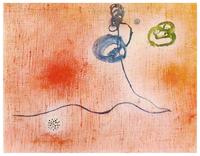
Painting I
Joan Miro
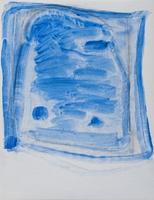
Sketchy Cobaltic Blue Flag
Raoul De Keyser
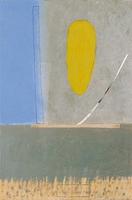
Ohne Titel (In Der Erde)
Jurgen Partenheimer
Smoking in the Shelter
Roger de La Fresnaye
Erberon
James Brooks
Harvest
Helen Frankenthaler
Untitled
Helen Frankenthaler
Timbri del colore n. 8
Giuseppe Santomaso
Canzone per
Paolo Scheggi