
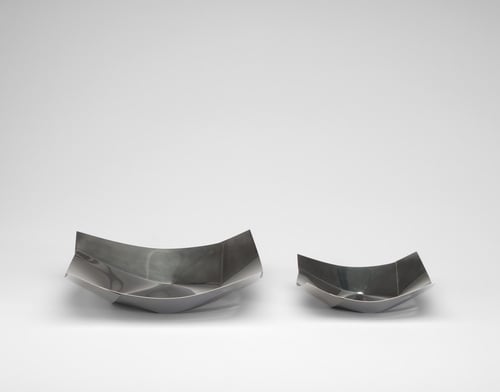
Expertenanalyse zu Bruno Munaris Maldive Tray
Stil: Concretism · Genre: design, utensil
The "Maldive Tray" by Bruno Munari (Concretism, design utensil) stands as a prime example of how Concretist principles can be applied to functional objects, dissolving the boundary between art and everyday use. Created by Munari—a key figure in Italian design and a proponent of geometric abstraction—the tray is not merely a passive container but an active sculptural statement.
Its significance lies in the rigorous integration of form and function: the tray’s structure likely employs clean, elemental shapes—circles, squares, or minimal curves—reducing ornamentation to pure geometry. This echoes the Concretist creed that art should be objectively built from elementary, non-representational components, while simultaneously serving a practical purpose. By transforming a humble utensil into a precise, rational composition, Munari demonstrates that utility need not compromise artistic integrity. The "Maldive Tray" thus becomes a distilled manifesto of Concretism in design: an object that is both a tool for living and a self-sufficient work of art, inviting the user to engage with geometry and materiality in their daily rituals.
Visuell ähnlich
20 Werke mit ähnlicher Komposition und Farbpalette
Leaf
Tapio Wirkkala
Untitled
Craig Kauffman
Untitled
Craig Kauffman

Untitled
Craig Kauffman
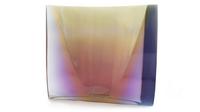
Centrifugal
Fred Eversley

Untitled
Christian Royal
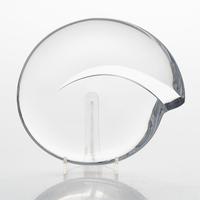
Object 3371, Iittala
Tapio Wirkkala
letter to Mr Issa
Lech Jankowski
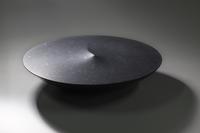
Untitled 149
Armen Agop
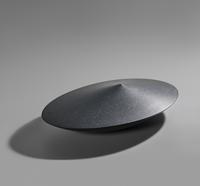
Untitled 147
Armen Agop
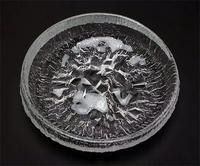
Lunaria (Serving Platter) 3449, Iitttala
Tapio Wirkkala

Cloud Trio
Bibi Smit
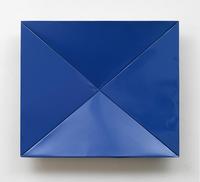
Fold
Charlotte Posenenske
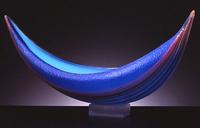
Caicco
Lino Tagliapietra
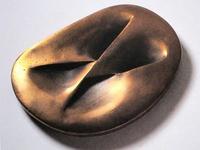
Subterranean Bow
Meret Oppenheim

Jääpala (Ice Cube) 3147 3847, Iittala
Tapio Wirkkala
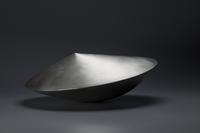
Untitled 118
Armen Agop
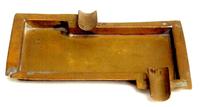
Ashtray
M. H. Maxy
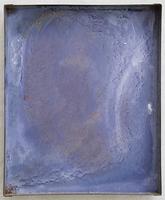
Farbwanne
Gotthard Graubner

Untitled 129
Armen Agop