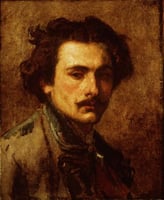
Analisi esperta di A Widow di Thomas Couture
Stile: Academicism · Genere: portrait
Expert Analysis of "A Widow" by Thomas Couture
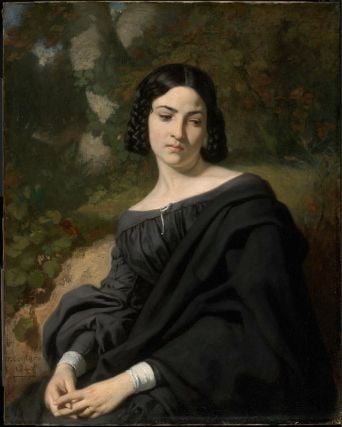
Within the framework of Academicism, Thomas Couture’s A Widow stands as a remarkable intersection of technical mastery and emotional depth—qualities that elevate it beyond conventional portraiture. Painted at a moment when the French Academy prized idealized history painting, Couture instead turns his focus to a singular, private figure, imbuing the genre with a psychological gravity more often reserved for grand narratives.
Significance within Academicism and the Portrait Genre
- Technical Prestige: Couture employs the polished brushwork, balanced composition, and restrained palette typical of Academic training. Yet he subverts expectations by using these skills not for mythological or allegorical subjects, but for a modern, individual sorrow. The widow’s dark garments and downcast gaze are rendered with meticulous attention to fabric texture and flesh tone, showcasing the artist’s command of formal academic technique while foregrounding human vulnerability.
- Psychological Realism: Unlike many academic portraits that emphasized social status or idealized beauty, A Widow prioritizes interiority. The subject’s isolation and quiet grief are palpable, a departure from the stoic or theatrical expressions common to the period. Couture captures a fleeting, unguarded moment of mourning, making the portrait feel both intimate and universal. This emotional honesty was influential on his most famous pupil, Édouard Manet, and later Realist painters who sought to depict modern life with sincerity.
- Bridge to Modernity: Couture’s work here exemplifies the tension within Academicism between rigid doctrine and emerging naturalism. Though he remained loyal to the Academy’s methods, his focus on a single, anonymous woman in a private state of loss challenges the hierarchy of subject matter (history painting over portraiture). In doing so, A Widow anticipates the shift toward Realism and Impressionism, where everyday emotions and moments became worthy of serious artistic treatment.
Why It Matters
“A Widow” is significant because it demonstrates that Academicism, often dismissed as conservative, could produce profoundly modern, empathetic works. Couture proves that technical proficiency need not be cold; here, it becomes the vehicle for a quiet, resonant study of human grief—one that foreshadows the psychological depth of later 19th-century art. This portrait remains a testament to Couture’s role as a pivotal figure who upheld classical standards while opening the door to a more personal, contemporary vision.
Visivamente simili
20 opere con composizione e palette affini
Portrait of Ebba Sparre
Sebastien Bourdon

Portrait of Christina, Queen of Sweden (1626–1689), half-length, seated, holding a scepter
Sebastien Bourdon
Giulia Gonzaga
Titian
Portrait of Aphra Behn
Mary Beale
Táborszky Nándorné portréja
Mihaly Szemler
Judith with the Head of Holophernes
Simon Vouet
PORTRAIT DE FEMME ACCOUDÉE
Elias Van Nijmegen
Portrait of An Elegant Lady Seated by a Fountain Holding An Oyster
Juriaen Pool
Portrait of Albertine Agnes Van Oranje-Nassau
Gerard van Honthorst
Portrait of a lady half-length with a servant girl holding a basket of flowers
Jacopo Amigoni
Portrait of a Young Man, Possibly Simon van Alphen
Nicolaes Maes
Mrs.William Eppes
John Singleton Copley
Portrait of a Young Woman as a Wise Virgin
Sebastiano del Piombo
Portrait de femme àa la robe brodee
Claude Arnulphy
Two women and a man ( Trio)
Giorgione
Portrait of a lady in black
Federico Faruffini
Clio, the Muse of History
Artemisia Gentileschi
Portrait of a Woman
Nicolaes Maes
Portrait of an Elegant Lady Resting her Arm on an Urn
Jean-François de Troy
Portrait de femme au chien
Jean-François de Troy