John Cage sanatçısının Not Wanting To Say Anything About Marcel, II eseri hakkında uzman analizi
Tarz: Neo-Dada · Tür: installation
Expert Analysis: “Not Wanting To Say Anything About Marcel, II” by John Cage
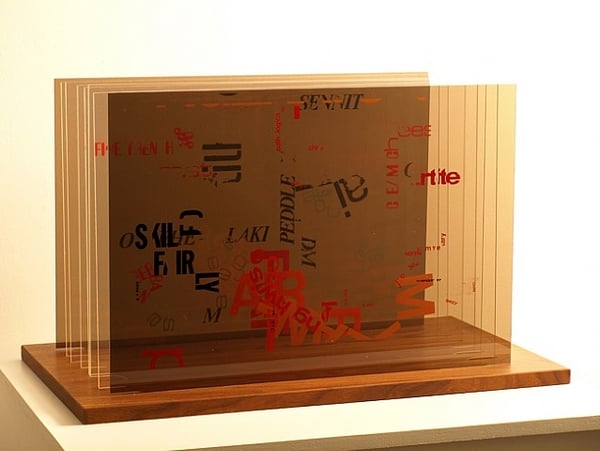
John Cage’s “Not Wanting To Say Anything About Marcel, II” (1969) is a quintessential Neo-Dada installation that redefines the boundaries between visual art, music, and language. Created as part of a series explicitly referencing Marcel Duchamp—the Dadaist master of the readymade and conceptual irony—this work embodies Cage’s lifelong commitment to chance procedures, silence, and the subversion of authorial intent.
Significance within Neo-Dada
Neo-Dada emerged in the mid-20th century as a reaction against Abstract Expressionism’s personal expression, reclaiming Dada’s anti-art stance through found objects, randomness, and hybrid media. Cage, already celebrated for his avant-garde musical compositions (e.g., 4'33"), brought his musical philosophy into the visual realm. “Not Wanting To Say Anything About Marcel, II” is a plexigram: a series of transparent Plexiglas panels screen-printed with fragmented words, images, and musical notations, arranged through Cage’s signature use of I Ching–based chance operations. The result is a deliberately non-hierarchical, open-ended installation that refuses fixed meaning.
What Makes the Work Significant
-
Visualizing Chance and Indeterminacy – Cage translated his compositional method of “indeterminacy” into a spatial, tactile form. Each panel’s content—drawn from quotes, Duchamp’s motifs, and random marks—was determined by coin tosses, mirroring the aleatory processes in his music. This makes the installation a score to be read, not a static image, and invites viewers to assemble meaning as active participants.
-
Homage and Subversion of Duchamp – The title ironically declares “not wanting to say anything” about Duchamp, yet the work is saturated with references to the older artist: the grid-like structure recalls Duchamp’s “The Bride Stripped Bare by Her Bachelors, Even”, and the use of printed text echoes Duchamp’s puns and notes. Cage both honors Duchamp’s conceptual legacy and extends it by removing the artist’s intentional voice, replacing it with chance—a radical departure from Duchamp’s own controlled irony.
-
Dematerialization of the Art Object – The Plexiglas panels are transparent, layered, and physically fragile, creating an installation that exists as light, shadow, and reflection rather than a solid sculpture. This material choice aligns with Neo-Dada’s critique of preciousness and commodity, as well as Cage’s Zen-influenced emphasis on ephemeral experience.
-
Interdisciplinary Hybridity – By fusing visual art with musical notation, poetry, and performance (the panels can be rearranged), Cage breaks down the boundaries between media. This work is not merely a visual object but a multisensory event, anticipating later installation and conceptual art practices.
Conclusion
“Not Wanting To Say Anything About Marcel, II” stands as a landmark of Neo-Dada because it enacts the movement’s core tenets: chance over control, process over product, and ambiguity over fixed meaning. Cage transforms homage into a generative, participatory system, making Duchamp’s legacy something to be performed rather than described. In doing so, he pushes Dada’s anti-art spirit into a new, networked era of art-making where the viewer completes the work.
Görsel olarak benzer
İlişkili kompozisyon ve renk paletine sahip 20 eser
Not Wanting to Say Anything About Marcel
John Cage
Not Wanting To Say Anything About Marcel, I
John Cage
Untitled
Norman Zammitt

Elbowing
Ray Howlett
Untitled
Salvador Dali

Soft Edges
Ray Howlett
Opal
Norman Zammitt

Swinging Look
Ray Howlett
Objeto cinético
Rubem Ludolf
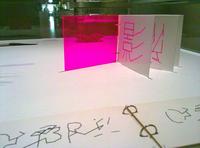
Avessos Encadeados/Ombre
Lourdes Castro
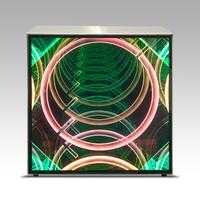
Soft Vortex
Ray Howlett
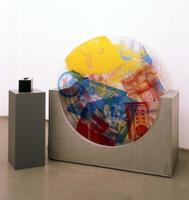
Revolver IV
Robert Rauschenberg
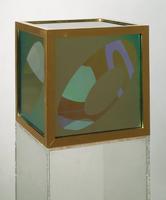
Untitled
Larry Bell

moiré glas
Carsten Nicolai
Void
Chul Hyun Ahn
ME/WE
Markus Raetz
Déplacement helicoideaux lumineux
Martha Boto
Acrylic Sculpture
Ilya Bolotowsky
Déplacement optique “A”
Martha Boto
World Inside a World
Ray Howlett