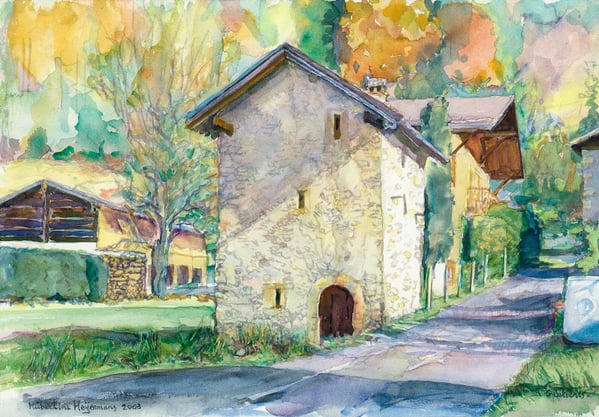
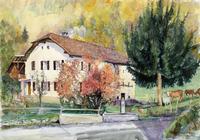
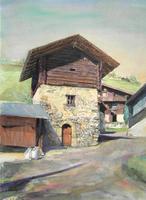
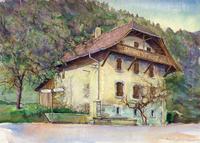
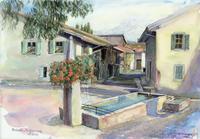
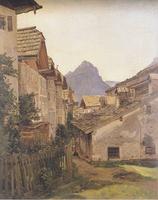
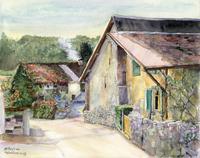
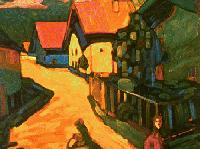
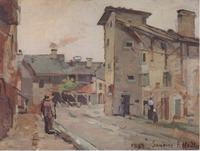
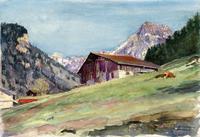
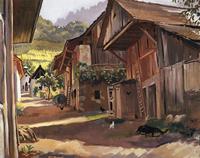
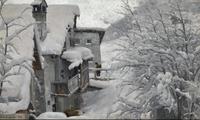
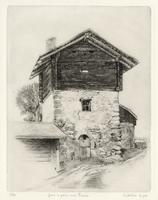
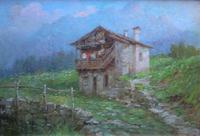
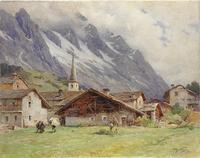
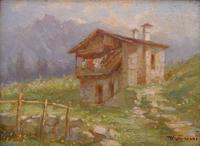
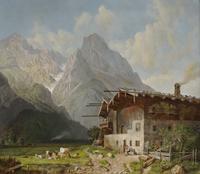
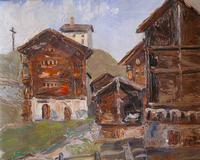
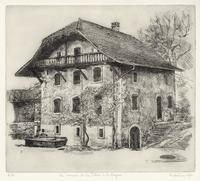
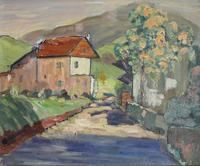
This artwork, House of the Dime in the village Glutières by Hubertine Heijermans, is a significant example of late 20th‑century Realist landscape painting executed in watercolor. Painted during the artist’s long active period (1979–2014), the work demonstrates an enduring commitment to the precise observation of rural architecture and natural light—a core tenet of the Realist tradition.
What makes the piece noteworthy is its fusion of two distinct traditions: the meticulous detail of the Dutch Golden Age landscape school (echoed in the artist’s surname and heritage) and the intimate, fleeting atmosphere afforded by watercolor. The subject—a modest village house bearing the curious name “Dime”—is rendered with extraordinary clarity, each brick and shadow carefully modulated. Yet watercolor’s transparency allows the paper to breathe, giving the scene a luminous, almost airy quality that a more opaque medium would lack.
The significance lies in Heijermans’ ability to elevate a humble, unremarkable structure into a study of quiet dignity. By focusing on a specific, named place (Glutières), she anchors the work in a sense of geographical and historical reality, while the soft washes of color evoke a particular time of day or seasonal light. This balance between academic precision and lyrical sensitivity—typical of the best Realist watercolors—demonstrates that the movement remained vital well into the late 20th century, capable of fresh, understated expression.