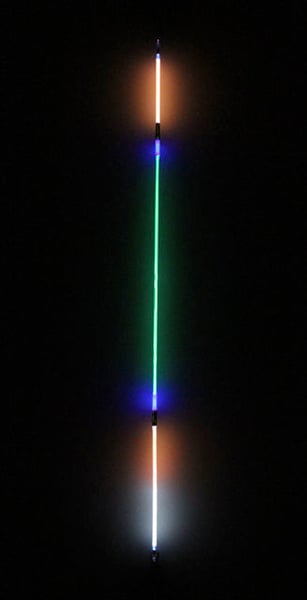
Expert analysis of Laddie John Dill’s Light Sentence (6)
Style: Light and Space · Genre: installation
Expert Analysis: "Light Sentence (6)" by Laddie John Dill
Style/Period Context:
Laddie John Dill is a key figure of the Light and Space movement, a southern California–based aesthetic born in the 1960s and 1970s. This movement privileges sensory perception—especially the behavior of light, atmosphere, and material subtlety—over narrative or iconography. Artists such as James Turrell, Robert Irwin, and Larry Bell sought to dissolve the boundaries between object and environment, often using translucent, reflective, or ephemeral media.
Significance of "Light Sentence (6)" as an Installation:
Dill’s Light Sentence series (the “(6)” indicates this specific iteration) exemplifies his signature synthesis of raw natural materials—typically sand, cement, and glass—with industrial components like neon or fluorescent light. In this installation, Dill suspends or layers sheets of glass over beds of colored sand and concrete, then integrates low-wattage light sources that interact with the translucency and reflection of the glass. The result is a delicate, atmospheric field where light seems to be “trapped” or “sentenced” within the material layers, a pun on the title that suggests both a poetic incarceration of illumination and a lyrical visual statement.
What Makes It Significant:
- Material Alchemy: Dill transforms humble, earthy substances into vehicles for ethereal light effects, bridging the organic and the technological—a hallmark of Light and Space’s emphasis on phenomenological experience.
- Perceptual Shift: The work compels viewers to move around it, adjusting their vantage point as light shifts across the sand and glass, making the installation itself a temporal event rather than a static object.
- Minimalist Yet Sensuous: Unlike the stark minimalism of some contemporaries, Dill’s work retains a tactile warmth (the grit of sand, the coolness of glass) that invites a deeply embodied encounter.
- Cultural Legacy: Light Sentence (6) stands as a refined example of how West Coast Light and Space artists used non-traditional materials to question the physical boundaries of art, anticipating later immersive and experiential installation practices.
In summary, this work is significant because it encapsulates the core Light and Space ambition: to make light tangible and space mutable, using a restrained palette of everyday materials to create a hushed, meditative environment that recalibrates the viewer’s sense of presence and perception.
Visually similar
20 works with related composition and palette

Light Sentence
Laddie John Dill

Light Sentence- Cool White
Laddie John Dill
Light Sentence
Laddie John Dill

Light Sentence
Laddie John Dill
Light Sentence (Argon River)
Laddie John Dill
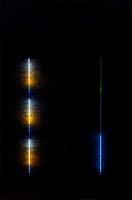
Light Sentence
Laddie John Dill
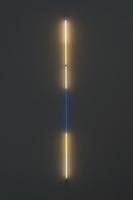
Light Sentence- Warm White
Laddie John Dill
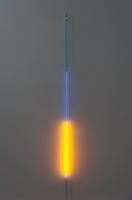
Light Sentence
Laddie John Dill
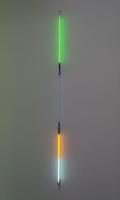
Light Sentence- Apple Green
Laddie John Dill
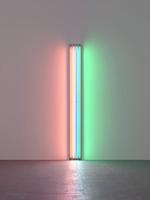
Untitled (to Henri Matisse)
Dan Flavin
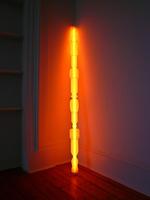
Idiot Stick 22
David Batchelor
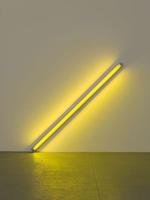
Diagonal of Personal Ecstasy (the Diagonal of May 25, 1963, to Constantin Brancusi)
Dan Flavin
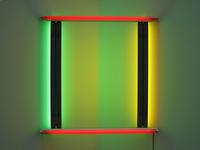
Untitled (to Bob and Pat Rohm)
Dan Flavin
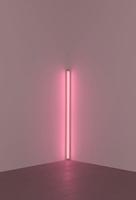
Pink out of corner (to Jasper Johns)
Dan Flavin

Light Sentence
Laddie John Dill
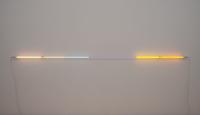
Light Sentence- Saffron
Laddie John Dill
Light Sentence- Ruby Red
Laddie John Dill
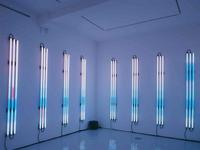
Column
Leo Villareal
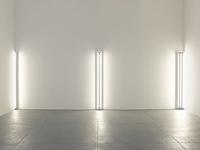
The nominal three (to William of Ockham)
Dan Flavin
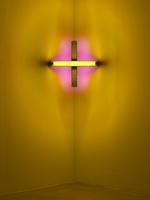
Untitled
Dan Flavin