
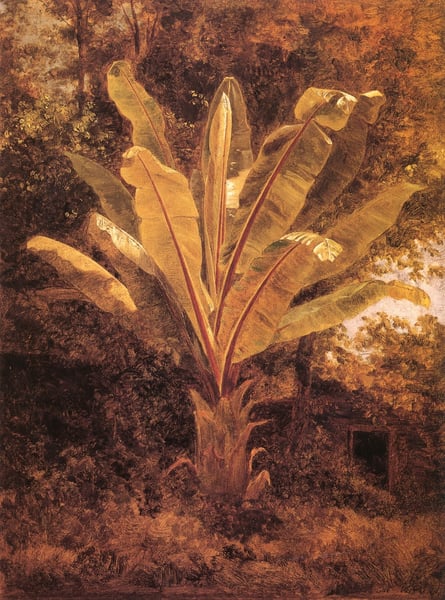
Plátano
Expert analysis of Jose Maria Velasco’s Plátano
Style: Realism · Genre: landscape
Expert Analysis of Plátano by José María Velasco
José María Velasco (1840–1912) is revered as the father of Mexican landscape painting, and Plátano stands as a quintessential example of his mastery within the Realist tradition. Executed with scientific precision and profound national pride, this work transcends mere topographic record to become a poetic meditation on the Mexican terrain.
Stylistic and Technical Significance
- Realist Fidelity: Velasco applies the tenets of Realism—observed directly from nature—with meticulous attention to light, texture, and atmospheric depth. The banana plant (plátano) is rendered with botanical exactitude: each broad leaf’s ribbing, the subtle gradations of green, and the soft shadow beneath the fronds demonstrate his training at the Academy of San Carlos and his study of European landscape traditions.
- Compositional Structure: The work likely positions the plátano as the central, almost monumental, subject against a receding landscape—possibly the Valley of Mexico. This foreground-background interplay anchors the viewer in a specific, recognizable locale while celebrating the native flora as a heroic motif.
Cultural and Historical Context
- Mexican Identity: Velasco painted during a period of nation-building after the Reform War. His landscapes consciously elevated Mexico’s natural wonders—its volcanoes, valleys, and native plants—as symbols of a distinct and proud national identity. Plátano is not a generic tropical study; it is a declaration that the humble plantain tree, central to Mexican cuisine and rural life, deserves the same artistic dignity as European classical subjects.
- Realism as Documentation: Velasco’s precise rendering served both artistic and scientific ends. His work often collaborated with the Mexican Society of Natural History, and Plátano would have been appreciated for its documentary value—recording a species and a landscape at a specific moment before urban expansion.
What Makes It Significant
- Bridge Between Eras: Velasco synthesized European Realist techniques with a distinctly American subject matter, paving the way for later Mexican muralists (Rivera, Orozco) who would also center the land and its people.
- Mastery of Light and Atmosphere: Unlike the romanticized landscapes of earlier generations, Velasco’s Plátano captures the clear, high-altitude light of the central Mexican plateau. The interplay of sun-drenched leaf surfaces and deep, cool shadows demonstrates his acute understanding of local optical conditions.
- Enduring Icon: The plátano—a seemingly ordinary plant—becomes under Velasco’s hand an emblem of fecundity, resilience, and the quiet grandeur of the Mexican countryside. It epitomizes how Realism, in his hands, was never mere imitation but a vehicle for deep cultural meaning.
In summary, Plátano is significant not only as a technical tour de force of Realist landscape painting but as a foundational work in the visual construction of Mexican national identity. Velasco transforms a simple banana plant into a symbol of place, heritage, and artistic integrity.
Visually similar
20 works with related composition and palette
Sommerlicher Garten in Wannsee
Oskar Begas
Plátano
Jose Maria Velasco

White Leaf
Corey Ribotsky
Landscape with palm tree and blooming flowerbed
Oleksandr Bogomazov
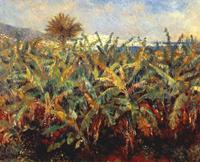
Field of Banana Trees
Pierre-Auguste Renoir
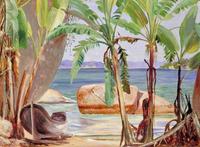
Bananas and Rocks at Paquetá, Brazil
Marianne North
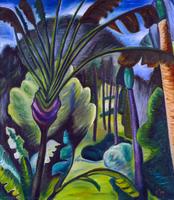
In Bermuda
Prudence Heward
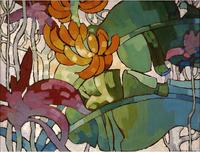
Hawaiian flowers
Arman Manookian
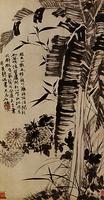
Banana, bamboo, chrysanthemums, orchids
Shitao
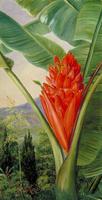
Banana, American Aloe and Cypress in a Garden, Java
Marianne North

Canna Leaves
Georgia O'Keeffe
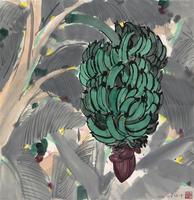
A Banana Garden Of Xishuangbanna
Wu Guanzhong

Riverbank
Kit Williams
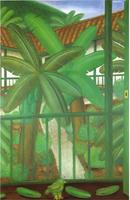
Patio
Fernando Botero
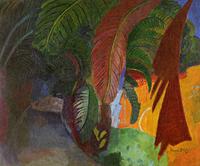
Palm Trees At Martigues (Homage To Gauguin)
Raoul Dufy
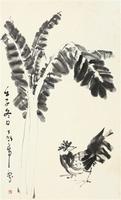
Cock and Banana Leaves
Ding Yanyong
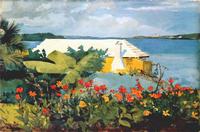
Flower garden and bungalow, Bermuda
Winslow Homer
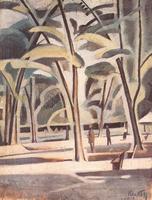
City Park
Kmetty János
Tropical Landscape
Albert Bierstadt
View of Kuching and River, Sarawak, Borneo
Marianne North