
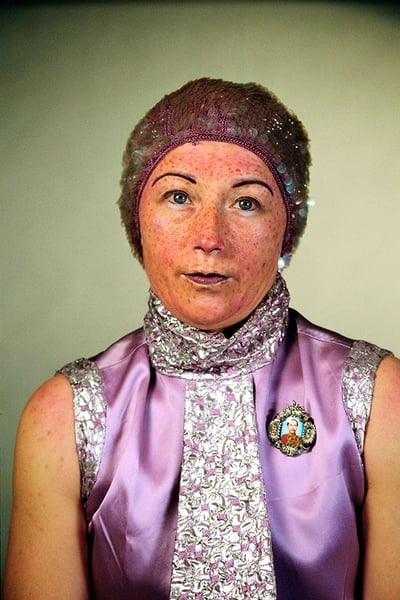
Analisi esperta di Untitled #351 di Cindy Sherman
Stile: Feminist Art · Genere: photo
As an expert art historian, I will analyze "Untitled #351" by Cindy Sherman based solely on the supplied structured facts: Style: Feminist Art, Genre: photo.
Significance within Feminist Art and Photographic Practice
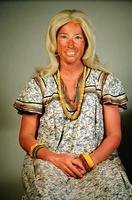
Cindy Sherman’s work is a cornerstone of postmodern feminist art, and "Untitled #351" exemplifies her strategic use of photography to deconstruct the male gaze and challenge traditional representations of women. While the specific visual content of this piece is not detailed here, its significance can be understood through the context of Sherman’s broader practice within the Feminist Art movement.
-
Subverting the Genre of Photography:
By choosing photo as her medium, Sherman enters a historically "objective" and documentary space—often used to present women as passive subjects for visual consumption. In works like #351, she reclaims the camera to stage performative self-portraits that are deliberately artificial, unsettling the notion of photographic truth. This aligns with feminist critiques of how photography has been used to naturalize gender roles and stereotypes. -
The Artifice of Identity:
Within the Feminist Art style, Sherman’s series (including the Untitled Film Stills, Centerfolds, and later History Portraits) demonstrates that identity is not fixed but constructed through cultural codes—clothing, pose, setting, and lighting. Untitled #351 likely continues this project by presenting a woman who is both the subject and the object, thereby collapsing the traditional binary of creator/created. This challenges the patriarchal notion of women as mere objects to be looked at. -
Critique of Mass Media and Archetypes:
Sherman’s photographs often reference film stills, advertisements, and art historical paintings. Her work’s significance lies in its ability to expose the limited roles available to women in visual culture: the ingénue, the housewife, the victim, the seductress. Even without seeing #351, the very act of titling it "Untitled" (with a number) refuses to assign a narrative or identity, forcing viewers to question their own assumptions about the woman depicted. This is a hallmark of feminist art’s institutional critique. -
The Photograph as a Site of Power:
In the feminist art movement of the 1970s and 1980s, artists like Sherman used photography to insert the female perspective into a medium dominated by male practitioners. By playing all roles herself—photographer, model, director, and prop stylist—she asserts control over her own representation. Untitled #351 thus becomes a document of agency, not passivity, and a key example of how feminist art reshaped the possibilities of the photographic medium.
In sum, "Untitled #351" is significant precisely because it embodies the core strategies of Feminist Art through the photo genre: it disrupts the visual codes of femininity, questions the authority of the camera, and insists on the constructedness of identity.
Visivamente simili
20 opere con composizione e palette affini

Untitled #359
Cindy Sherman

Remembering Kiki
Francis A. Willey

Untitled #353
Cindy Sherman

Untitled #360
Cindy Sherman

Untitled #199
Cindy Sherman
Diana, Princess of Wales
Diana Ringo
Self-Portrait in Knit Hat
Joan Brown

Untitled #408
Cindy Sherman
Untitled B
Cindy Sherman
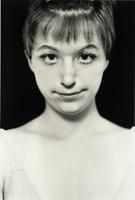
Untitled C
Cindy Sherman
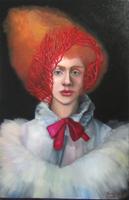
Coralthey
Vannie Gama

Portrait of a woman
Karl Gussow
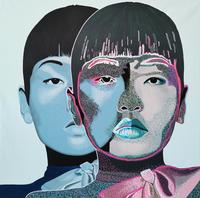
Kim 2100
Caroline David

Untitled #201
Cindy Sherman
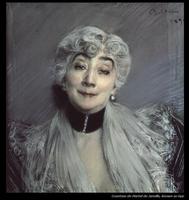
Portrait of the Countess de Martel de Janville, known as Gyp (1850-1932)
Giovanni Boldini
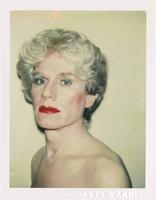
Self-Portrait in Drag
Andy Warhol
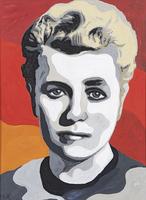
Portrait d’Ekaterina Fourtseva
Nadia Khodossiévitch-Léger
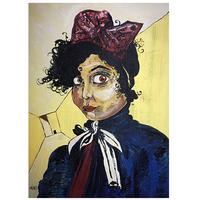
A110
Alan Aine
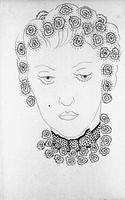
Chica Da Silva
Alberto da Veiga Guignard
Untitled #354
Cindy Sherman