Analyse experte de The Harvest de Frederick Morgan
Style : Romanticism · Genre : genre painting
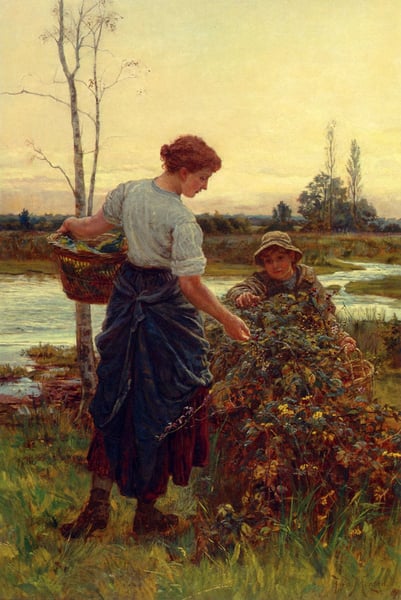
Expert Analysis: "The Harvest" by Frederick Morgan
As a genre painting within the Romantic tradition, Frederick Morgan’s "The Harvest" captures the period’s deep reverence for nature, emotion, and the idealized rhythms of rural life. The work’s significance lies in its synthesis of Romanticism’s core values—nostalgia, connection to the land, and the beauty of honest labor—with the accessible, storytelling quality of genre painting.
Morgan elevates a simple harvest scene into a meditation on human harmony with the natural cycle. The composition likely emphasizes warm, golden light and tender human interactions (common in his work), reflecting Romanticism’s focus on sentiment and the sublime in everyday moments. By choosing a harvest—a universal symbol of fruition and community—Morgan makes the Romantic ideal tangible: the viewer is invited to feel the tranquility and dignity of agrarian life, free from industrialization’s tensions. This blending of emotional resonance with a vivid, relatable subject helps secure the painting’s place as a quintessential example of how Romantic genre painting could find the extraordinary within the ordinary.
Genre
Style
Visuellement similaire
20 œuvres à la composition et à la palette proches
Not Far To Go
Frederick Morgan
Madeleine in An Wheat Field
Daniel Ridgway Knight
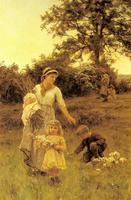
The Garland
Frederick Morgan
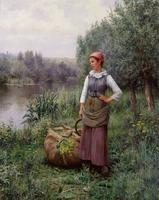
Girl by a stream, Flanders
Daniel Ridgway Knight
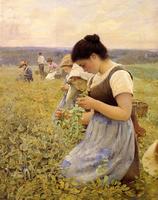
Women in the Fields
Charles Sprague Pearce
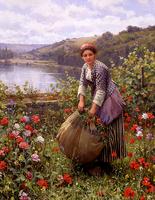
The Grass Cutter
Daniel Ridgway Knight
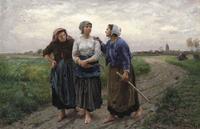
The friends
Jules Breton
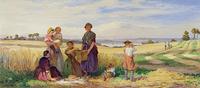
Break For Refreshment, Harvest Time
John Absolon
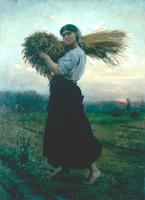
The Gleaner
Jules Breton
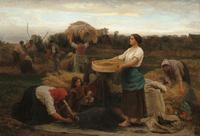
Harvesting Rapeseed
Jules Breton
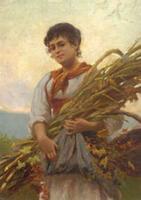
The harvest
Vittorio Tessari
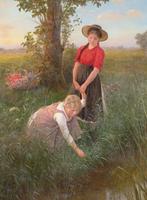
Picking flowers
Carl von Bergen
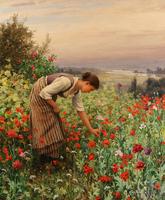
Girl Picking Poppies
Daniel Ridgway Knight
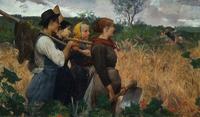
In the fields
Egisto Ferroni
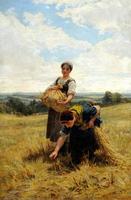
Gleaners
Frederick Morgan
At Harvest Time
Jules Bastien-Lepage
Young Peasant Woman Playing with Cockchafers
Jules Breton
Young Woman in the Fields
Jules Breton
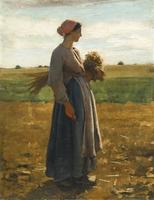
Young Woman in the Fields
Jules Breton
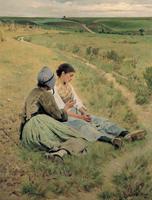
Peines De Coeur
Charles Sprague Pearce