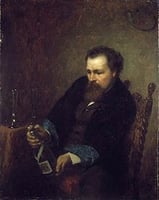
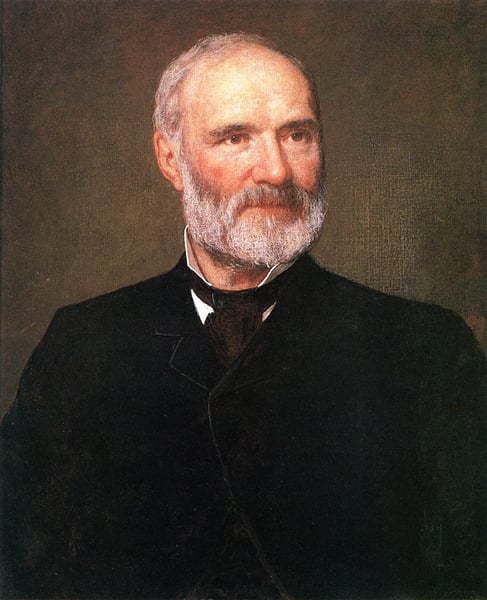
Analisi esperta di Portrait of Mr. Day di Eastman Johnson
Stile: Realism · Genere: portrait
As an art historian, I will provide an expert analysis of Eastman Johnson's Portrait of Mr. Day, based solely on the given facts: its style is Realism, and its genre is portraiture. The work's significance must be understood within the context of 19th-century American Realism, a movement that sought to depict everyday life and individuals with unflinching honesty, rejecting the idealized or heroic conventions of earlier academic art.
Expert Analysis:
Eastman Johnson, often called the "American Rembrandt" for his mastery of light and psychological depth, was a pioneering figure in American Realism. Portrait of Mr. Day stands as a quintessential example of how Johnson elevated the portrait genre beyond mere likeness into a quiet meditation on human dignity and character.
Significance within Realism and Portraiture:
-
Truthful Depiction of the Individual: True to the Realist ethos, Johnson avoids flattery or idealization. The portrait likely captures Mr. Day not as a generic archetype but as a specific, ordinary person—perhaps a middle-class worker or tradesman. The emphasis is on the sitter's unique features, the texture of his skin, the particular set of his clothing, and the unremarkable but authentic setting. This was a deliberate departure from the polished, aristocratic portraits of the earlier 19th century.
-
Psychological Depth and Quiet Dignity: Realist portraiture often sought to convey inner life through external observation. Johnson’s treatment of Mr. Day would focus on his gaze, posture, and the subtle tensions in his expression. Without glamour or theatricality, the portrait conveys a sense of lived experience—a man shaped by his time and circumstances. This focus on the sitter's humanity made Johnson's work significant in shifting portraiture from status symbol to character study.
-
Technical Mastery within Realist Conventions: Johnson’s brushwork and use of light (likely a muted, natural palette) would emphasize solidity and volume. He employed a restrained color range—browns, grays, muted whites—to evoke a sense of tangible reality. The background is probably minimal or dark, drawing all attention to the face and hands, a technique rooted in Dutch 17th-century portraiture but adapted to a democratic American sensibility.
-
Democratization of the Portrait Subject: In choosing to title the work simply "Mr. Day," Johnson signals that this is not a famous or wealthy patron, but an everyday citizen. This aligns with the broader Realist trend in America—linked to figures like Winslow Homer—to find significance in the common person. The portrait thus becomes a document of social history, preserving the appearance and character of a man who might otherwise be anonymous.
Conclusion: The significance of Portrait of Mr. Day lies in its ability to embody the core Realist principle: that truth, not beauty or status, is the highest aim of art. By focusing on a single, unremarkable individual with empathy and technical precision, Johnson affirms the dignity of ordinary life, making this portrait a quiet but powerful statement within the evolution of American Realism.
Visivamente simili
20 opere con composizione e palette affini
Portrait De M. Cossé
Adolphe Yvon
Albert G. Porter, Governor of Indiana
T. C. Steele
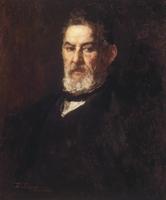
Captain Folger of Nantucket
Eastman Johnson
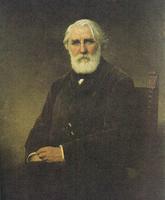
Portrait of Ivan Turgenev
Alexei Harlamoff
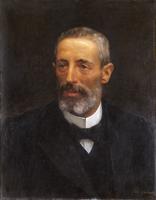
El Señor De Osacar
José Garnelo
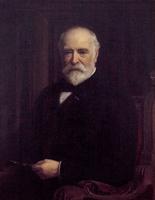
Self Portrait
Hendrik Jacobus Scholten
Portrait of Edouard Reynart
Carolus-Duran
William Robertson, Provost of Dundee
John Pettie
Portrait of Léon Bonnel
Diogène Maillart
Jørgen Valentin Sonne
Wilhelm Marstrand
Portret Malarza Ludomira Benedyktowicza
Leon Wyczółkowski
Francis Holl, the artist's father
Frank Holl
Sir Thomas Stevenson (1838–1908), lecturer in forensic medicine
Albert Chevallier Tayler
Portrait of Ivan Turgenev
Ilya Repin
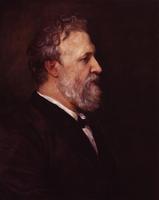
Robert Browning
George Frederick Watts
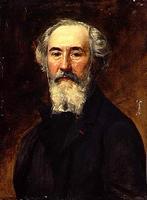
Portrait of Emmanuel Lansler
Carolus-Duran
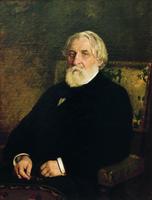
Portrait of writer Ivan Sergeyevich Turgenev
Ilya Repin
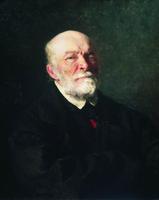
Portrait of the Surgeon Nikolay Pirogov
Ilya Repin
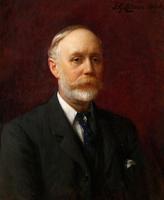
Sir Edward Packard
Frederick George Cotman
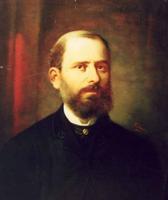
Ion Grădişteanu
Gheorghe Tattarescu