Análisis experto de The Savoyard Boy de Eastman Johnson
Estilo: Realism · Género: portrait
Artwork: The Savoyard Boy by Eastman Johnson
Style: Realism
Genre: Portrait
Expert Analysis:
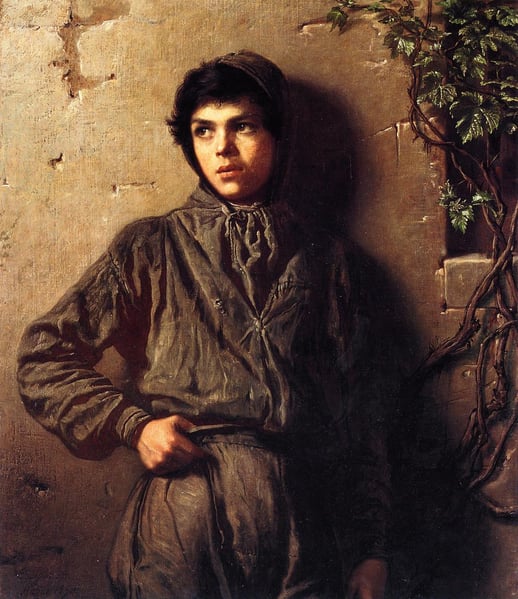
The Savoyard Boy stands as a compelling example of mid‑19th‑century American Realism, a movement that sought to depict everyday life with unflinching honesty and empathy. Eastman Johnson, often called the “American Rembrandt” for his masterful handling of light and human character, here turns his attention to a vulnerable child from the Savoy region of the Alps—a figure likely seen as a wandering musician or beggar in the streets of Europe.
Significance within Realism:
- Democratic subject matter: Unlike idealized or heroic portraiture, Johnson elevates a poor, marginalized child to the status of a serious artistic subject. This reflects Realism’s core mission to dignify ordinary people, especially the working class and the impoverished.
- Psychological depth: The boy’s expression is neither sentimental nor melodramatic; it conveys a quiet, intelligent resilience. Johnson avoids the picturesque poverty common in genre painting, instead presenting a specific human being with dignity and interiority.
- Technical virtuosity: Johnson’s training in Düsseldorf and The Hague is evident in the meticulous modeling of the boy’s face and tattered clothing, the subtle modulation of skin tones, and the soft focus of the background. The realism here is not mere documentation but a careful orchestration of light and shadow that creates a sense of intimacy.
Period and cross‑cultural relevance:
Painted during Johnson’s stay in Europe (the 1850s–60s), The Savoyard Boy bridges European and American artistic currents. The subject references the migratory Savoyard children often painted by French realists like Gustave Courbet, yet Johnson’s treatment is distinctly American in its optimistic, humanist focus. The portrait anticipates Johnson’s later masterworks of American rural life (The Old Stagecoach, The Cranberry Harvest), where he continues to apply the same empathetic realism to figures on the margins.
In sum, The Savoyard Boy is significant not only as a technical tour de force of Realist portraiture but also as a foundational work that asserts the importance of the unseen—the poor, the young, the transient—in the grand narrative of art history.
Visualmente similares
20 obras con composición y paleta relacionadas
Little girl eating cherries
Jules Breton
Mother and Child
Thérèse Schwartze
The orphan
Émile Auguste Hublin
Girl with a Pitcher
Vasily Perov
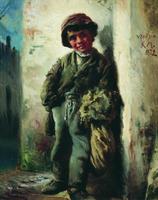
Savoyard
Konstantin Makovsky
Portrait of a Young Girl, standing, three quarter length, holding a sea shell and rosary
Émile Auguste Hublin
Bust of a peasant woman
Silvestro Lega

Longing (Saudade)
Jose Ferraz de Almeida Junior
Begging children
Meyer von Bremen
Fruit seller; costume of Normandy
Eleuterio Pagliano

Kitchen interior with maid
Hendrick Joseph Dillens
Young Italian woman at the well
Anton Romako
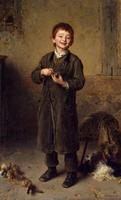
First result
Ludwig Knaus
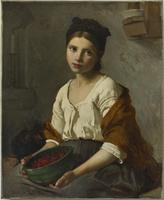
The cherry girl
Émile Auguste Hublin
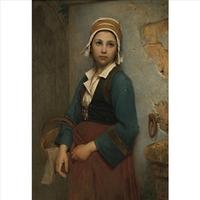
The lonely maid
Émile Auguste Hublin
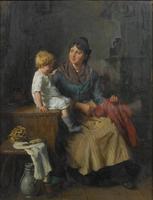
The new dress
Felix Schlesinger
Herring Dish
Konstantin Makovsky
Children in the woods
Felix Schlesinger
Country Boy
Nikolay Bogdanov-Belsky
Portrait of a peasant woman
Silvestro Lega