Analisi esperta di Classical Landscape Composition di John Varley
Stile: Romanticism · Genere: landscape
Expert Analysis: "Classical Landscape Composition" by John Varley
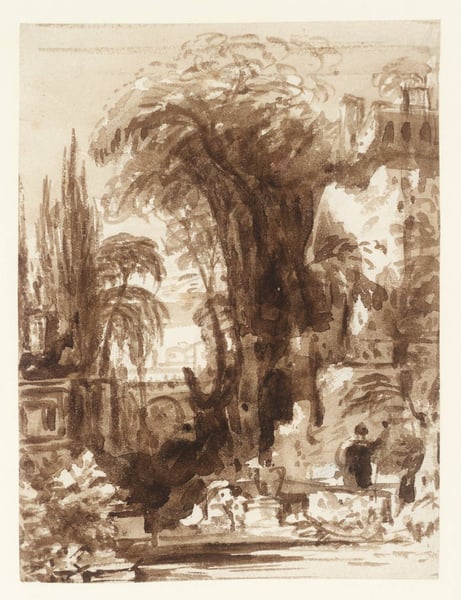
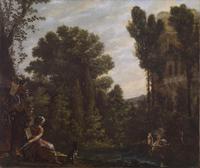
John Varley’s Classical Landscape Composition occupies a distinctive place within Romanticism—a movement primarily associated with emotional intensity, the sublime, and untamed nature. Yet Varley’s work demonstrates that Romantic landscape painting could also embrace the ordered, harmonious principles of classical composition, revealing the breadth and flexibility of the period’s artistic ideals.
Significance within Romanticism
-
Synthesis of Classical Order and Romantic Atmosphere: Unlike many Romantic landscapes that emphasize wild, dramatic vistas, Varley’s painting structures nature through balanced, symmetrical arrangements reminiscent of Claude Lorraine or Nicolas Poussin. This formal clarity tempers the emotional fervor typical of Romanticism, creating a serene, contemplative mood that still prioritizes nature’s grandeur. The “classical” title itself underscores a deliberate dialogue with older traditions, proving that Romantic artists could honor reason and structure without sacrificing depth of feeling.
-
Elevation of the Humble Landscape: As a British watercolorist and influential teacher, Varley helped legitimize landscape as a vehicle for serious artistic expression during the Romantic era. By infusing a compositionally disciplined scene with the Romantic reverence for natural light and atmosphere—soft gradients, delicate skies, and lyrical distances—he shows that even a quiet, idealized view of the countryside can evoke the sublime sense of infinity and spiritual connection to the natural world.
-
Influence on the English Watercolour School: Varley was a central figure in the early 19th-century English watercolour movement, and Classical Landscape Composition exemplifies his ability to translate the high-minded ambitions of Romantic history painting into a more intimate, accessible medium. The work’s fusion of structured line with atmospheric wash technique made him a pioneer in demonstrating watercolour’s capacity for both compositional rigor and poetic expression—a legacy that shaped later Romantic landscapists like J.M.W. Turner and John Sell Cotman.
In essence, Varley’s painting is significant because it challenges the stereotype of Romanticism as purely rebellious or chaotic. Instead, it reveals that Romantic artists could achieve emotional resonance through calm, measured beauty, proving that the movement’s core—the awe-inspiring power of nature—could be articulated just as powerfully within a classical framework.
Visivamente simili
20 opere con composizione e palette affini
Casino Farnese on the Palatine Hill, Rome
Joseph-Marie Vien
Scottish Romantic Landscape
William Leighton Leitch
A rocky river landscape
Joachim Govertsz. Camphuysen
Landscape with the finding of Moses
Claude Lorrain
Landscape with an Arched Gateway
Adam Pynacker
Ruins of the House of Septimius Severus on the Palatine
Cesare Biseo
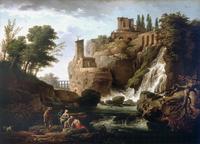
Tivoli Landscapes (1748) by Joseph Vernet
Claude-Joseph Vernet
Castle Overlooking a River
Maxime Lalanne

Landscape with St. Jerome and rocky crag
Paul Bril
Temple of Clitunno
Giovanni Battista Piranesi
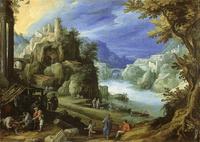
Fantastic mountain landscape
Paul Bril
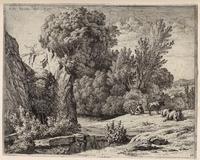
Landscape with a shepherd and three cows
Karel Dujardin
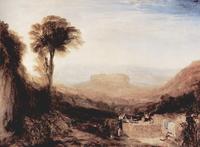
View of Orvieto
J.M.W. Turner
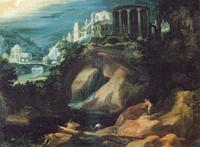
Landschaft mit Sibyllentempel
Paul Bril
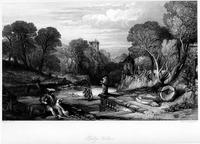
Tulleveolan, engraving by William Miller after Leitch, from Eight Engravings in Illustration of Waverley
William Leighton Leitch
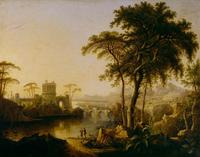
A River Landscape with a Castle at Sunrise
Sebastian Pether
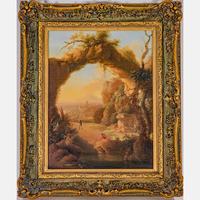
Landscape
Jan Hackaert
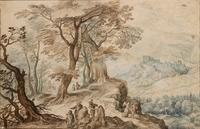
Landscape with Tobias and the Angel
Jan Brueghel the Younger
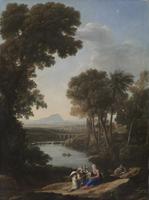
Rest on the Flight into Egypt
Claude Lorrain
Landscape with a Scene of Witchcraft
Agostino Tassi