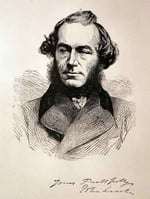
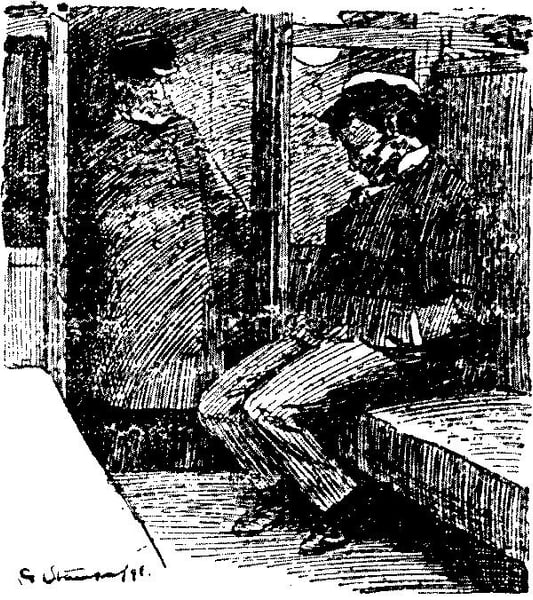
AFTER AN EASTERTIDE FESTIVITY—ON THE INNER CIRCLE
Dettagli
Analisi esperta di AFTER AN EASTERTIDE FESTIVITY—ON THE INNER CIRCLE di John Leech
Stile: Realism · Genere: illustration
Expert Analysis of "AFTER AN EASTERTIDE FESTIVITY—ON THE INNER CIRCLE" by John Leech
John Leech, a leading Victorian illustrator and a mainstay of Punch magazine, produced this work within the context of 19th-century Realism. While Realism in fine art (Courbet, Millet) focused on rural labor and the urban poor, its illustrative counterpart often turned to the humor and unvarnished truths of middle-class and city life. Leech’s piece stands out as a quintessential example of social documentation through illustration, capturing a fleeting, unidealized moment that reveals much about Victorian leisure, transport, and class interactions.
Significance within its Style and Period:
-
Realism of the Everyday: The title points to a specific, transient moment—“after” a festivity, on the “Inner Circle” (referring to the Inner Circle railway line of the London Underground, opened in the 1860s). Leech chooses not the glitter of the Easter holiday itself, but the tired, messy aftermath. This aligns with Realism’s commitment to depicting ordinary, unheroic experiences—the weary commuters, the scattered debris, the slumped postures of people returning home. The work elevates a mundane railway journey to a subject worthy of artistic attention.
-
Illustration as a Mirror of Society: Leech’s illustrations were widely disseminated in Punch, making him a chronicler of Victorian manners. Here, the “Inner Circle” functions as a microcosm of the city: a cramped, class-mixed space where the aftermath of celebration exposes social realities. The contrast between the supposed festivity (Easter, a time of renewal and joy) and the exhaustion of the return journey is a subtle, humorous critique of modern urban life—a hallmark of Leech’s style.
-
Technical Realism in Line and Tone: As an illustrator, Leech mastered the wood-engraved line, using cross-hatching and precise contour to convey texture (woolen coats, shiny hats, tired faces) without sentimentality. The composition, likely a crowded carriage or platform, forces the viewer’s eye across a slice-of-life scene, echoing the journalistic immediacy that made Punch illustrations powerful social documents.
-
Cultural Specificity: The “Eastertide festivity” and the “Inner Circle” root the work in a distinct historical moment—the expansion of London’s public transport in the 1860s-70s. Leech captures a new kind of crowd experience: the anonymous, weary post-holiday crush, which became a defining feature of industrial urbanism. This makes the illustration significant not only as art but as a primary source for understanding Victorian daily life.
In sum, Leech’s work is significant because it transforms illustration into an instrument of sharp social observation. It demonstrates that Realism’s goals—truth to contemporary life, rejection of idealization, attention to transient moments—could be achieved in the popular press just as powerfully as in salon painting. The piece remains a vivid, unglamorous snapshot of Victorian London, alive with the authentic fatigue and resilience of its people.
Genere
Stile
Visivamente simili
20 opere con composizione e palette affini
NOTES OF TRAVEL
John Leech
AN EXCITING TIME
John Leech
WHAT'S SAUCE FOR THE GOOSE
John Leech
LA BELLE DAME SANS 'MERCI'
John Leech
Illustration to "A Week of Kindness"
Max Ernst
IN THE UNDERGROUND
John Leech
Dispute about faith (a scene in the car)
Vasily Perov
HIGHLY ACCOMMODATING
John Leech
RAILWAY LUXURIES
John Leech
Illustration to "A Week of Kindness"
Max Ernst
ZOOLOGY
John Leech
A REMINDER
John Leech
A DILEMMA
John Leech
A MAN AND A PASSENGER
John Leech

SMOKING COMPARTMENT
John Leech
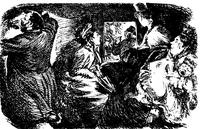
TOUT VIENT À QUI SAIT ATTENDRE
John Leech

THIRD CLASS. TO SEAT SIX
John Leech
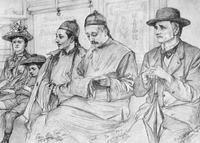
Chinese people on the Underground - Berlin
Christian Wilhelm Allers
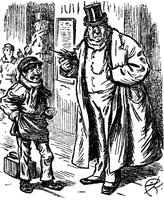
A NON-SEQUITUR
John Leech
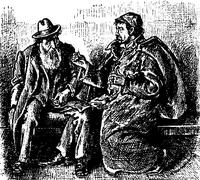
A TRAGEDY ON THE GREAT NORTHERN
John Leech