Expert Analysis of "Miskhor. After the rain" by Dmitry Nalbandyan
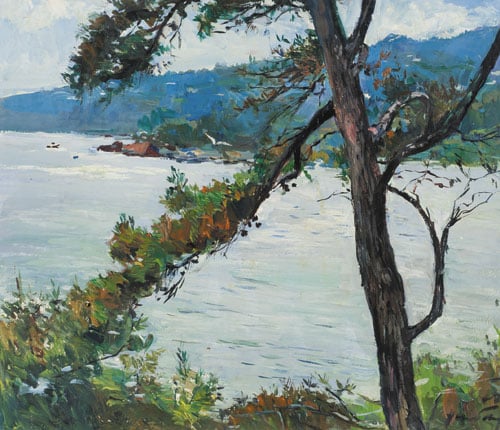
Despite the conventional landscape genre, this work achieves significance within the Socialist Realist style by reinterpreting nature through the lens of Soviet ideology. The title, Miskhor. After the rain, suggests a specific location—a Crimean resort—that was a symbol of state-sanctioned leisure and recovery for workers. Rather than an untamed wilderness, the scene likely depicts a cultivated, harmonious environment where nature is refreshed and accessible. The "after the rain" moment implies cleansing and renewal, aligning with Socialist Realism’s optimistic narrative of progress and rejuvenation under Soviet care.
In the Nature period, the artist avoids romanticized sublimity in favor of a calm, ordered landscape that reflects socialist values: balance, accessibility, and the human place within a managed ecosystem. The significance lies in how Nalbandyan transforms a simple post-rain view into a subtle affirmation of Soviet life—where even nature serves the collective ideal of rest and productivity. This work exemplifies how Socialist Realist painters could invest a seemingly apolitical genre with ideological resonance, making the ordinary extraordinary within the movement’s prescribed visual language.