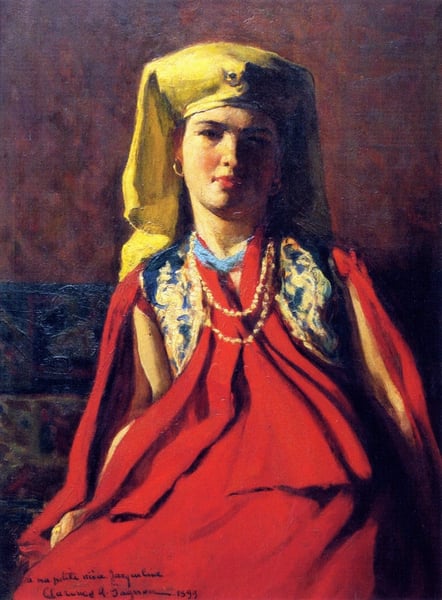
Analisi esperta di Armenian Woman di Clarence Gagnon
Stile: Impressionism · Genere: portrait
Expert Analysis: "Armenian Woman" by Clarence Gagnon
Clarence Gagnon (1881–1942) is best known for his luminous Canadian landscapes and scenes of rural Quebec, yet Armenian Woman reveals a lesser‑known dimension of his artistic practice: a direct engagement with global cultures beyond his native environment. Painted in an Impressionist style, this portrait achieves significance through its fusion of two distinct traditions—the Western Impressionist fascination with light and atmosphere, and the dignified, intimate rendering of a specific ethnic identity.
Stylistic Significance within Impressionism
Gagnon applies the core tenets of Impressionism—loose, vigorous brushwork and an emphasis on the fleeting effects of natural light—to the human figure. Rather than dissolving the sitter into a study of pure optical sensation, he uses broken color and soft, diffused shadows to model the woman’s features with both immediacy and warmth. The face is likely bathed in cool, even light, while the rich textile (perhaps an embroidered headscarf or traditional dress) provides a foil for warm, saturated hues. In doing so, Gagnon demonstrates that impressionist technique can serve portraiture’s inherent psychological depth, not just landscape or still life.
Cultural and Historical Significance
The subject—an Armenian woman—was uncommon in early‑20th‑century Canadian art, a period when most Canadian painters focused on national identity through wilderness or urban scenes. Gagnon’s travels (including Europe and North Africa) exposed him to diverse ethnic communities. Armenian Woman may reflect his empathy for a persecuted people (the Armenian Genocide of 1915 occurred during his most active years). By choosing to depict an Armenian sitter with respectful, unromanticized attention, Gagnon expands the reach of Canadian Impressionism beyond its usual boundaries, offering a portrait that is simultaneously a study of character and a document of cross‑cultural encounter.
Legacy
Though Gagnon’s reputation rests primarily on his Quebecois subjects, Armenian Woman stands as a testament to his versatility. It demonstrates that Impressionism, when applied to portraiture, can capture both universal human presence and the specific markers of heritage. The work thus enriches our understanding of how early Canadian modernists navigated global themes, making it a significant, if underrecognized, piece in the narrative of Impressionist portraiture.
Visivamente simili
20 opere con composizione e palette affini
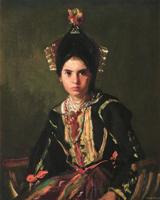
La Montera. Segovia Girl in Fiesta Costume
Robert Henri
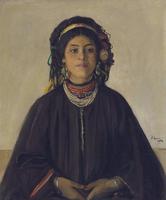
Aïda, a Moorish Maid
John Lavery
Souvenir from the Orient
Jean-François Portaels
Woman in a national costume
Konstantin Makovsky
Italian Woman (Jewish Algerian Woman)
Camille Corot
Carmen
Théodore Ralli
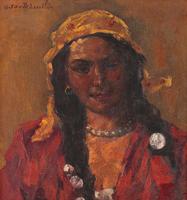
The Yellow Headscarf
Octav Bancila
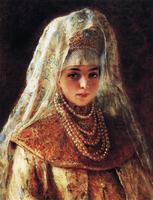
Boyaryshnya
Konstantin Makovsky
Italian girl
George Elgar Hicks
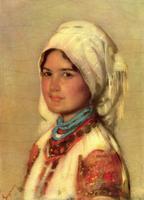
Peasant Woman from Muscel
Nicolae Grigorescu
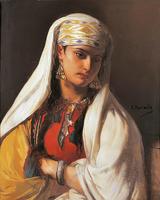
Young oriental woman
Jean-François Portaels
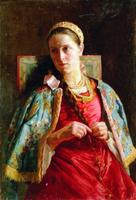
Portrait of the Young Lady in Russian Costume
Konstantin Makovsky
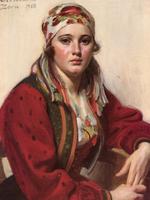
Ols Maria
Anders Zorn
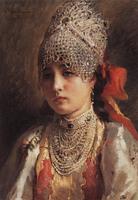
Boyaryshnya
Konstantin Makovsky
Portrait of Artist's Spouse
Oleksa Novakivskyi
Odalisque
Iosif Iser
Portrait of a bacha
Vasily Vereshchagin
Head of the Old Woman
Konstantin Makovsky
Mildred-O Hat
Robert Henri
Carmelita Requena
Thomas Eakins