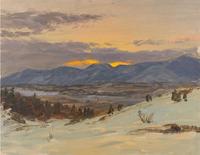
Expert Analysis: Clarence Gagnon’s Early Spring Morning in the Laurentian Wilds
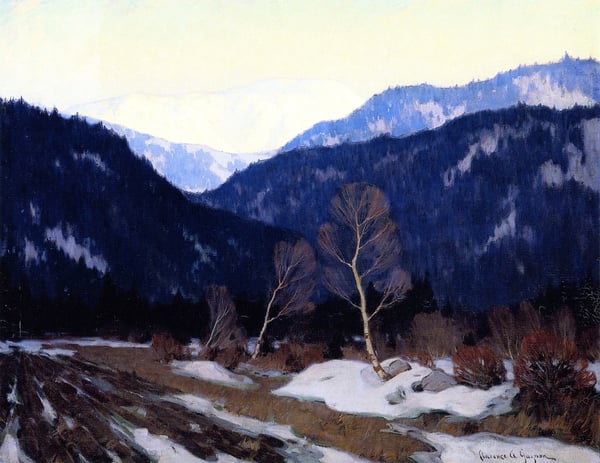
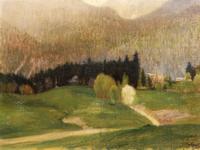
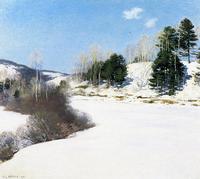
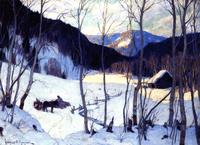
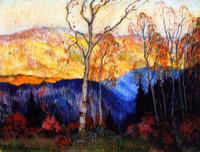
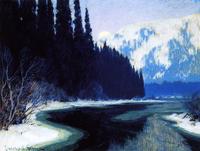
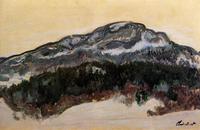
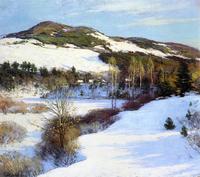
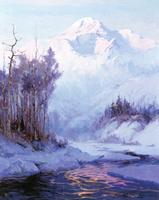
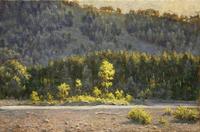
As an Impressionist landscape painted by Canadian artist Clarence Gagnon, this work captures the fleeting, atmospheric conditions of a spring dawn in the Laurentian Mountains. Gagnon’s significance lies in his ability to merge the core tenets of French Impressionism—broken brushwork, a high-keyed palette, and an emphasis on shifting light—with the distinct character of the Canadian wilderness.
The “early spring morning” setting is particularly telling: Impressionism excels at rendering the ephemeral, and here the thawing snow, emerging earth, and soft, milky light of dawn create a delicate interplay of cool shadows and warm golden reflections. Gagnon’s brushstrokes likely flicker across the canvas to suggest both the crisp air and the textural roughness of the Laurentian terrain—rocky outcrops, pine silhouettes, and melting ice.
Within the Impressionist movement, Gagnon’s work is notable for adapting the style to a northern climate and topography rarely seen by the original French Impressionists. Whereas Monet painted the Seine or the coast of Normandy, Gagnon depicted the wild, untamed forests and hills of Quebec, infusing them with the same sensitivity to atmospheric vibration. Early Spring Morning in the Laurentian Wilds stands as a testament to how Impressionism could transcend its origins to capture the unique luminosity and rugged beauty of Canada’s natural world, marking Gagnon as a vital figure in the country’s artistic heritage.