
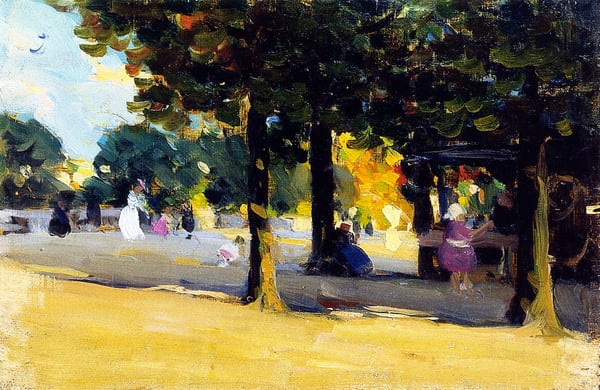
Clarence Gagnon sanatçısının Luxembourg Gardens. Paris eseri hakkında uzman analizi
Tarz: Impressionism · Tür: landscape
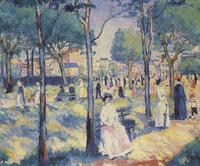
Based solely on the provided facts, this analysis focuses on how "Luxembourg Gardens. Paris" by Clarence Gagnon exemplifies the core tenets of Impressionism within the landscape genre.
Significance as an Impressionist Landscape
As an Impressionist work, this painting’s significance lies in its depiction of a specific, modern urban leisure setting—the Luxembourg Gardens in Paris—through the movement’s revolutionary approach to light, color, and atmosphere. Impressionist landscapes of this era were not about topographical accuracy but about capturing a fleeting, sensory impression of a scene at a particular moment. Gagnon’s treatment of the gardens would likely emphasize:
- Transient Effects of Light: The scene would be defined by dappled sunlight filtering through trees, casting shifting shadows on paths, flowerbeds, and figures. The white or pastel-toned gravel paths typical of French formal gardens would act as a reflective surface, animated by broken, vibrating brushstrokes of pure color (blues, pinks, yellows) to suggest shimmering light.
- Brushwork and Texture: Instead of smooth, blended paint, the canvas would be built from visible, energetic dabs and dashes of pigment. This technique mimics the visual "vibration" of the outdoors and emphasizes the materiality of paint itself, a hallmark of the style.
- Subject as Veil for Sensation: The gardens—with their fountains, statues, strolling Parisians, and children at play—serve not as a documentary record but as a vehicle for conveying the feeling of a pleasant afternoon in the city. The focus is on the harmony of nature and human life, rendered through optical sensation rather than detailed narrative.
Genre Context
Within the landscape genre, this work is significant because it represents a key shift in the late 19th and early 20th centuries: moving away from idealized, heroic, or pastoral landscapes toward the depiction of plein air scenes of modern life. The Luxembourg Gardens were a favorite subject for Impressionists precisely because they combined natural elements (trees, sky, water) with the fashionable, everyday activity of Belle Époque Paris. Gagnon’s painting would thus stand as a record of how Impressionism transformed landscape art into a study of atmosphere, urban leisure, and the artist’s immediate perceptual experience.
In summary, the artwork’s significance is in its pure expression of Impressionist principles—especially the capture of light and fleeting moments—applied to an iconic Parisian landscape subject, making it a representative example of how the movement redefined landscape painting for the modern era.
Görsel olarak benzer
İlişkili kompozisyon ve renk paletine sahip 20 eser
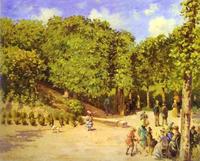
Town Garden in Pontoise
Camille Pissarro
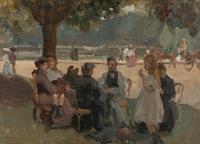
In the Forrest of Boulogne near Paris
Isaac Israels
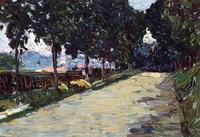
Park of St. Cloud
Wassily Kandinsky
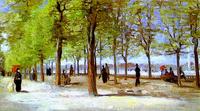
Terrace in the Luxembourg Garden
Vincent van Gogh
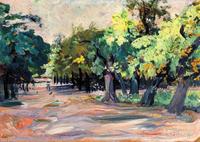
Scheiber Hugó, Parkrészlet,
Scheiber Hugó
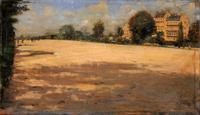
Avenue du Bois de Boulogne, Paris
Giuseppe De Nittis
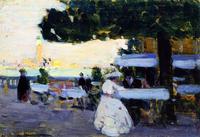
Public Gardens, Venice
Clarence Gagnon
Paris cafe
Konstantin Korovin
Study for the Cercle de l'île de Puteaux
Henri Gervex
Park in Paris
Auguste Herbin
A Valencian Garden
Joaquín Agrasot
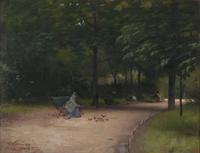
Feeding birds in the park
Paul Peel
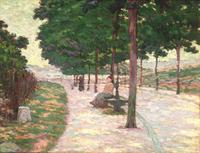
Landscape
Louis Abel-Truchet
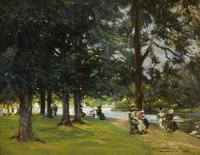
The upper Thames
Albert Chevallier Tayler
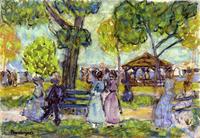
The Pavilion
Maurice Prendergast
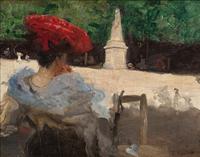
Luxembourg Gardens
Eliseu Visconti
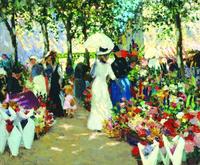
French Flower Market
Ethel Carrick
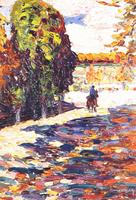
Park of St. Cloud with horseman
Wassily Kandinsky
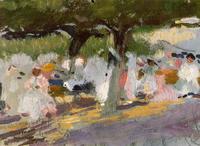
Under the tamarinds (San Sebastian)
Joaquín Sorolla
On the Boulevard
Kazimir Malevich