
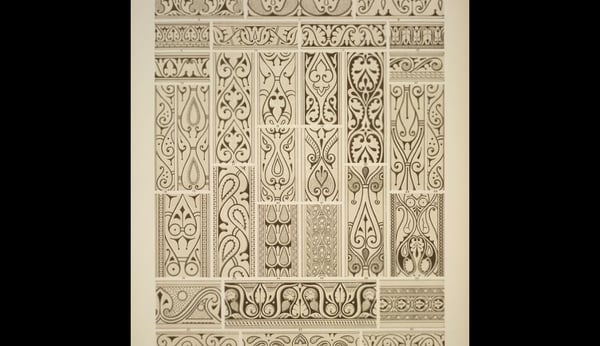
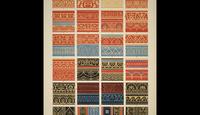
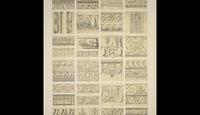
Arabian no. 1. Arabian ornaments from the ninth century from Cairo
Ayrıntılar
Owen Jones sanatçısının Arabian no. 1. Arabian ornaments from the ninth century from Cairo eseri hakkında uzman analizi
Tarz: Art Nouveau (Modern) · Tür: design
Expert Analysis: "Arabian no. 1. Arabian ornaments from the ninth century from Cairo" by Owen Jones
This work is a key artifact of the Art Nouveau (Modern) period, representing Owen Jones's systematic documentation of non-Western ornament. Its significance lies in how it synthesizes historical Islamic design principles with the emerging decorative language of late 19th-century Europe.
Within its style and period, the work is significant for the following reasons:
-
Bridging Cultural Traditions: The artwork explicitly references ninth-century Arabian ornaments from Cairo, demonstrating Art Nouveau's fascination with exotic, non-classical sources. Jones's precise recording of these motifs helped introduce Islamic geometric and arabesque patterns to Western designers, fostering a cross-cultural dialogue that enriched the Modernist aesthetic.
-
Influence on Design Theory: As part of Jones's broader project (famously The Grammar of Ornament), this piece exemplifies the period's analytical approach to ornament. Jones codified the underlying "grammar" of these Arabian motifs—repetition, symmetry, and stylized natural forms—which directly informed Art Nouveau's emphasis on rhythmic, flowing lines and flat, decorative surfaces.
-
Preservation of Historical Craft: By isolating ninth-century Cairo ornaments, the work acts as a vital historical record at a time when European design was rapidly industrializing. It elevates Islamic decorative art from mere craftsmanship to a legitimate source for "high" design, challenging Eurocentric hierarchies and anticipating later modernist principles of form following function.
In summary, "Arabian no. 1" is significant not only as a beautiful design but as a foundational document that helped shape Art Nouveau's global vocabulary, proving that the period's innovation was deeply rooted in the recovery and reimagining of historical ornament.
Görsel olarak benzer
İlişkili kompozisyon ve renk paletine sahip 20 eser
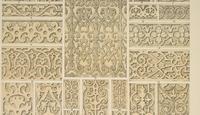
Elizabethan Ornament no. 2. Various ornaments in relief from the time of Henry VIII to that of Charles II
Owen Jones
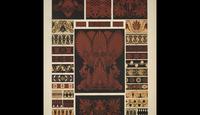
Greek no. 5. Ornaments from Greek and Etruscan vases
Owen Jones
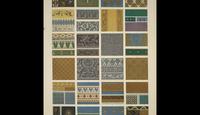
Renaissance Ornament no. 4. Enamels from the Louvre and Hotel Cluny
Owen Jones
Pompeian no. 1. Collection of borders from different edifices in Pompei
Owen Jones
Hindoo Ornament no. 2. Ornaments from the collection at the Crystal Palace, Sydenham
Owen Jones
Renaissance Ornament no. 6. Ornaments from pottery at Hotel Cluny and Louvre
Owen Jones
Greek no. 8. Painted Greek ornaments from the temples and tombs in Greece and Sicilty
Owen Jones
Renaissance Ornament no. 7. Ornaments from pottery at Hotel Cluny and Louvre
Owen Jones
Nineveh and Persia, no. 1
Owen Jones
Medieval Ornament no. 4. Stained glass of various periods
Owen Jones
Greek no. 6. Ornaments from Greek and Etruscan vases
Owen Jones
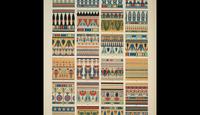
Egyptian no. 4
Owen Jones
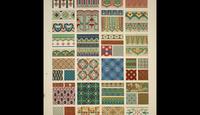
Chinese Ornament no. 2. Ornaments painted on porcelain and wood from woven fabrics
Owen Jones
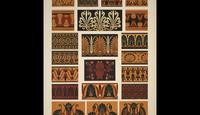
Greek no. 4. Ornaments from Greek and Etruscan vases
Owen Jones
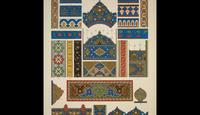
Persian Ornament no. 3. Ornaments from Persian manuscript in the British Museum
Owen Jones
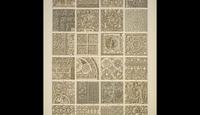
Byzantine no. 1. Carved Byzantine ornaments
Owen Jones
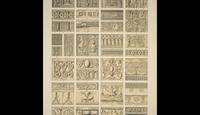
Renaissance Ornament no. 8. Ornaments from stone and wood from the collections of the and Louvre and Hotel Cluny
Owen Jones
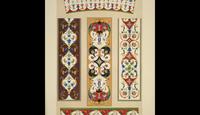
Italian Ornament no. 3. Ornaments from the Palazzo Ducale, and the Church of St. Andrea, Mantua
Owen Jones
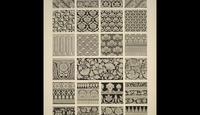
Indian Ornament no. 1. Ornaments from metal work from the exhibitions of 1851
Owen Jones
Renaissance Ornament no. 9. Ornaments from stone and wood from the collections of the and Louvre and Hotel Cluny
Owen Jones