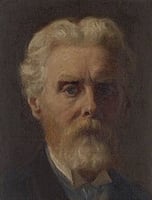
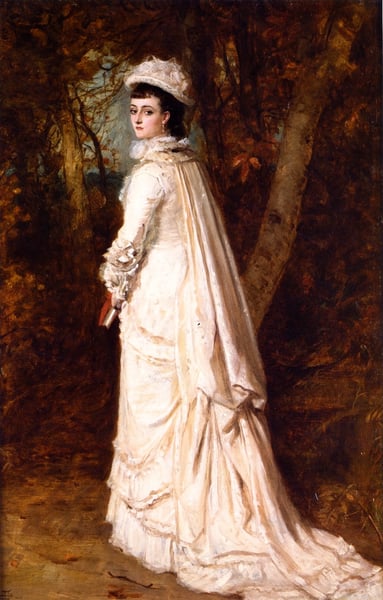
Mary Carrie
Analisi esperta di Mary Carrie di James Archer
Stile: Romanticism · Genere: portrait
Expert Analysis of "Mary Carrie" by James Archer
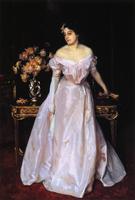
As a portrait within the Romantic tradition, James Archer’s “Mary Carrie” embodies the movement’s core preoccupations: the elevation of individual emotion, the idealization of inner life, and a departure from neoclassical restraint. Archer, a Scottish painter associated with the Pre-Raphaelite circle, brings a distinctly Romantic sensibility to this work.
Significance within Romanticism:
-
Emotional Interiority: Unlike the formal, status-driven portraiture of earlier eras, Archer focuses on the sitter’s psychological presence. The Romantic portrait seeks to capture not just likeness, but a fleeting, personal mood—often introspective, pensive, or dreamlike. The title “Mary Carrie” suggests a named individual, grounding the work in specific identity, yet the Romantic lens transforms her into a vessel of universal feeling.
-
Naturalism and Atmosphere: Romantic portraiture often softens contours and employs chiaroscuro to evoke mystery or sublimity. Archer would likely have used rich, warm tones and subtle lighting to create an intimate, almost spiritual aura around the sitter—a hallmark of the Romantic emphasis on the sublime encounter between viewer and subject.
-
Rejection of Convention: The Romantic portrait rejects rigid academic posing in favor of a more “natural” arrangement—perhaps a turned head, a distant gaze, or an unguarded expression. This aligns with the broader Romantic rebellion against Enlightenment rationalism, celebrating instead the spontaneous, the sensitive, and the singular.
-
Archer’s Unique Contribution: While not as widely known as Delacroix or Géricault, Archer brings a distinctly Victorian-Romantic sensibility—blending Pre-Raphaelite attention to detail (e.g., textiles, hair, skin tones) with a Romantic yearning for the poetic. In “Mary Carrie,” the sitter likely appears both real and idealized, caught in a moment of quiet contemplation that invites the viewer to share her inner world.
In sum, “Mary Carrie” is significant as a Romantic portrait that prioritizes emotional truth over social display. Archer uses the genre to explore the fragile, transient nature of human identity—a central Romantic concern—making the work a testament to the movement’s enduring fascination with the individual soul.
Visivamente simili
20 opere con composizione e palette affini
Mrs. Henry White
John Singer Sargent
Madame Melba
Rupert Bunny
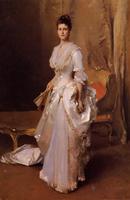
Mrs. Henry White (Margaret Daisy Stuyvesant Rutherford)
John Singer Sargent
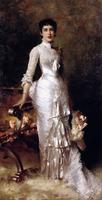
Young Beauty In A White Dress
Julius LeBlanc Stewart
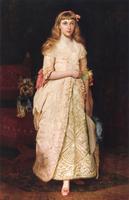
A Portrait of Miss Rose Fenwick as a Child
James Archer
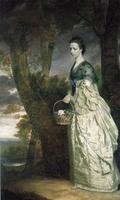
Mrs. Thomas Riddell
Joshua Reynolds
Lady Sunderlin
Joshua Reynolds
Mrs. Edward Deshon Brandegee
John Singer Sargent
The Love Letter
Auguste Toulmouche
Harmony in Pink and Grey: Lady Meux
James McNeill Whistler
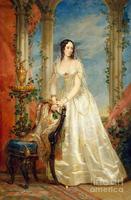
Portrait of Princess Zinaida Yusupova
Christina Robertson
Charlotte Dufaux, in her wedding dress
Emile Claus
Madeleine Morlet
Antonio de La Gándara
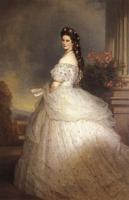
Elizabeth, Empress of Austria
Franz Xaver Winterhalter
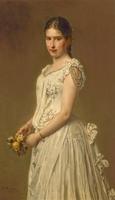
Portrait of the artist's daughter, Johanna Knaus
Ludwig Knaus
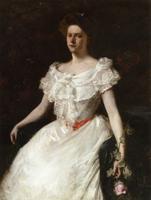
Lady with a Rose
William Merritt Chase
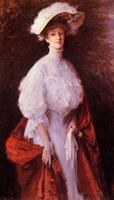
Portrait of Miss Frances
William Merritt Chase
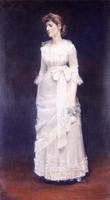
The White Rose, aka Miss Jessup
William Merritt Chase
Hylda, Daughter of Asher and Mrs. Wertheimer
John Singer Sargent

Portrait of Pauline Astor
John Singer Sargent