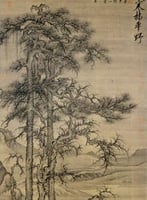
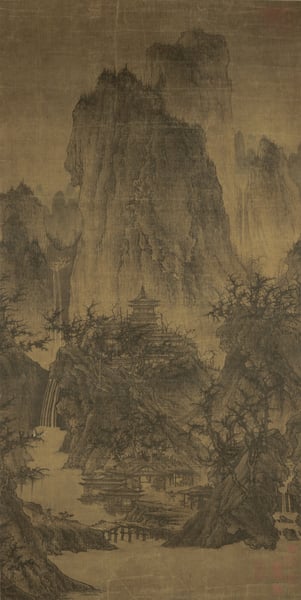
Analisi esperta di A Solitary Temple Amid Clearing Peaks di Li Cheng
Stile: Ink and wash painting · Genere: landscape
Analysis of "A Solitary Temple Amid Clearing Peaks" by Li Cheng
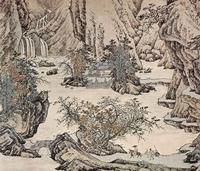
As an exemplar of Northern Song dynasty ink wash landscape painting, Li Cheng's A Solitary Temple Amid Clearing Peaks represents a pivotal moment in Chinese art, where the pursuit of spiritual resonance (qiyun) and the meticulous study of natural forms converge.
Executed in the classic ink and wash medium, the work belongs to the shanshui (mountain-water) genre. Li Cheng is renowned for his "cold, sparse" style, and this painting epitomizes that aesthetic. The composition typically employs a towering, central mountain mass rendered with precise, "crab-claw" branches and carefully modulated ink washes. The "solitary temple" is often tucked into a misty cleft, dwarfed by the vertical cliffs and gnarled, leafless trees—a motif that evokes a sense of quietude, impermanence, and the transcendent power of nature.
The significance lies in Li Cheng's revolutionary treatment of space and atmosphere. He masterfully uses atmospheric perspective—layering washes to suggest distance and moisture—and a bold asymmetry that guides the viewer’s eye diagonally into the deep landscape. This technique broke from earlier, more pattern-based Tang styles and established a new standard for "monochrome" landscape painting as a vehicle for philosophical contemplation. His refined brushwork, combining cun (texture strokes) with subtle gradations of ink, captures both the stark realism of Northern Chinese mountain scenery and an ethereal, almost melancholic mood.
A Solitary Temple Amid Clearing Peaks is significant as a definitive work of the Northern Song literati ideal: it is not merely a depiction of nature, but a visual poem that encodes the scholar’s longing for retreat and harmony with the Dao. Li Cheng’s influence persisted through the Song and Yuan dynasties, making this painting a cornerstone of the ink-wash landscape tradition.
Visivamente simili
20 opere con composizione e palette affini
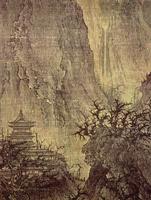
Buddhist Temple in Moutain
Li Cheng
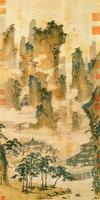
Pavilions in the Mountains of the Immortals
Qiu Ying
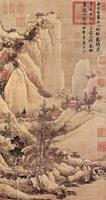
Clearing after Snow on a Mountain Pass
Tang Yin
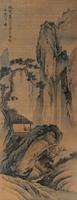
Watching Waterfall
Lan Ying
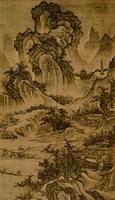
Untitled
Guo Xi
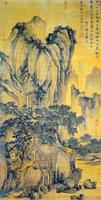
Sound of Pines on a Mountain Path
Tang Yin
Dancing and Singing (Peasants Returning from Work)
Ma Yuan
Landscape
Sesshu Toyo
Pines and the Waterfall
Lan Ying
Early Spring
Guo Xi
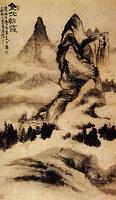
Light of dawn on the monastery
Shitao
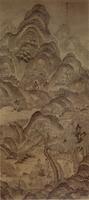
Landscape of Pine Valley
Chen Hongshou
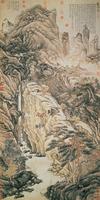
Lofty Mount Lu
Shen Zhou
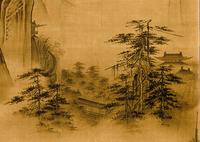
Dancing and Singing (Peasants Returning from Work) (detail 1)
Ma Yuan
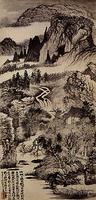
Jinting Mountains in Autumn
Shitao
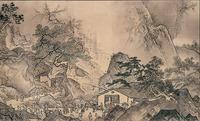
Landscape of Four Seasons (Spring?)
Sesshu Toyo
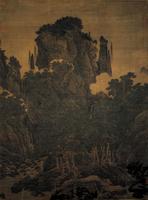
Wind in the Pines Among a Myriad Valleys
Li Tang
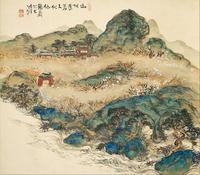
Mountain of Immortals
Tomioka Tessai
Landscape
Qiu Ying
Sansui chokan, detail
Sesshu Toyo