Untitled
Analisi esperta di Untitled di Lewis Carroll
Stile: Pictorialism · Genere: photo
Expert Analysis of "Untitled" by Lewis Carroll (Pictorialism)
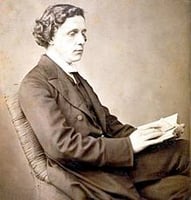
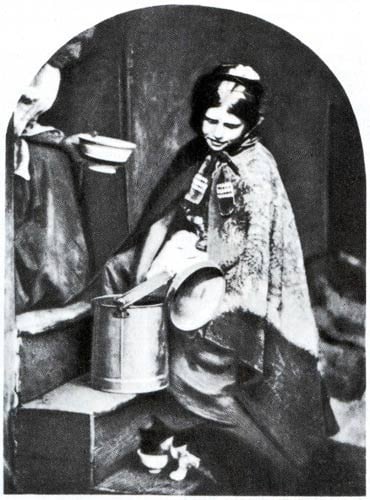
Within the context of Pictorialism—a late-19th-century movement that championed photography as a fine art through soft focus, atmospheric effects, and narrative composition—Lewis Carroll’s Untitled stands as a significant early example of the genre’s ambitions. Carroll (the pseudonym of Charles Lutwidge Dodgson) is best known for his literary fantasies, but his photographic practice was deeply intertwined with the Pictorialist ethos: he sought to elevate the camera beyond mere documentation into a vehicle for emotion, allegory, and otherworldly beauty.
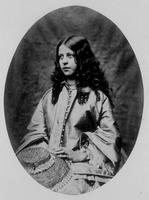
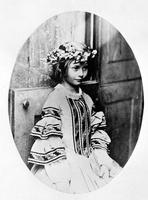
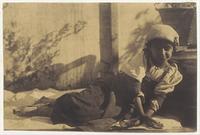
This untitled photograph likely depicts a young girl in a staged, intimate setting—a hallmark of Carroll’s oeuvre. The significance lies in how Carroll uses Pictorialist techniques—such as soft-focus lens work, careful manipulation of light and shadow, and handcrafted printing—to create a dreamlike aura that anticipates the psychological undertones of later symbolist photography. Unlike many Pictorialists who favored rural landscapes or classical tableaux, Carroll focused on the child as a muse, embedding his images with allusions to innocence, fantasy, and often a slightly unsettling fairy-tale quality.
The work’s significance within Pictorialism is threefold:
- Pioneering Subjectivity: Carroll’s Untitled exemplifies how Pictorialism allowed photography to become a medium of personal vision. The image is not meant to record a specific person or moment but to evoke a mood—tender, wistful, or ambiguous—that aligns with the Pictorialist quest for “soul” over fact.
- Interplay with Narrative: Drawing from his literary imagination, Carroll’s photographs are inherently narrative. This untitled piece functions as a visual poem, bridging the gap between Victorian genre painting and the emerging art-photography movement. The composition often mirrors Pre-Raphaelite painting, with careful attention to costume, gesture, and symbolic props.
- Technical Artistry: Carroll meticulously controlled every stage of the photographic process—from exposure to hand-coated albumen prints—which was central to Pictorialism’s rejection of industrial, mechanical reproducibility. The resulting soft gradations and subtle tonalities give the image a painterly quality that defends photography’s place alongside the traditional fine arts.
While Carroll’s work is sometimes viewed through a controversial lens today, its historical importance in shaping Pictorialism remains undeniable. Untitled is not merely a photograph of a sitter; it is a crafted vision that helped forward the argument that photography could be a legitimate art form, rich with emotion and intention.
Visivamente simili
20 opere con composizione e palette affini
The reproach
Federico Faruffini
Untitled
Lewis Carroll
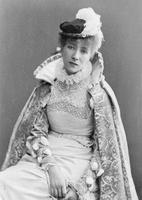
Sarah Bernhardt as Dona Sol in 'Hernani'
Felix Nadar
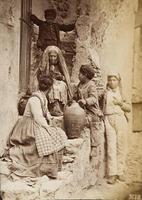
Limina family
Giuseppe Bruno
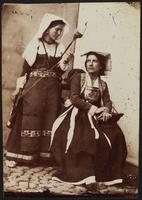
Roman Campagna - Young wool spinner and woman with basket
Giacomo Caneva
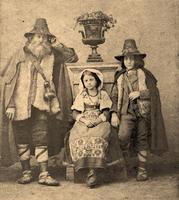
Italian Piferrarri - musicians
Giacomo Caneva
The singer Oberländer
Richard Gerstl
Young Girl Spinning
Giacomo Caneva
Untitled
Lewis Carroll
Photograph
Thomas Eakins
Sicilian peasants (possibly from Limina)
Giuseppe Bruno
Two peasants wearing a Sicilian costume
Giuseppe Bruno
Négresse de Bahia - Indienne botocudo
Gherasim Luca
Alice
Lewis Carroll
Sleeping monk
Giacomo Caneva
Mary and Charlotte Webster and Margaret Gatey
Lewis Carroll
Saint Cecilia, After the Manner of Raphael
Julia Margaret Cameron
At the fountain
Federico Faruffini
Carlotta Cortudino, a beggar girl
Giacomo Caneva
George Sand
Felix Nadar