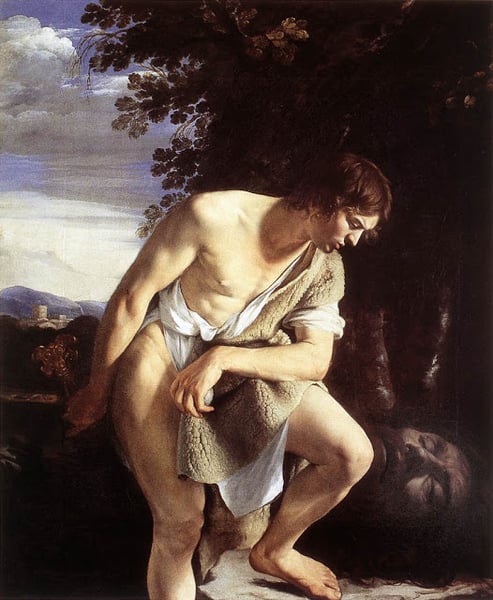
Artwork Analysis: "David Contemplating the Head of Goliath" by Orazio Gentileschi
Within the framework of Mannerism (Late Renaissance), Orazio Gentileschi’s religious painting of David Contemplating the Head of Goliath gains significance through its departure from the balanced naturalism of the High Renaissance. The work exemplifies Mannerism’s characteristic artificiality and emotional intensity, focusing not on the heroic action of the biblical story but on the introspective moment after the battle. David’s pensive gaze and the delicate, almost theatrical arrangement of the severed head and sword reflect the Mannerist emphasis on elegance and psychological tension over physical realism. This inward, contemplative mood—rather than dramatic narrative—highlights late Renaissance concerns with subjective experience and the Mannerist taste for refined, courtly emotion. Gentileschi’s handling of the subject also underscores the period’s interest in chiaroscuro and subtle tonal contrasts, linking his work to contemporary developments in religious painting that prioritized spiritual meditation over overt drama.